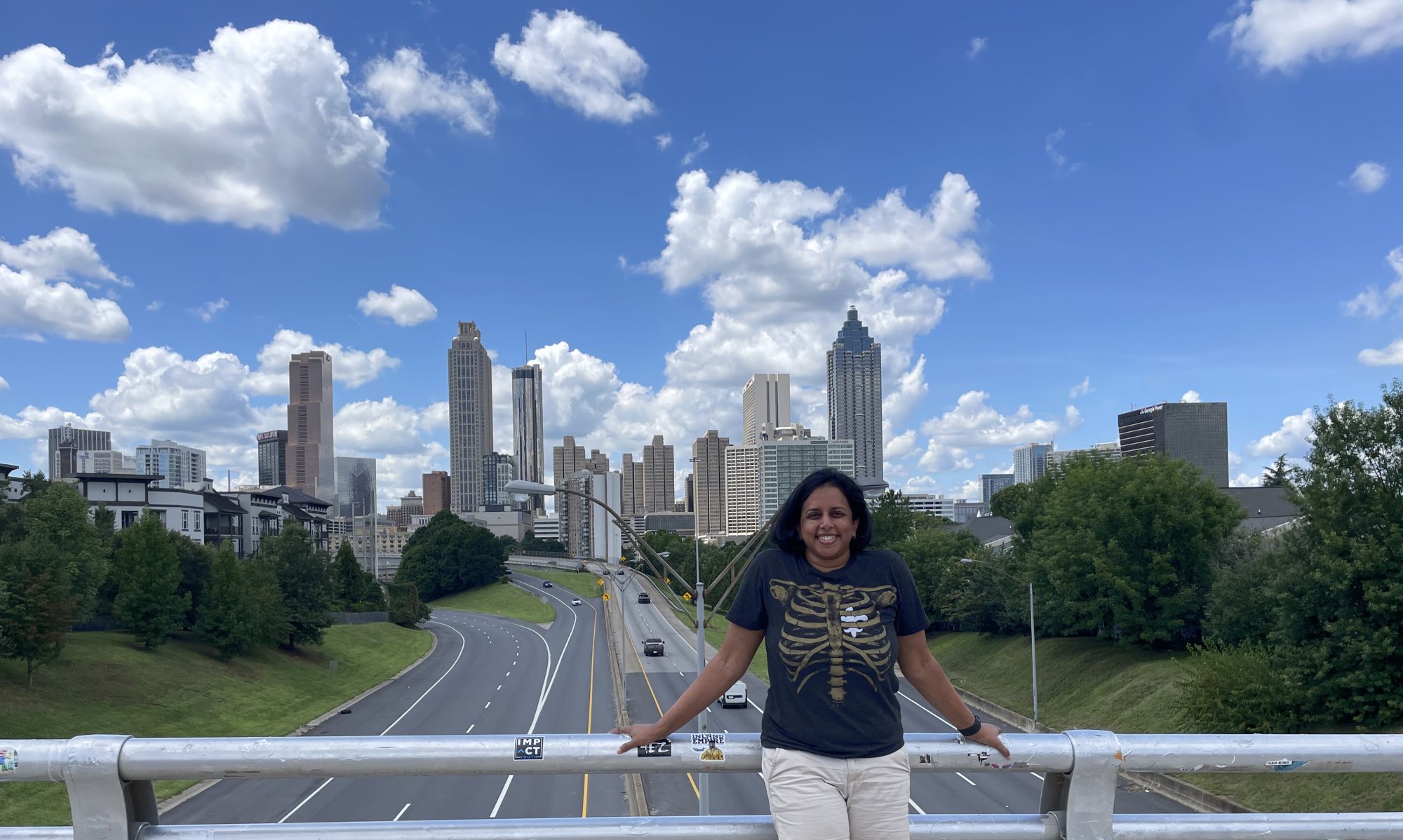
Earlier this month, I spent a few days in NYC to see four Broadway shows and to see the Belle Da Costa Greene exhibit at the Morgan Library and Museum. I took the opportunity to check out some other favorite sights like Grand Central Terminal, Central Park, the New York City Public Library (NYPL) Main Building, and check out a few new sights like Federal Hall Museum, Merchant’s House Museum, Hamilton Grange, the Theodore Roosevelt birthplace, and a walking tour of Lower Manhattan with NYC historian Thomas Silk.
Giving My Regards to Broadway
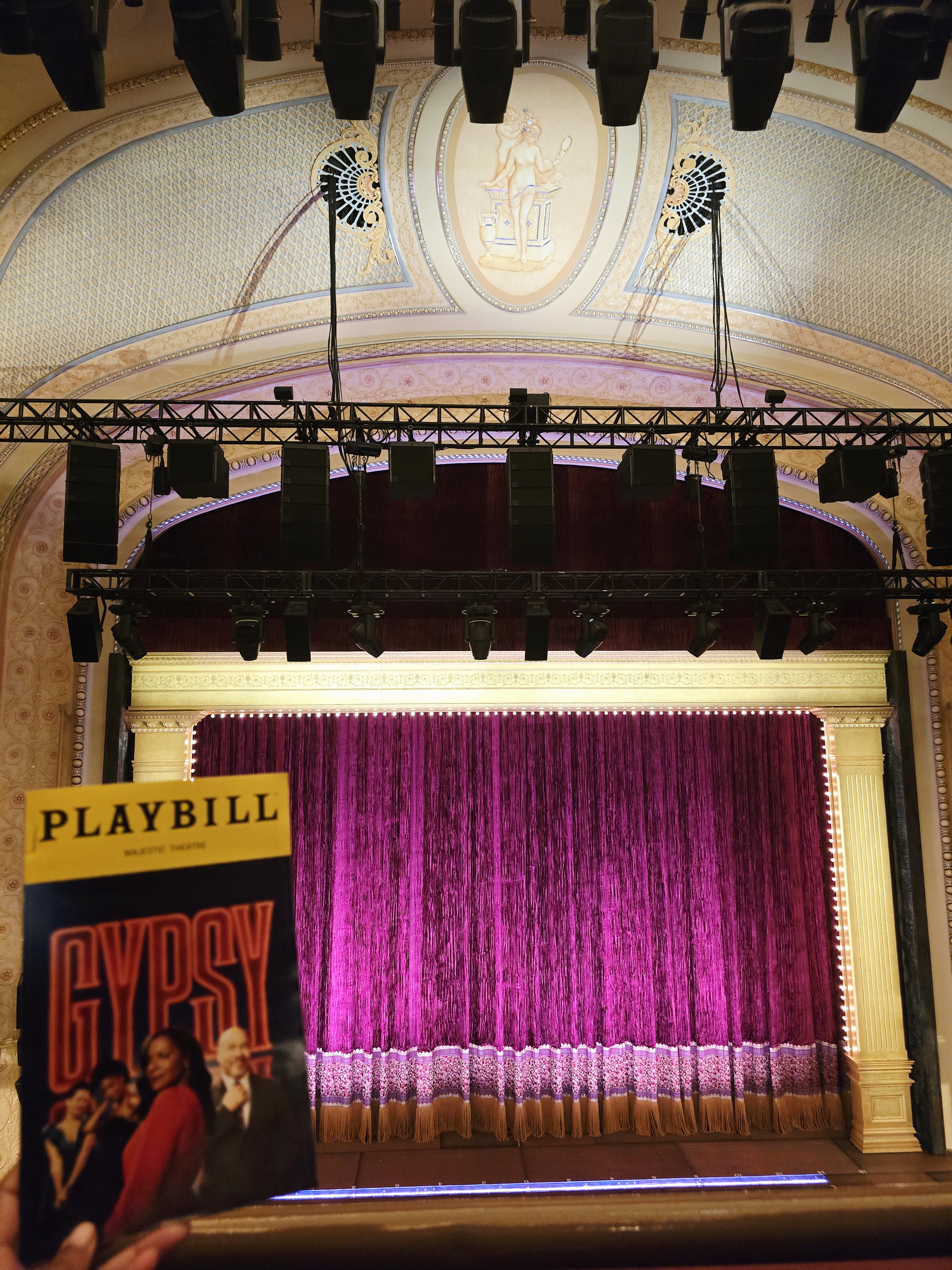
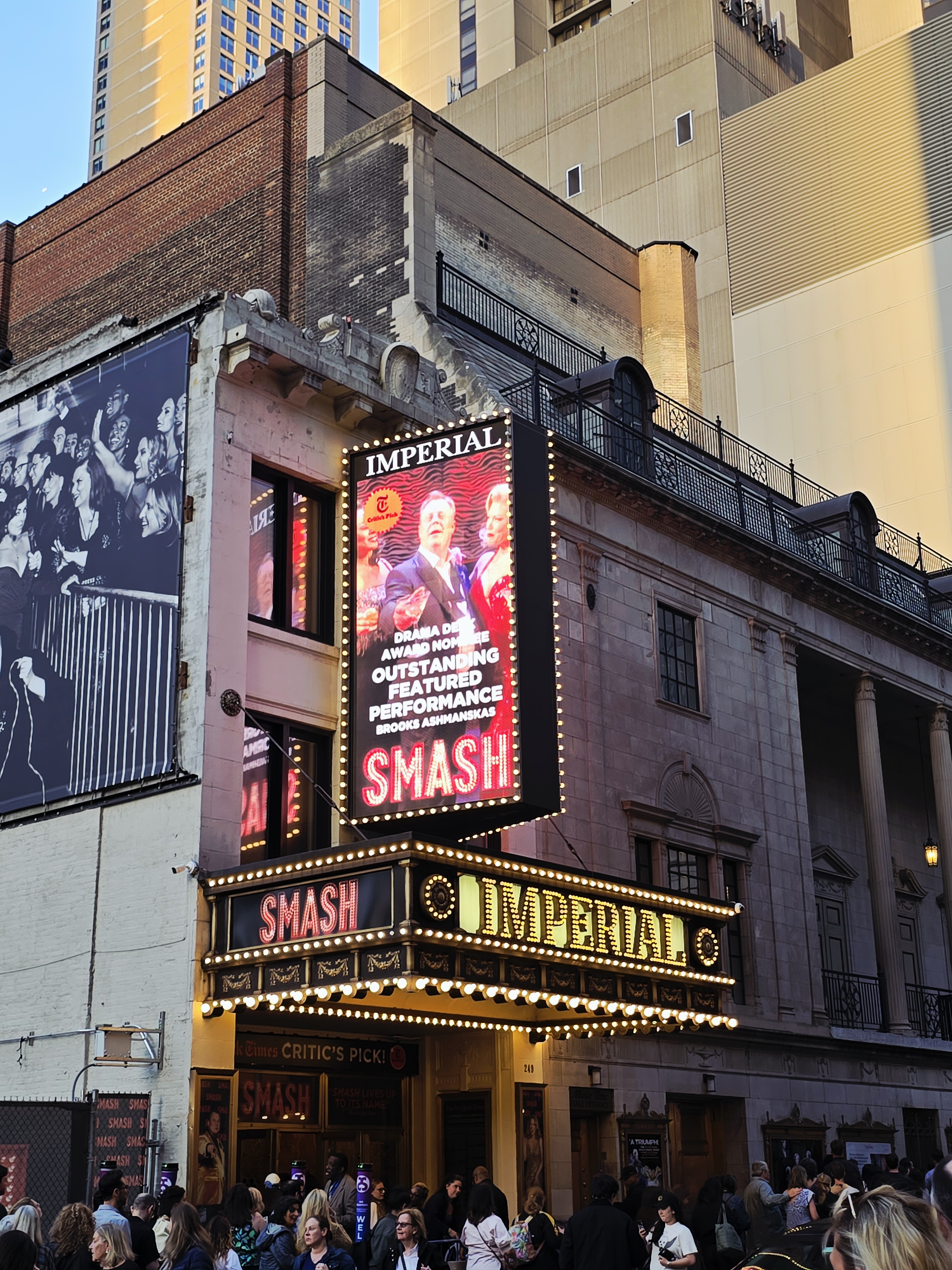
The four Broadway shows that I saw were SMASH, Good Night, Good Luck, Gypsy (with Audra McDonald!!!) and Buena Vista Social Club. The first show I saw, SMASH, is a musical based on a tv show about a Broadway show about Marilyn Monroe — very meta! If you saw the show, the main character is Ivy, but Karen plays a smaller role, and there is a new character, Chloe that enters the scene. The day I went to see Good Night, Good Luck (with George Clooney!!!) was when the Tony Award nominations were announced, and it garnered five nominations, including one for Best Actor for Clooney. Friday night I saw Gypsy (with Audra McDonald!!!) which was nominated for five Tonys, including Best Revival of a Musical and Best Actress for McDonald, her record 11th nomination.




I bought tickets for all of these shows ahead of time, but I had a hard time picking the last show. Sunset Boulevard? Death Becomes Her? Which was starring Megan Hilty who played Ivy in the tv show version of SMASH – again, very meta. A late entry was Buena Vista Social Club, which was recommended to me by several people, and once the Tony award nominations came out, it won my heart in a landslide with its TEN nominations, including Best Musical and Best Featured Actress, and a special Tony for its live musicians. When I saw that John Leguizamo was one of the producers, I was IN for sure. It was well worth it. I also had the pleasure of visiting the Broadway Museum. If you’re a theater fan like me, add it to your list!
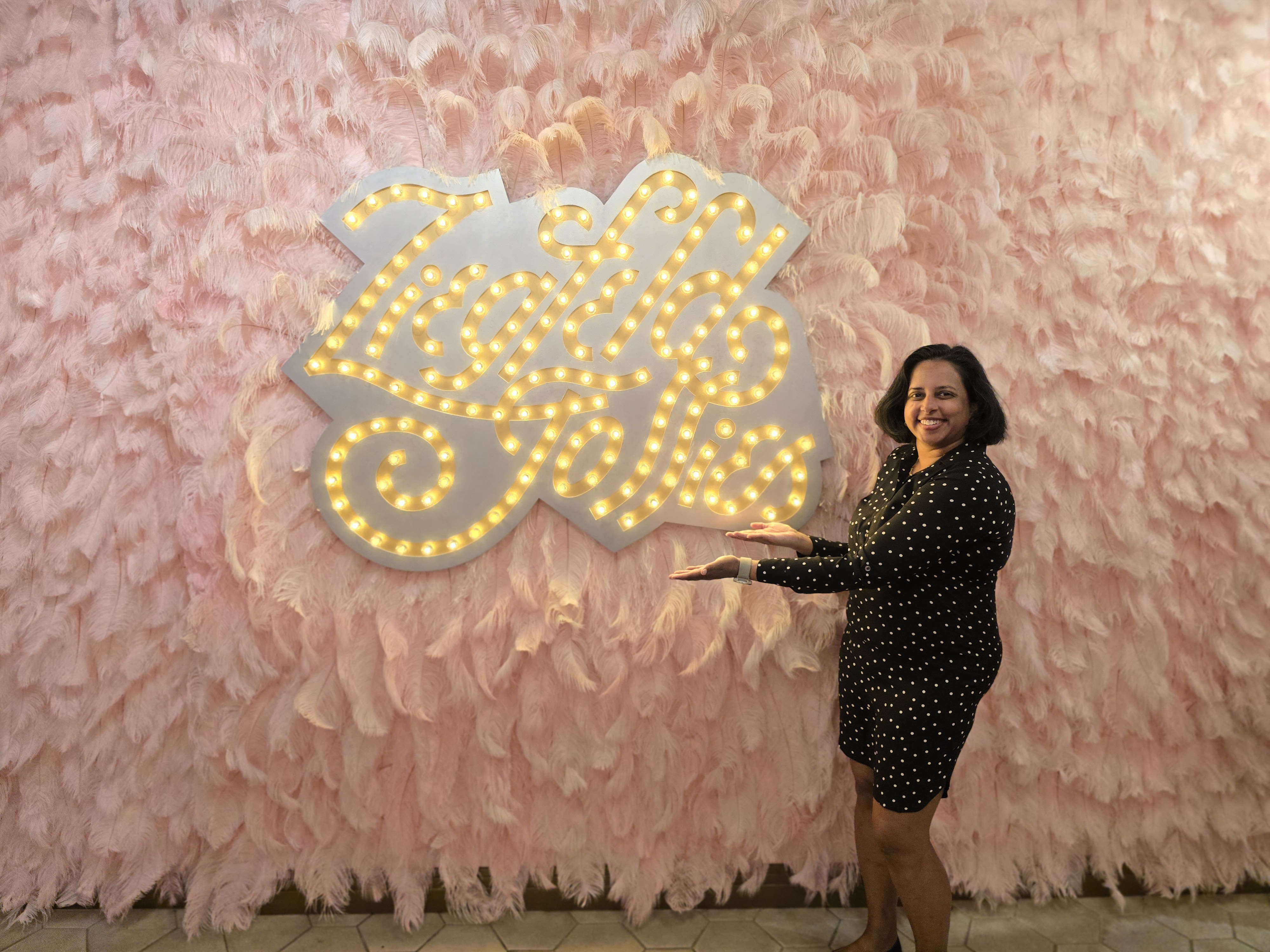
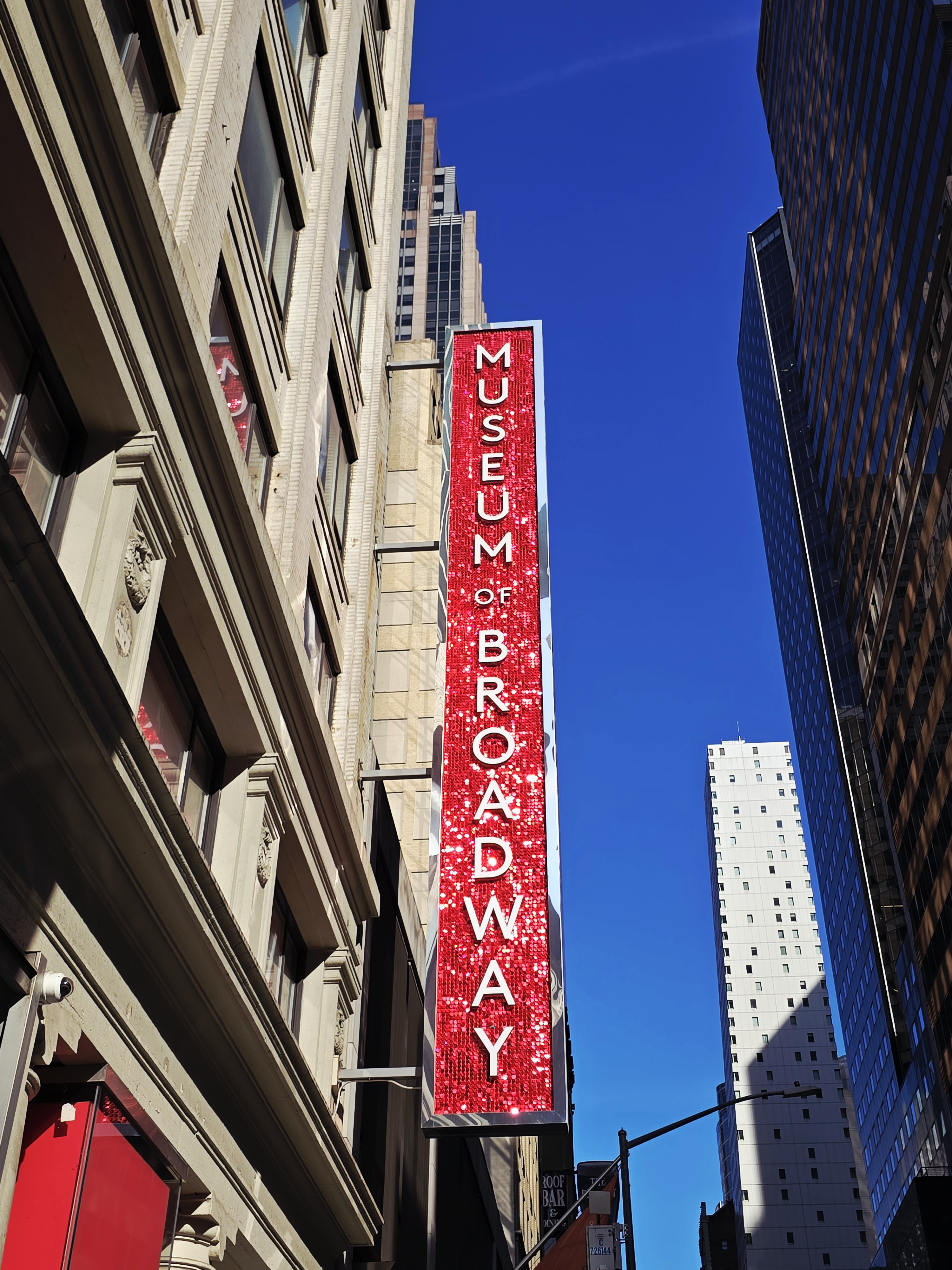
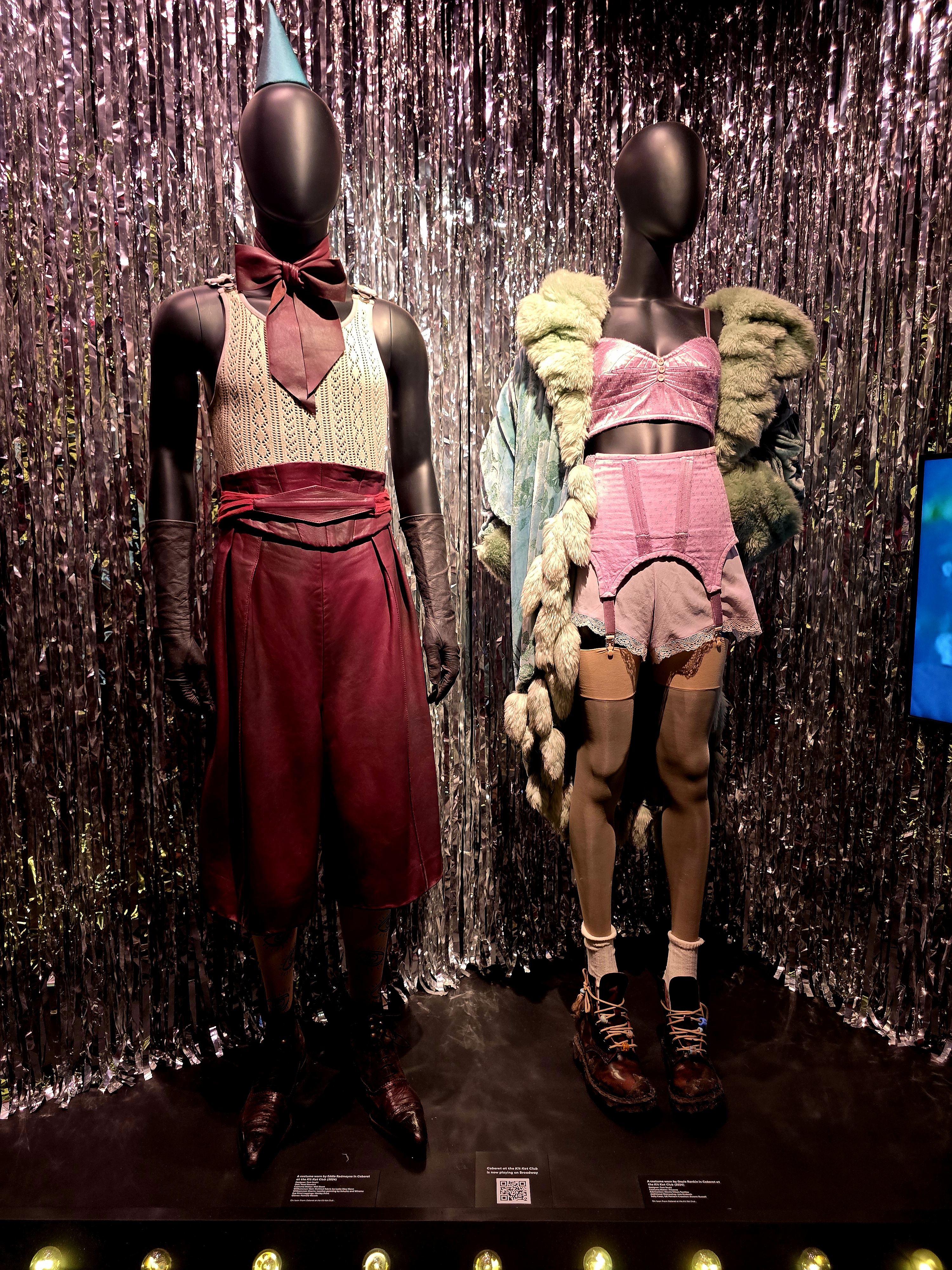


The most perfect day was spent at the NYPL Main Building, the Morgan Library & Museum, and Grand Central Terminal before heading to see Gypsy Friday night. The bonus was that all of these were within ten city blocks.
NYPL: Books, Art, Patience and Fortitude
The New York City Public Library combined the somewhat public libraries of John Jacob Astor and James Lenox. I say somewhat private because they served mostly as reference and research libraries, and were open to the public, but only with an admission ticket. The New York Public Library’s first director, Dr. John Shaw Billings, drew the initial design for the building. The plot of land was the Croton Reservoir, located alongside Fifth Avenue between 40th and 42nd Streets. The above-ground reservoir was not only an important water source for the city, but also a popular strolling spot for those seeking an escape for the city. Remember, NYC this far north was pretty sparse in the late 19th century comparedto what you see now. You can still see part of the reservoir foundation in the South Court of the library building.


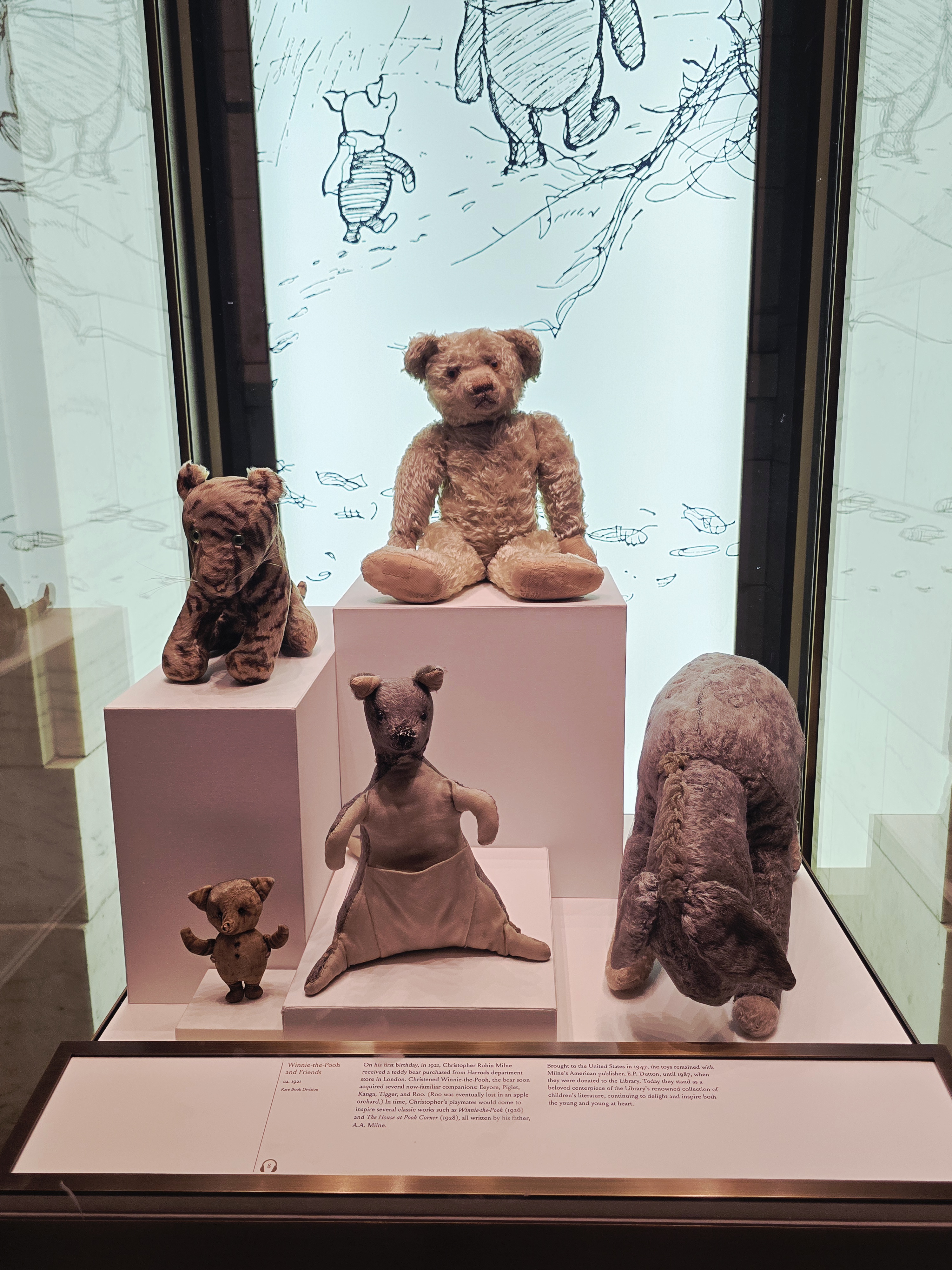


The library was designed in the Beaux Arts style by Carrère and Hastings, and constructed between 1902 and 1910, and dedicated on May 23, 1911. An estimated 30,000 to 50,000 people visited the library on its first day and the first book was called for at 9:08, and delivered six minutes later. Dr. Billings’ plan called for a giant reading room above seven floors of stacks which allowed for the rapid delivery system.
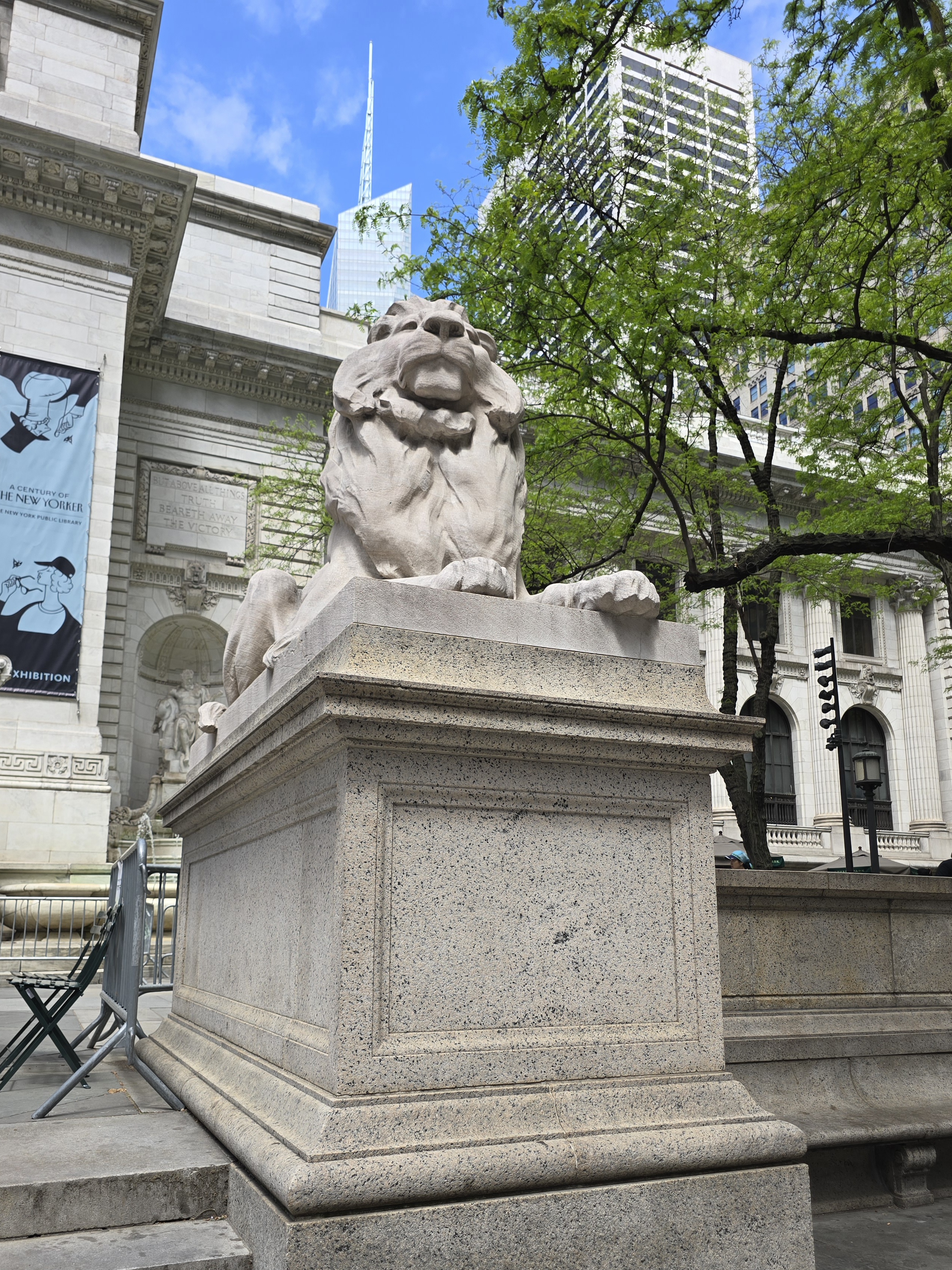
The Main Library was the largest marble building upon its completion. The two lions that guard the front entrance, Patience and Fortitude, were designed by E.C. Potter and carved by the Piccirilli brothers. Made of Tennessee marble, they were originally named Leo Astor and Leo Lenox after the two founding benefactors, and evolved into Lord Astor and Lady Lenox though they are both male. In 1930, Mayor Fiorello La Gaurdia referred to the lions as Patience (on the left if you’re facing the main entrance) and Fortitude because he thought New Yorkers would need both characteristics to survive the Great Depression. The lions have undergone several restorations since 1975, the most recent in 2019.


The Rotunda Room which serves as the main hallway before going into the public Catalog Room and the Rose Reading Room, is actually a rectangular room with a barrel-vault ceiling. The paintings by Edward Laning on the walls and the ceiling mural were commissioned by the WPA in the early 1940s. From the Rotunda Room, walk into the Public Catalog Room, which serves as an entry to the reading room, and gives you an idea of what the reading room would look like with its 50 foot ceilings, a ceiling mural, and identical chandeliers.
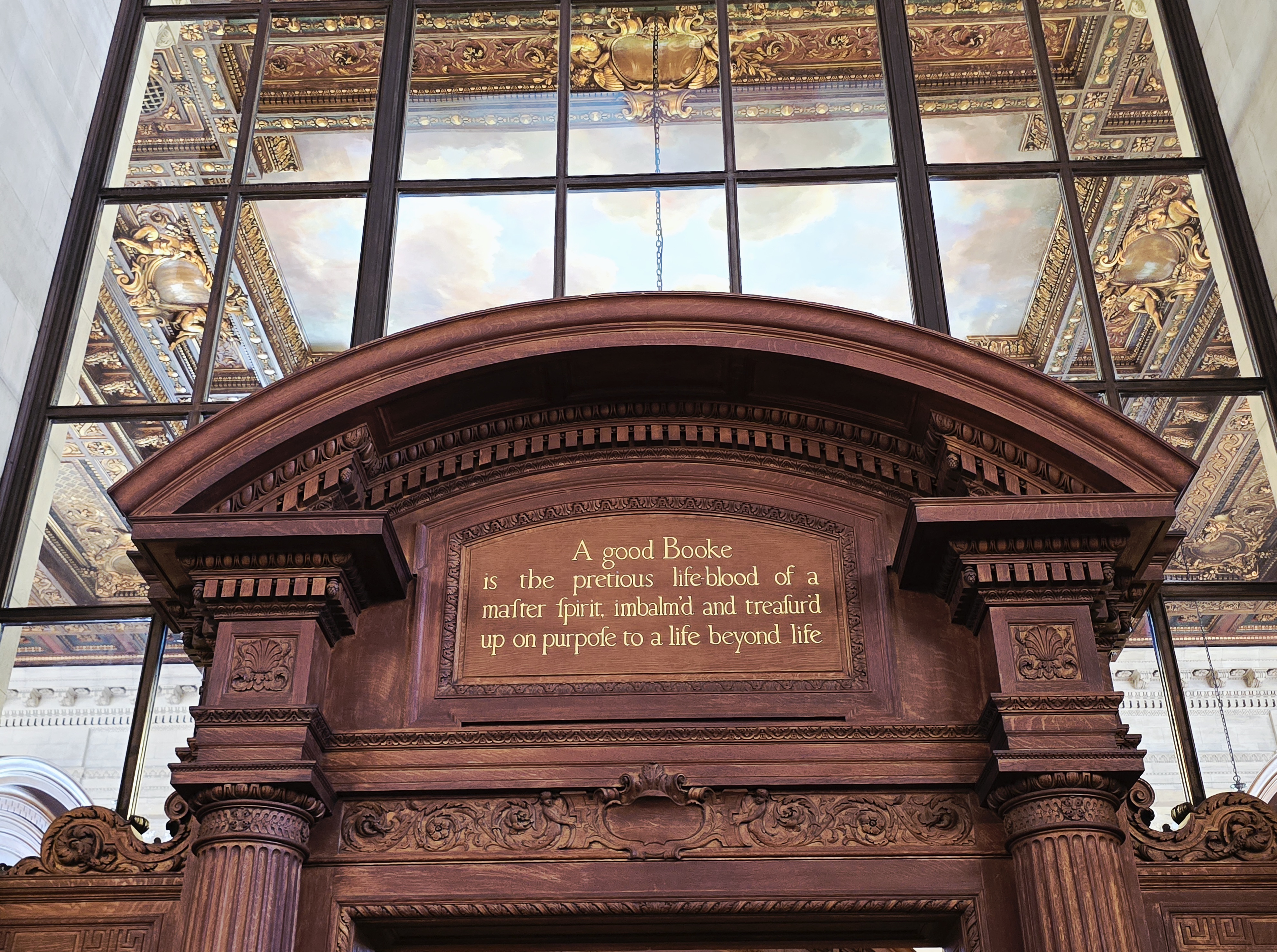
The Main Reading Room measures 77 feet wide by 295 feet long, with ceilings 50 feet high. When the library was built, the two rows of chandeliers in the reading room used incandescent light bulbs which were a recent innovation, and powered by the library’s own power plant. The plaster ceiling displays a reproduction 3-part mural since the original mural could not be salvaged during a 1998 restoration. The mural is surrounded by moldings of scroll cartouches, cherub heads, satyrs, nude female figures, flowers and vases of fruit, all of which disguise ventilation grills. The reading room went through a $12 million, two-year restoration, completed in 2016. The restoration was necessary after an ornamental rosette fell from the ceiling of the reading room.

The Main Building was declared a National Historic Landmark in 1965, placed on the Register of Historic Places in 1966, and designated a NYC Landmark in 1967.
Andrew Carnegie pledged $5 million to build 65 branch libraries in Manhattan, Bronx and Staten Island, which were and are still part of the NYPL system. Bronx and Queens already had their own library systems, and still do to this day. The firms of McKim, Mead & White, Carrère and Hastings (who designed the Main Building) and Walter Cook were hired to design the branch libraries to maintain uniformity in their appearance and achieve some cost savings.
I will never not be amazed by this building. Of course, I brought a book to read, as the library was intended to be a place to read and research and not necessarily take books home with you. I had to show the security guard my bag, and showed him that the book came from Fulton County library, not this library. Maybe my next trip, I’ll visit one of those branch libraries Andrew Carnegie funded.


Birthplace of NYC Preservation? Grand Central Terminal
Grand Central Terminal was designed by Reed and Stem in the Beaux Arts style, and built between 1903–1913. Another architectural firm, Warren and Wetmore, were brought in to design the grand facade which faces Park Avenue, and Parisian architects and artists Jules-Félix Coutan, Sylvain Salières, and Paul César Helleu to design other elements. Grand Central’s facade was designed to resemble another nearby Beaux Arts style building, the NYPL main building on Fifth Avenue.
Grand Central Terminal was the brainchild of the owners of Hudson River Railroad, the New York and Harlem Railroad, and the New York and New Haven Railroad. Cornelius Vanderbilt, owner of Hudson River Railroad, proposed a station where all three lines would meet to ease the disruption passengers faced trying to transfer to different stations. Grand Central Depot, completed in 1871, quickly outgrew its capacity by 1900, and what you see now is the result. Construction of the new Grand Central Terminal took ten years to complete because they built it around existing rail operations.


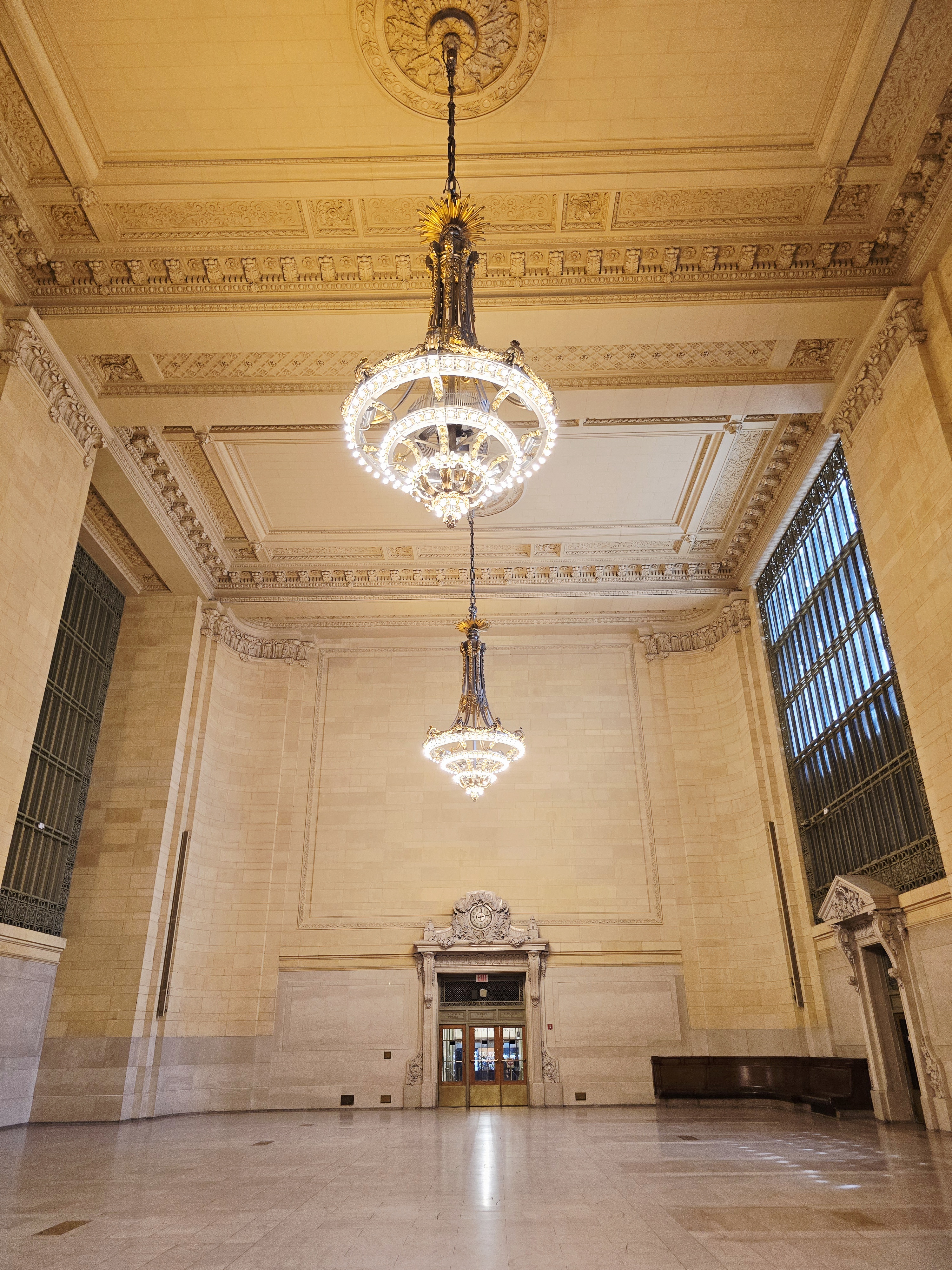
Grand Central is bounded by Vanderbilt Avenue to the west, Lexington Avenue to the east, 42nd Street to the south, 45th Street to the north, and down the center of the front facade, Park Avenue which cuts off at 42nd St and becomes the Park Avenue Viaduct, picking up again as Park Avenue at 45th Street. Vanderbilt Avenue now only runs from 44th to 47th Street now so the next closest street to the west is now Madison Avenue.
The interior of Grand Central features oak leaves and acorns, picked specifically by railroad baron Cornelius Vanderbilt to honor their family motto “Great oaks from little acorns grow”. The station originally included a post office on the east side, a grand waiting room, and the Campbell Apartment. The apartment was built as an office for John Campbell, who served on the board of NYC Railroads, and later became offices for CBS, and even a jail for the rail line. It is now a bar known as The Campbell, and they do make tasty cocktails, but get there early — it fills up!

Grand Central faced the same fate as the other commuter rail terminal, Penn Station, which was torn down in 1963. Penn Station was built by architectural firm McKim, Mead & White for the arch-rival Pennsylvania Railroad, which was an electric rail line. Like Grand Central, Penn Station also originally had a post office which was even bigger than the one at Grand Central. With the decline of rail travel, the owners of the two competing stations, Penn Station and Grand Central, decided to merge, and formed Penn Central. When Penn Central tore down Penn Station in 1963 to build a skyscraper and Madison Square Gardens, the Municipal Arts Society was formed, NYC Landmarks Preservation Commission formed, and the Landmarks Preservation Law passed in 1965 in response to the demolition of Penn Station.
NYC Landmarks Preservation Commission designated Grand Central a landmark in 1967. In 1975, local courts overrode the landmarks designation, leading to another proposed skyscraper, designed by either I.M. Pei and Marcel Breuer — I’ve seen references to both architects. The I.M. Pei design replaced the demolished station, while Breuer’s sideways shoebox design would have been built on top of the station. In came concerned citizens like Jacqueline Kennedy Onassis and the Municipal Arts Society. Penn Central Transportation Co vs NYC went all the way to the Supreme Court, which ruled in favor of the NYC Preservation Commission in 1978.
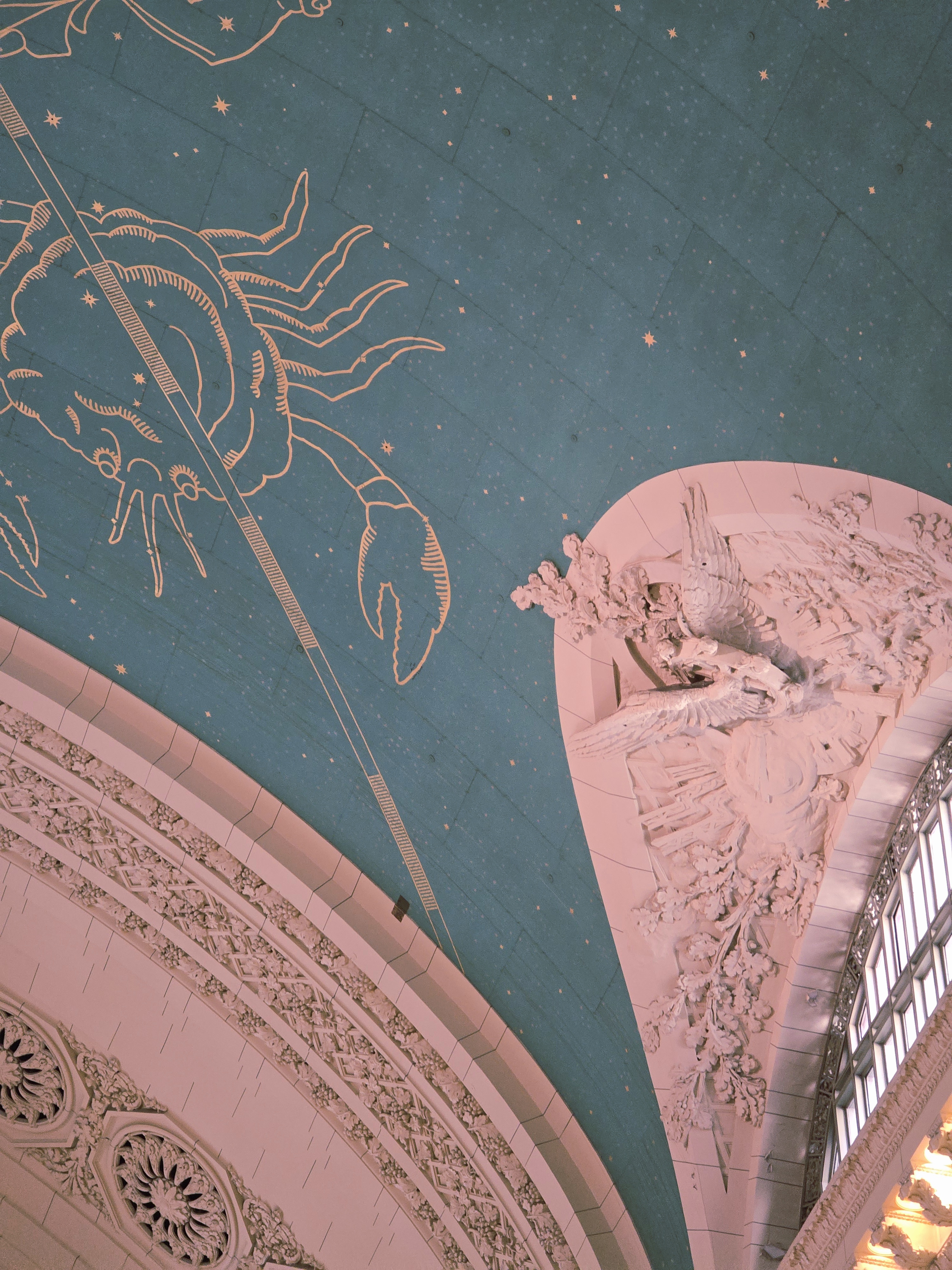
Restoration projects since the early 1990s included cleaning of the famous celestial ceiling, removing decades of soot and cigarette smoke, the addition of the East stairs to match the stairs on the opposite side, and removal of commercial advertising in the main terminal area.


The most perfect day in NYC continued at the Morgan Library & Museum after NYPL Main Building and Grand Central Terminal. I try to visit NYC once a year, usually to see a few Broadway shows and to see some museums and fantastic old buildings. The Morgan Library & Museum combines my love of old buildings, historic artifacts and BOOKS!

Coming Back to an Old Friend: The Morgan Library & Museum
I came upon the Morgan Library and Museum by accident in 2013 when I was walking from my hotel on 36th Street towards Park Avenue to go to Grand Central. I saw a beautiful Italian Renaissance brownstone building, the name Morgan, and I was intrigued. I came back the next day for my first visit, and I was in awe of the space. But this year was the busiest I’ve ever seen it, and it’s all thanks to one woman: Belle da Costa Greene. But more about her later…
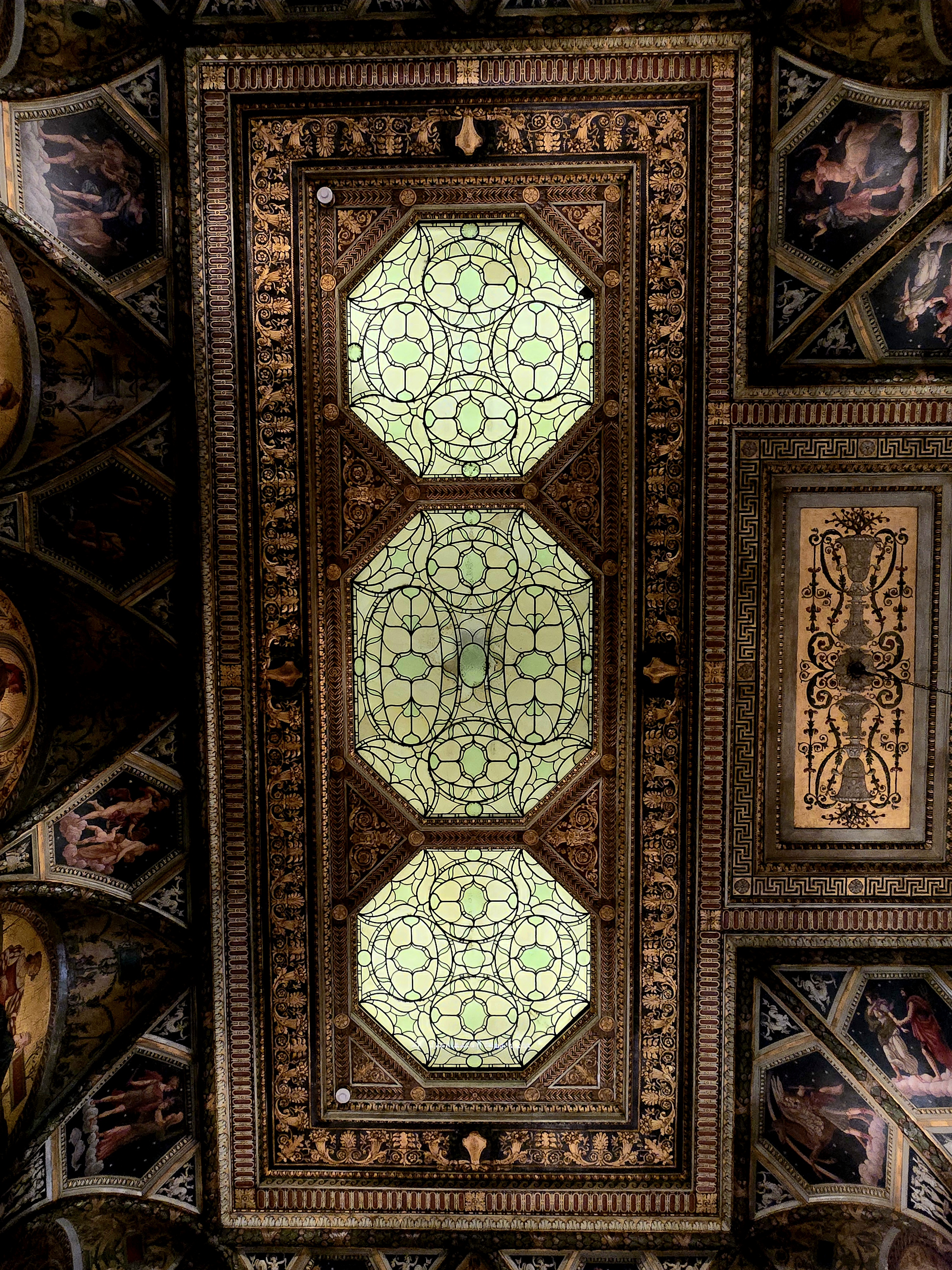
J.P. Morgan built his personal library between 1902 and 1906 next to his home on Madison Ave between 36th and 37th Streets. The library was designed by Charles McKim of McKim, Mead and White in the style of an Italian Renaissance palazzo. Morgan started collecting items for his library in 1890, and by the time he finished construction, he brought on Belle Da Costa Greene to be his personal librarian.
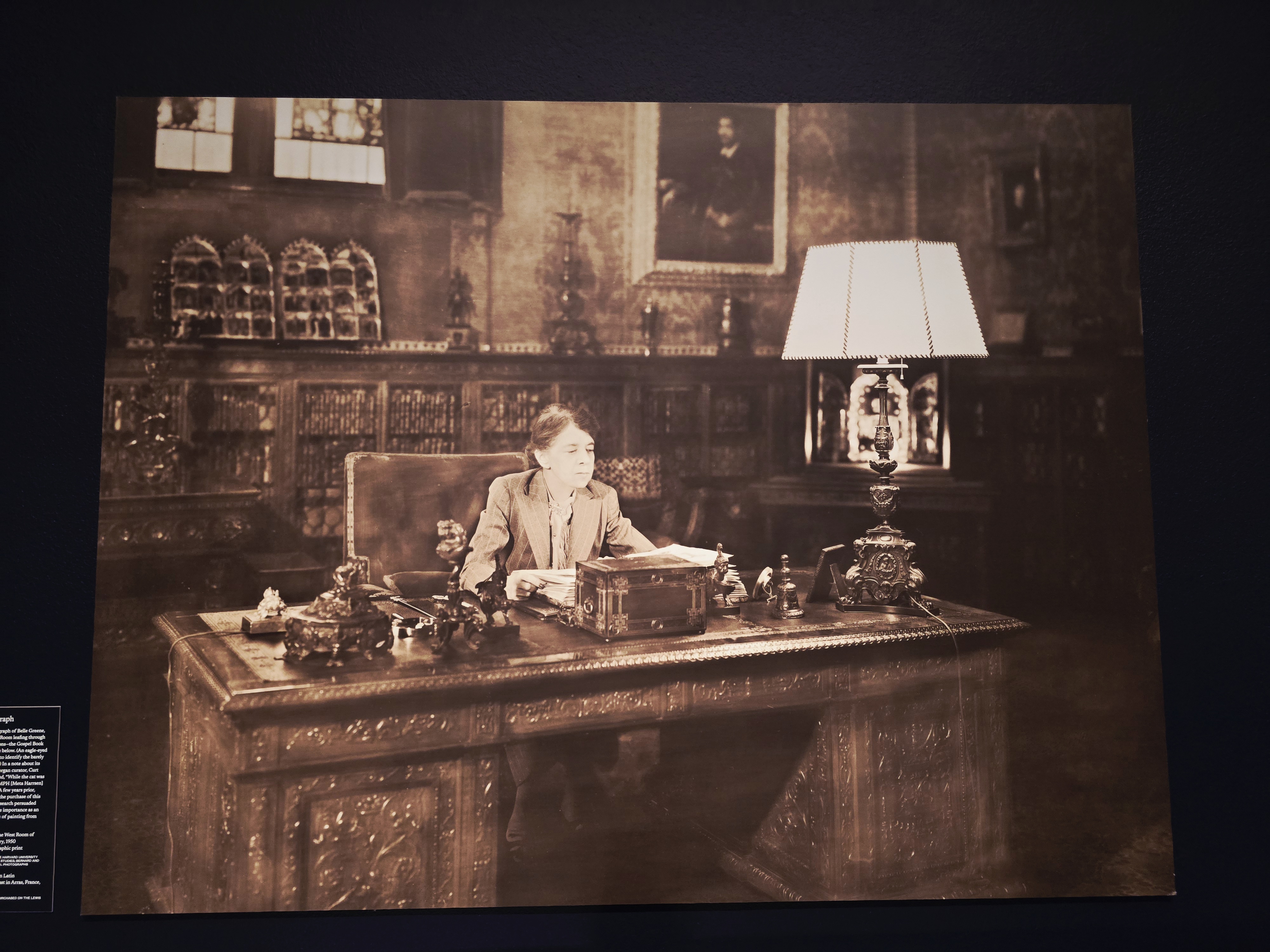
When Morgan died in 1924, Greene persuaded his son, Jack Morgan, to open the library to the public and scholars. Jack Morgan replaced his father’s home with the current annex building, connecting McKim’s designed library spaces with a gallery.

The role of shopper and librarian was typically a White man at this point in history. A woman holding the role was unheard of, much less a Black woman. But Belle Da Costa Greene passed as White. Her story was known in art and library circles, but if you are a reader like me, you learned about her from the book, The Personal Librarian by Marie Benedict and Victoria Christopher Murray. And the week I was in New York City was the last week of an exhibit about Belle Da Costa Greene at the Morgan Library & Museum, hence the enormous crowds! The gift shop staff told me during a visit in 2022 that the book had doubled their attendance from before it was published, so I can only imagine how popular this exhibit has been.




Belle Da Costa Greene was born Belle Marion Greener to Genevieve Ida Fleet and Richard Theodore Greener in Washington, D.C. The Fleet family were wealthy, well-known and respected in D.C., as well as being part of the underground Railroad. Genevieve was a musician and educator, like many others in her family. Richard, was the first Black graduate from Harvard, and educator and racial justice activist. Richard Greene was also dean of Howard University’s Law School, and was a professor at the University of South Carolina during a brief period of integration in the 1870s during Reconstruction.
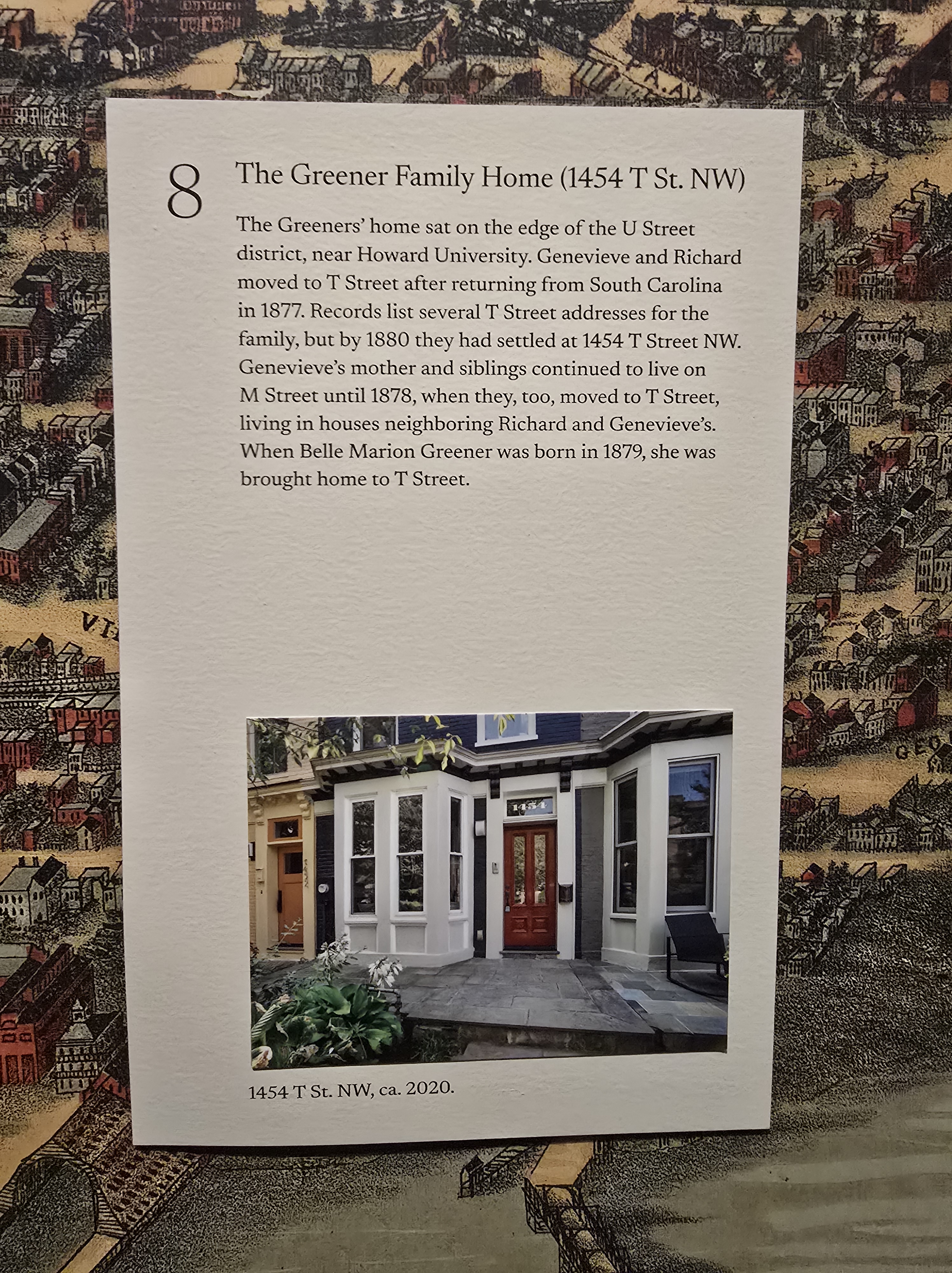


After her parents separated when Belle was a teenager, her mother moved with the children to New York City where they changed their last name to Greene, and took advantage of their light skin to pass as white. Belle also changed her middle name from Marion to da Costa, a name of Portuguese origin, to explain her slightly darker complexion. She attended Amherst College to study the new field of library sciences, completing a six-week course, and worked at the Princeton University Library, working closely with rare books. She developed a friendship with Junius Spencer Morgan, nephew of J.P. Morgan, and he introduced the two. Her future as Morgan’s personal librarian was set.
Greene and Morgan worked side by side to build the collection, which includes rare books and manuscripts, as well as sculptures and paintings. She became Morgan’s gatekeeper for those seeking his assistance in the rare book or art world. She traveled around the world to bid on items during auctions and to shop personal collections of other wealthy individuals. After J.P. Morgan passed, Greene convinced Jack Morgan that the collection was too important to be kept private, and should be made available to the public for research purposes.
Greene retired as the Morgan Library’s Director in 1948 after 43 years of service, and died in 1950. Even at her death, the truth of her mixed ancestry essentially not known. She never married nor had children for fear that her child may have dark skin. Not until 199 was the truth discovered when a Greene biographer found her birth certificate in Washington D.C.
Belle da Costa Greene’s story has fascinated me since I first read The Personal Librarian, and I will continue to visit the museum and library as I have done since 2013. If you’re ever in NYC, I hope you will visit and see for yourself the wonder that is the Morgan Library and Museum. No matter how many times I visit New York City, Grand Central, Morgan Library & Museum, and the NYPL will always be on my must-see list.
After the most perfect day in NYC visiting the NYPL, Morgan Library and Museum and Grand Central, the second best day had to be visiting Central Park and the Theodore Roosevelt Birthplace.

Bully to T.R.
I’ve read several books about Theodore Roosevelt — I refuse to call him Teddy because I read that he didn’t like the nickname — and I knew that he was born in a brownstone in Manhattan. I was delighted to discover that while the original house was torn down, a replica was built by his sisters after his death and turned into a museum.
Roosevelt’s birthplace museum is now part of the National Parks Service, which seems so appropriate considering the impact Roosevelt had on the parks system and conservation efforts worldwide. Not only did Roosevelt double the acreage of the parks system, but he also passed the Antiquities Act on June 8, 1906. The Antiquities Act allowed Roosevelt and future presidents to establish historic landmarks, historic or prehistoric structures, and other objects of historic or scientific interest as national monuments. Under Roosevelt’s presidency, Devils Tower in Wyoming, El Morro in New Mexico, the Petrified Forest, Montezuma Castle and a large portion of the Grand Canyon in Arizona became historic landmarks.
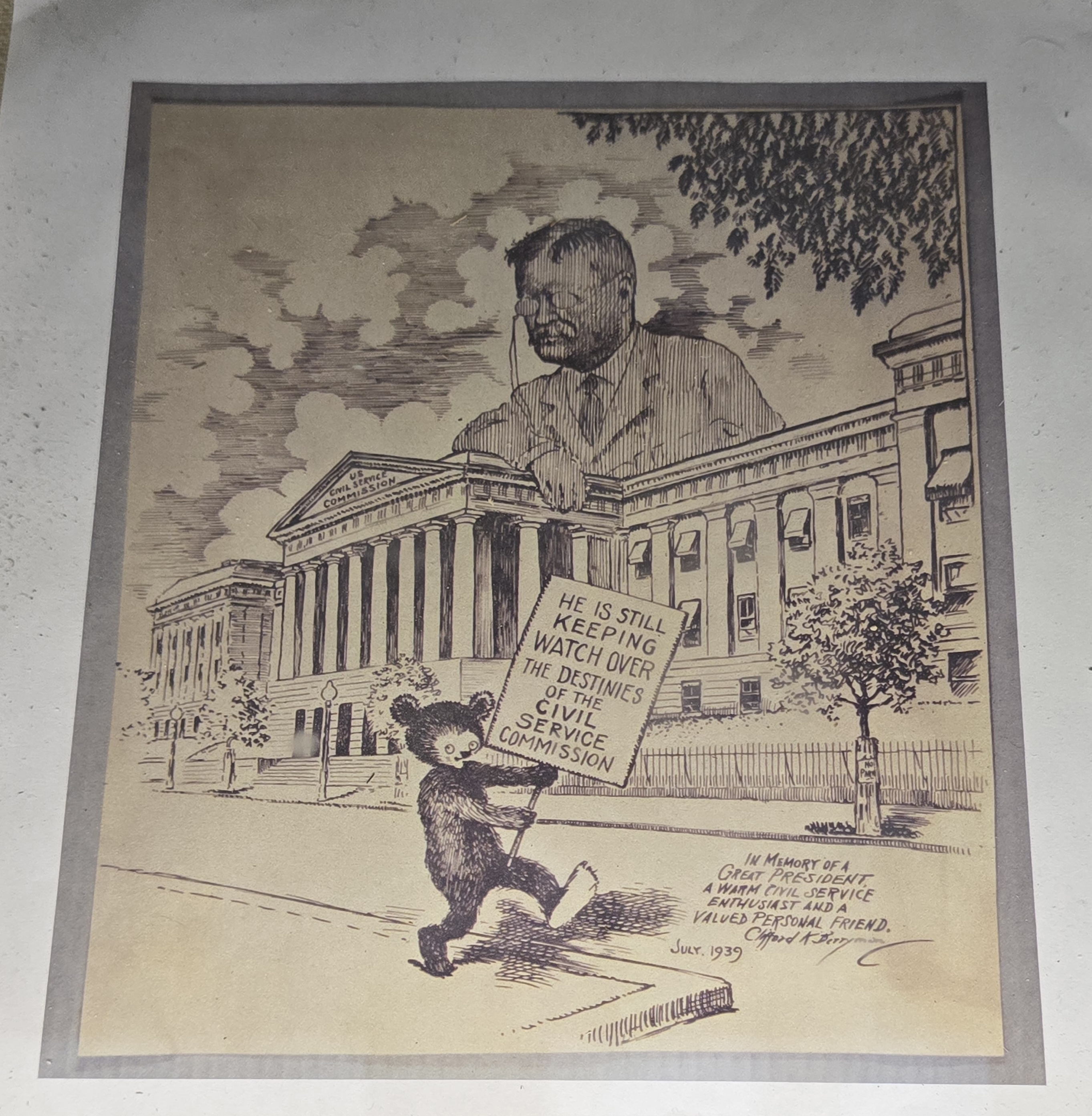
Theodore Roosevelt, Jr, or Teedie or T.R. as he liked to be called, was born to Theodore Sr. and Martha Bulloch Roosevelt on October 27, 1858. Nicknames were big in the Roosevelt family: his father went by Thee, and his mother, Mittie. Mittie was born in Georgia, and grew up in a grand estate in Roswell, which you can visit – Bulloch House where the Roosevelts were married. I was there in March! Thee Roosevelt owned a glass manufacturing company, which was known for its glass lamps and stained glass windows. There are examples of this work all over the home! Thee was also a great philanthropist, helping to found the Metropolitan Museum of Art, the American Museum of Natural History, and a children’s orthopedic hospital. The Roosevelt household was not like those of many high society homes. The children were allowed to gather with the family and not kept with the nanny as with most wealthy families. In fact, the nanny was Mittie’s sister, Annie! In her room, you can see items from Annie, including a cross-stitch sampler she did while living in Roswell.

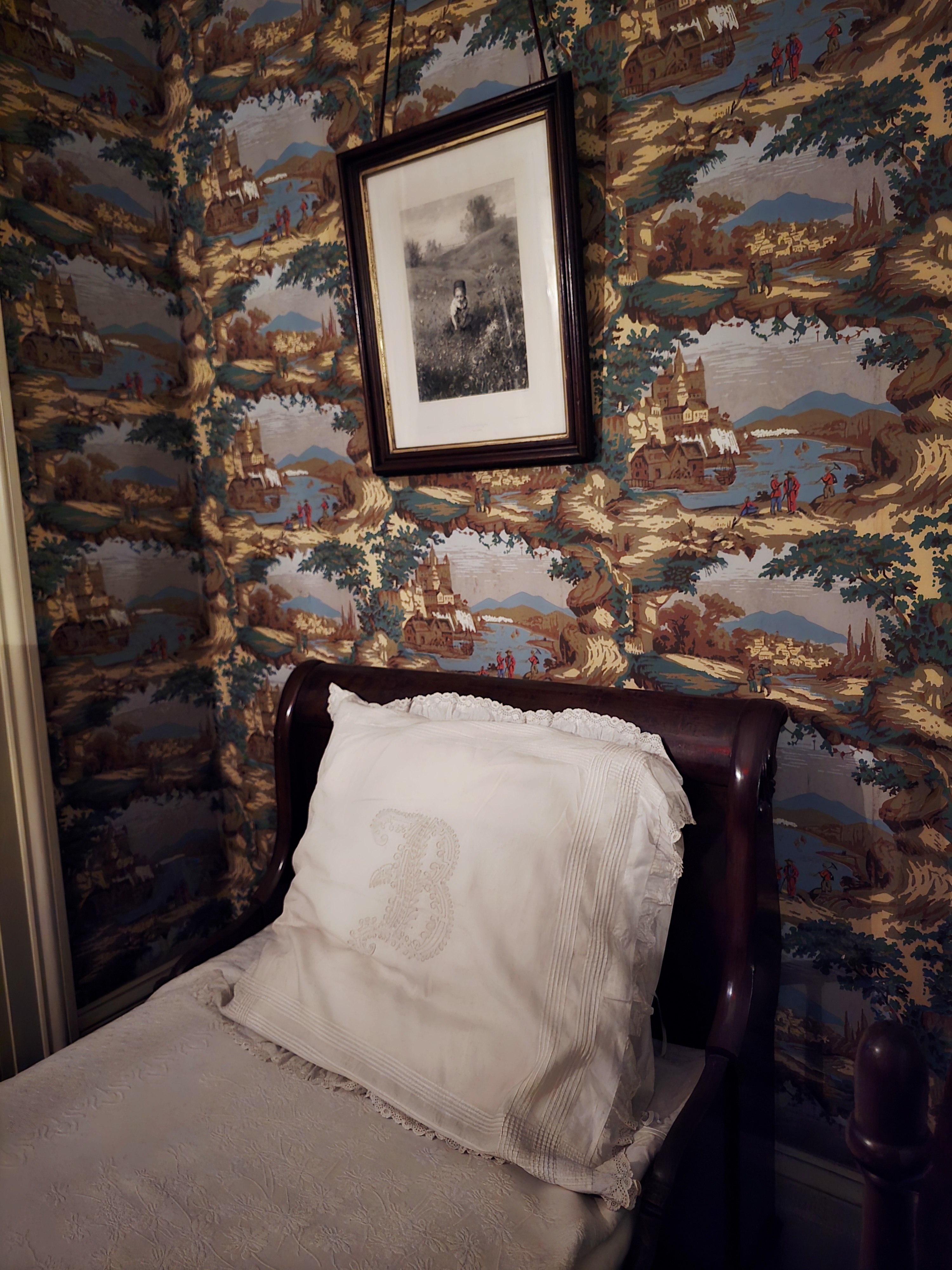


The birthplace museum I toured was not the actual home where Roosevelt was born. The brownstone at 28 E 20th Street was built in 1848, and the Roosevelts moved in 1854. The family lived here until 1872 when the neighborhood became more commercial, and the Roosevelts moved uptown to W 57th Street. The brownstone was torn down in 1916 for a retail building, but after Roosevelt died in 1919, the Women’s Roosevelt Memorial Association bought the retail building, tore it down, and commissioned Theodate Pope Riddle to rebuild the original brownstone. The brownstone next door, 26 E 20th St was originally the home of Thee’s brother, Robert, and was used as a model to recreate T.R.’s birthplace. The Association bought this brownstone and demolished it to build the museum that sits there now. I wish they had kept the brownstone facade at least.


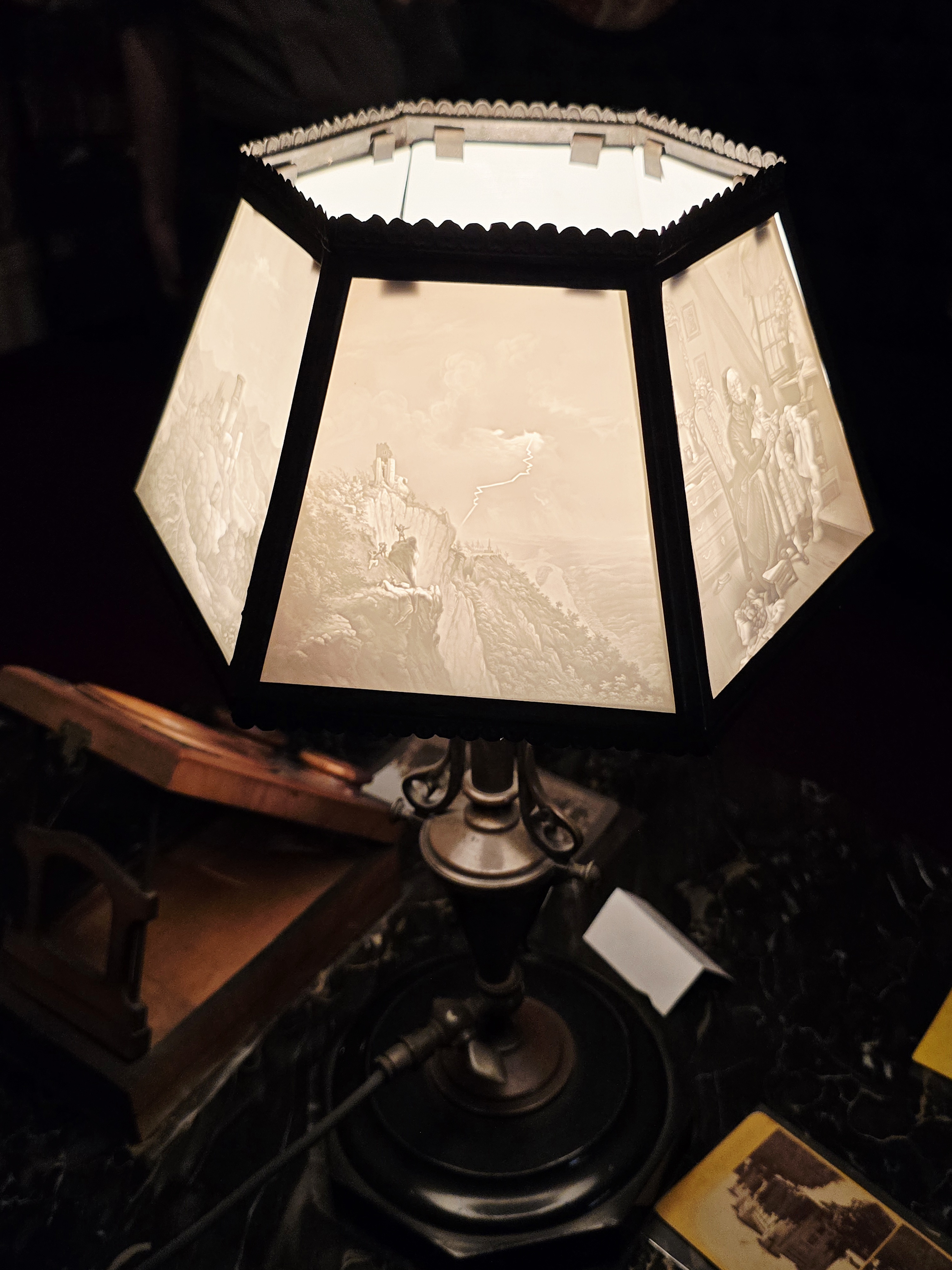
The Theodore Roosevelt Birthplace Home opened in 1923, and included furnishings donated by Roosevelt’s widow, Edith, and his two sisters. One side of the center of the museum outlines the history of the Roosevelt family arriving in New York from the Netherlands to the lives of Theodore Sr and his father, Cornelius Van Schaack Roosevelt. The other side details T.R.’s childhood, his collegiate career at Harvard, his marriages to Alice and Edith, and his children. Along the walls, I learned more about Roosevelt’s political career, before, during and after his presidency. At the back of the museum is more detail about T.R.’s presidency, including an assassination attempt during his 1912 presidential campaign.
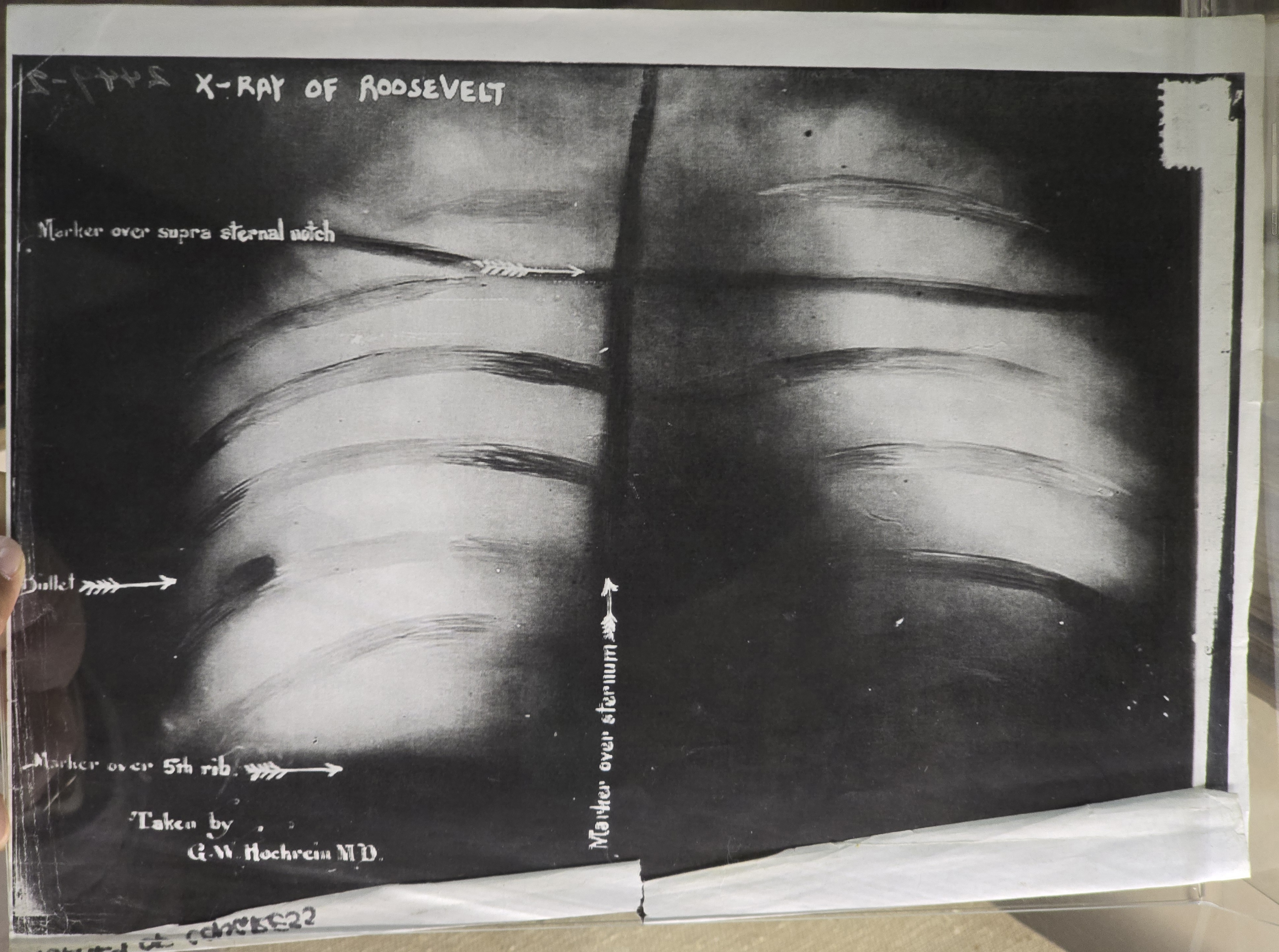
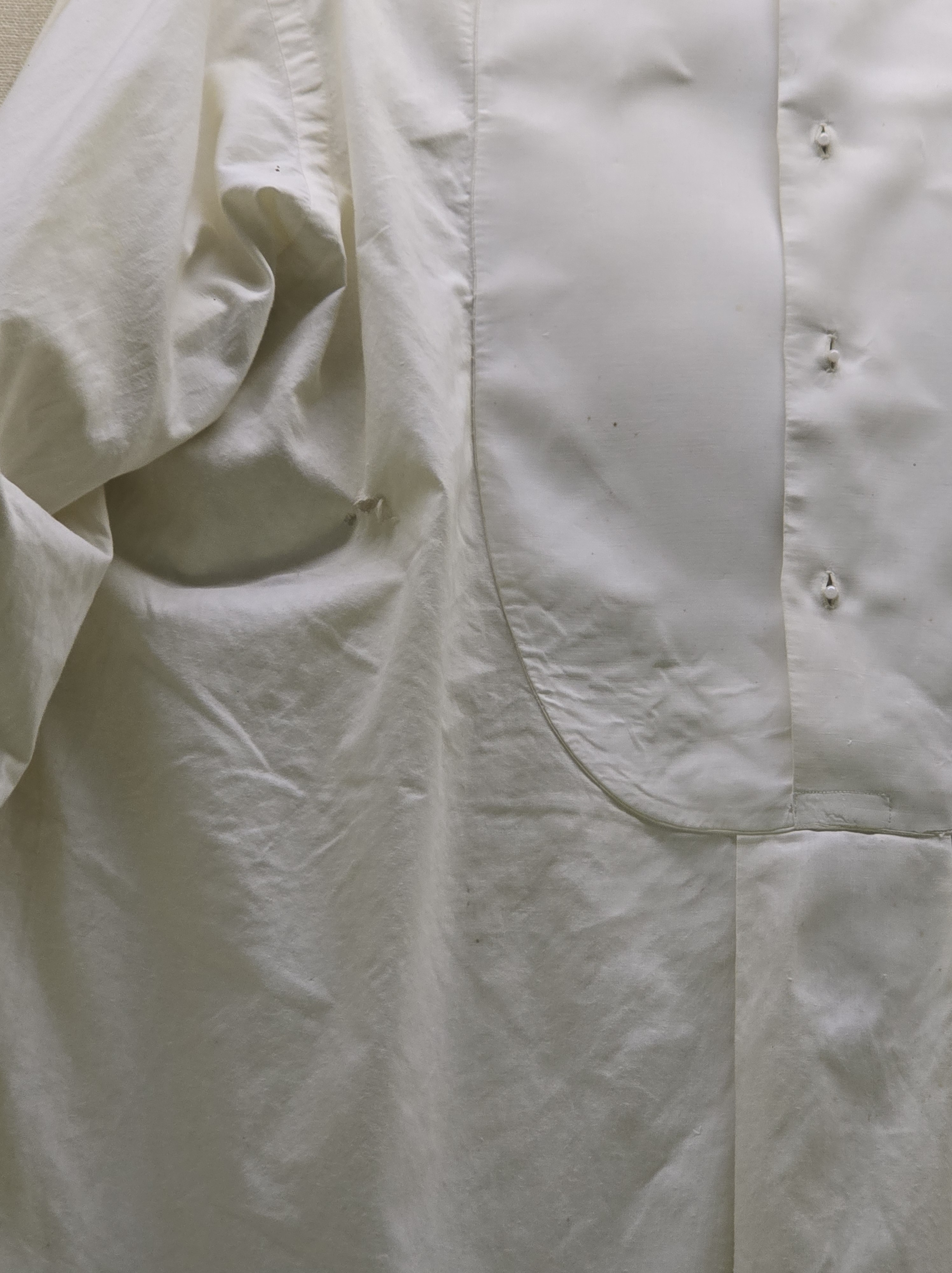

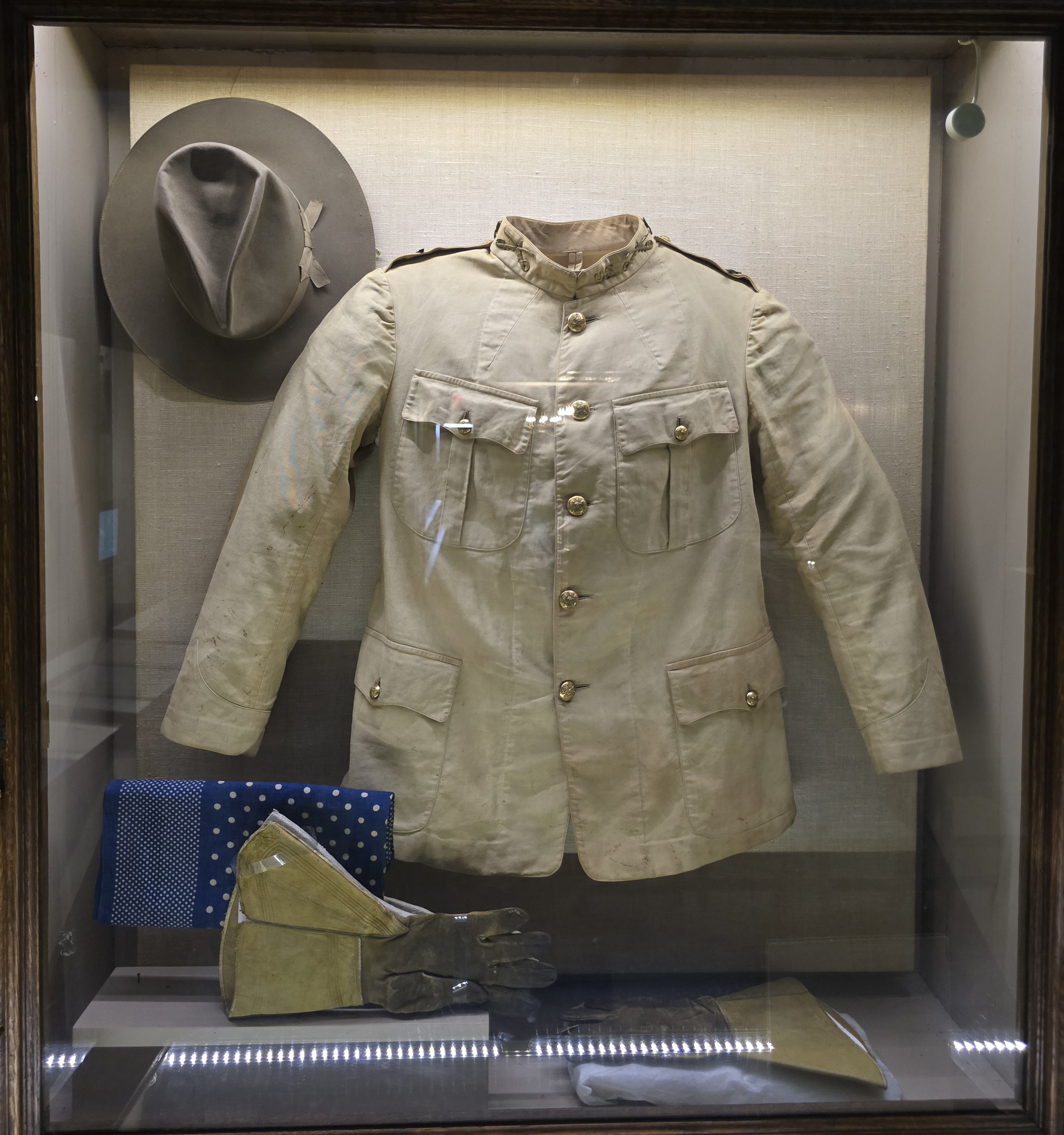
The rangers at the Theodore Roosevelt birthplace were a wealth of knowledge, both about T.R., his family and the home itself. If you’re ever in New York City, I highly recommend checking it out, along with other NPS sites in the city.
Beautiful Day to Stroll in Central Park
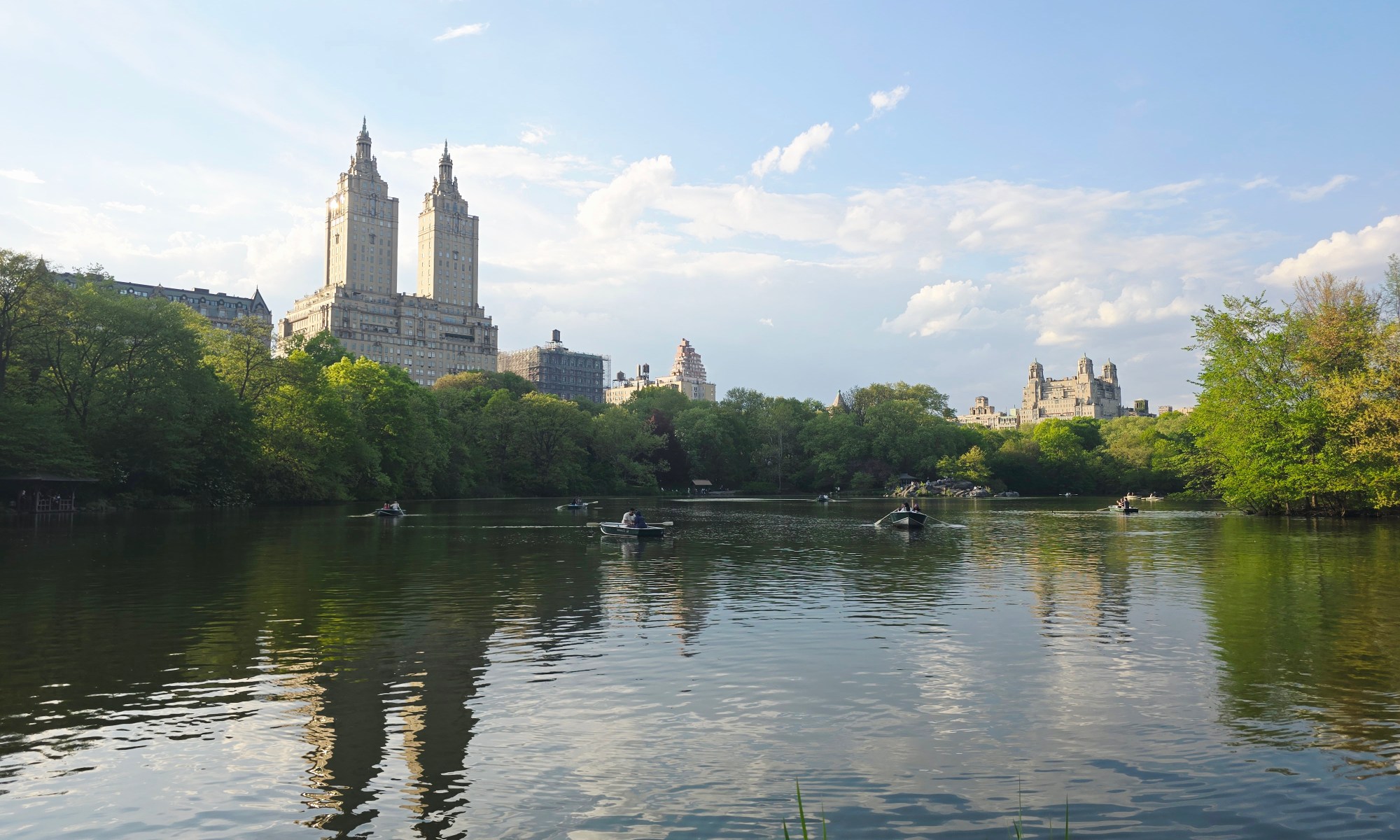
Next stop? Central Park! Spring was in full swing in New York, so I took my time going from the north end at 110th Street at the Vanderbilt gates, all the way to the Bow Bridge near 72nd Street.
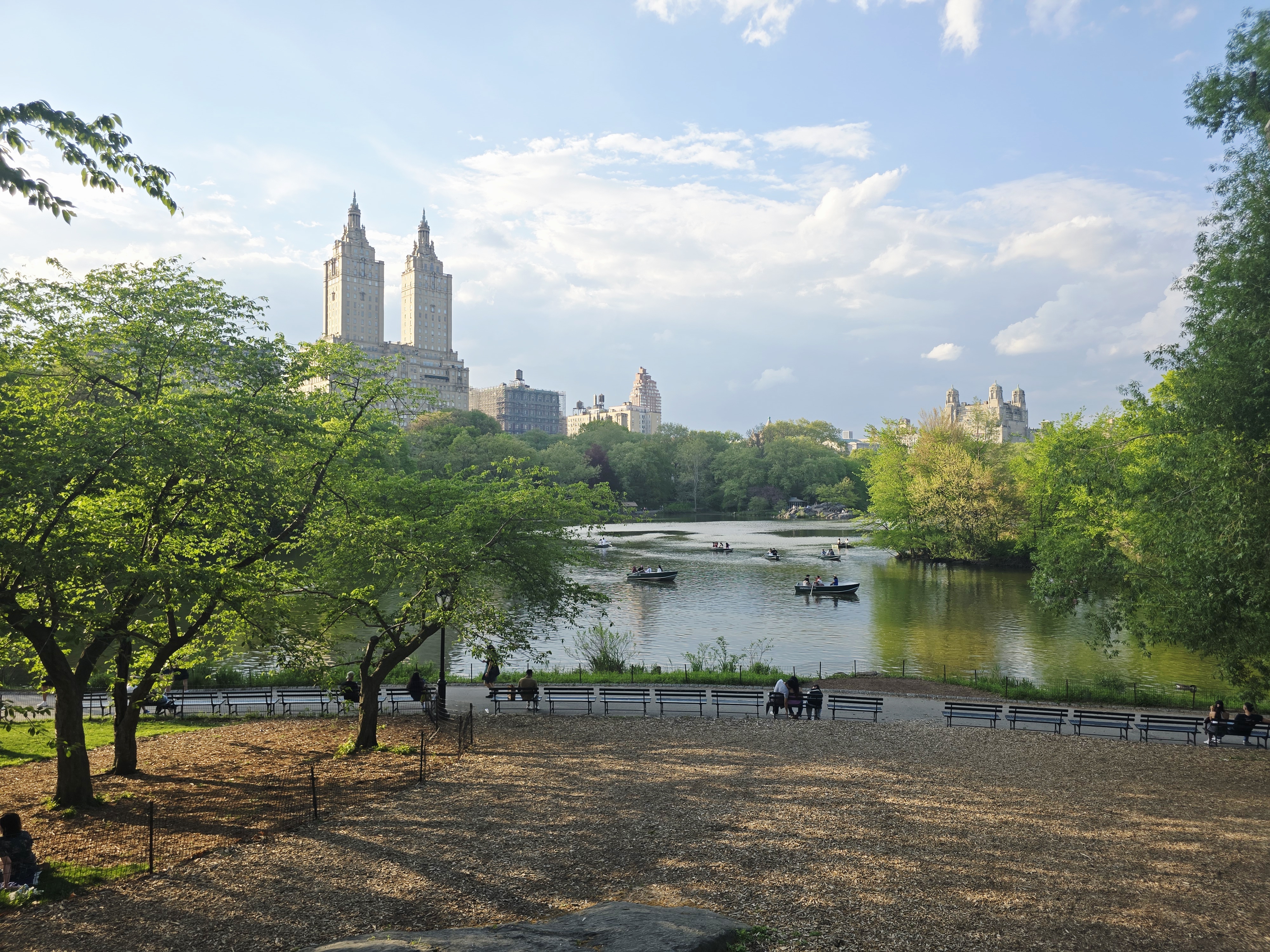
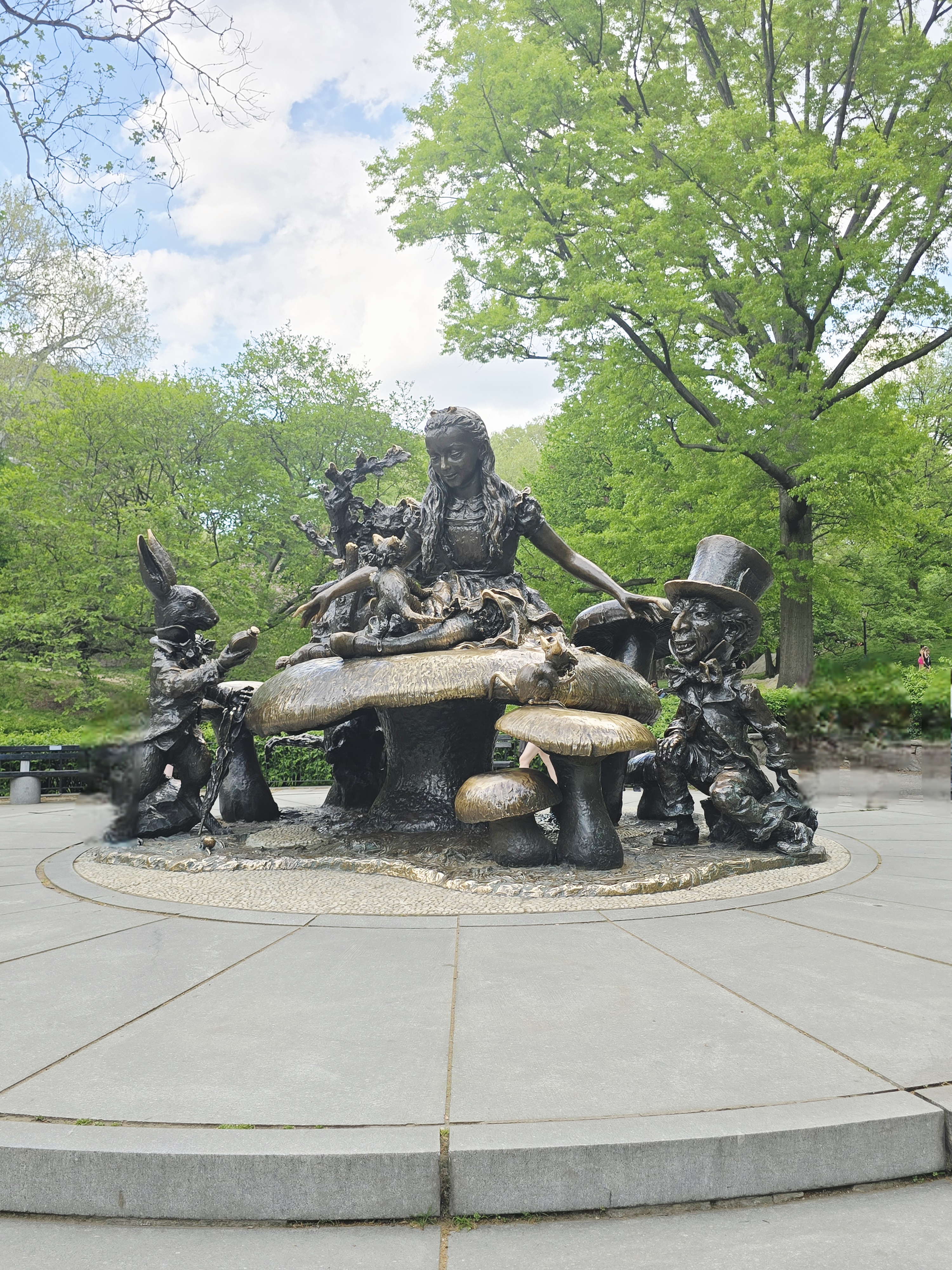


Central Park was first proposed in the 1840s, and a design competition held in the early 1850s. The land was a combination of farmland to the north, and Seneca Village, and settlement comprised of mostly Black free New Yorkers, and some German and Irish immigrants well. Seneca Village was founded in 1825, and destroyed in 1857 for the construction of Central Park. The original 778 acre park was designed by landscape architects Frederick Law Olmsted and Calvert Vaux who won a design competition with what they called “The Greensward Plan”.
The first section of Central Park was opened at the end of 1858. More land to the north was purchased the next year and the rest of the park was completed by 1876. The park fell into decline in the early 20th century, and NYC parks commissioner Robert Moses (maybe my least favorite New Yorker??) cleaned up the park. The Central Park Conservancy was created in 1980 to maintain and refurbish the park.
I walked into Central Park through the Vanderbilt Gate at 105th Street. The gate by George Post, an architectural student of Richard Morris Hunt for for the mansion of Cornelius Vanderbilt II’s mansion which was built in 1883 and located at the southeast corner of Central Park. The mansion was demolished in 1926 and donated to New York City, then installed in Central Park near the Conservatory Garden in 1939.

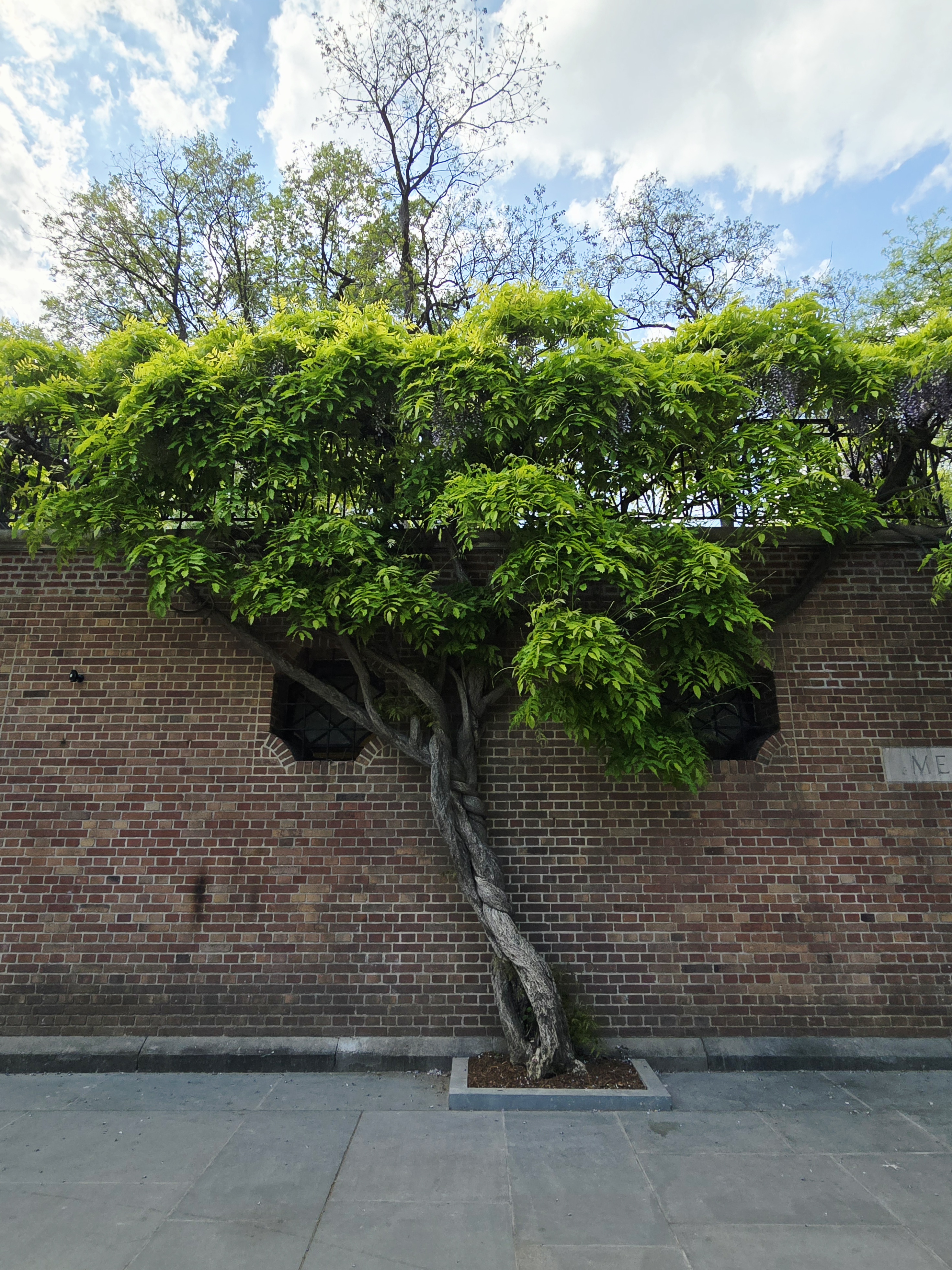
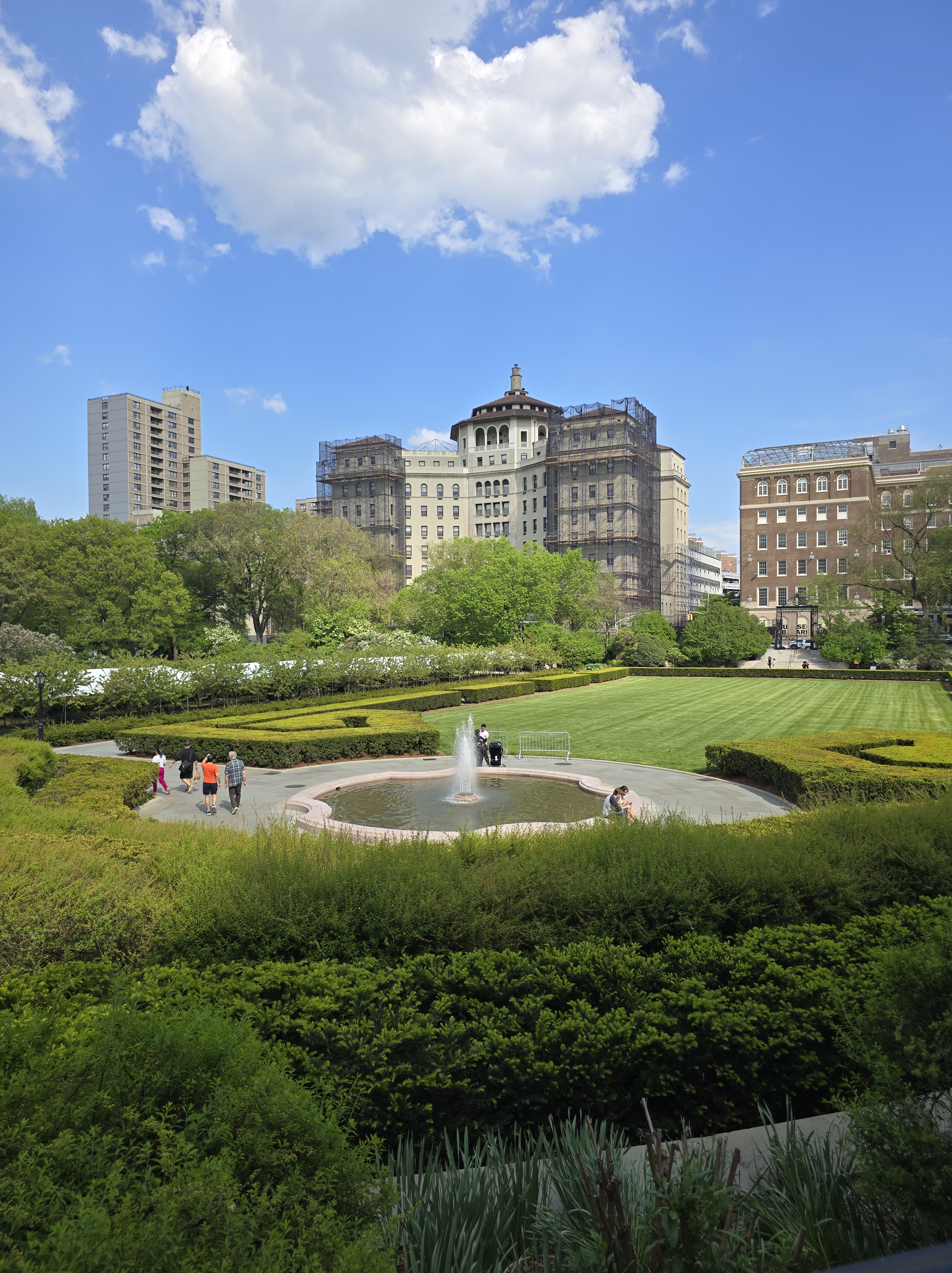
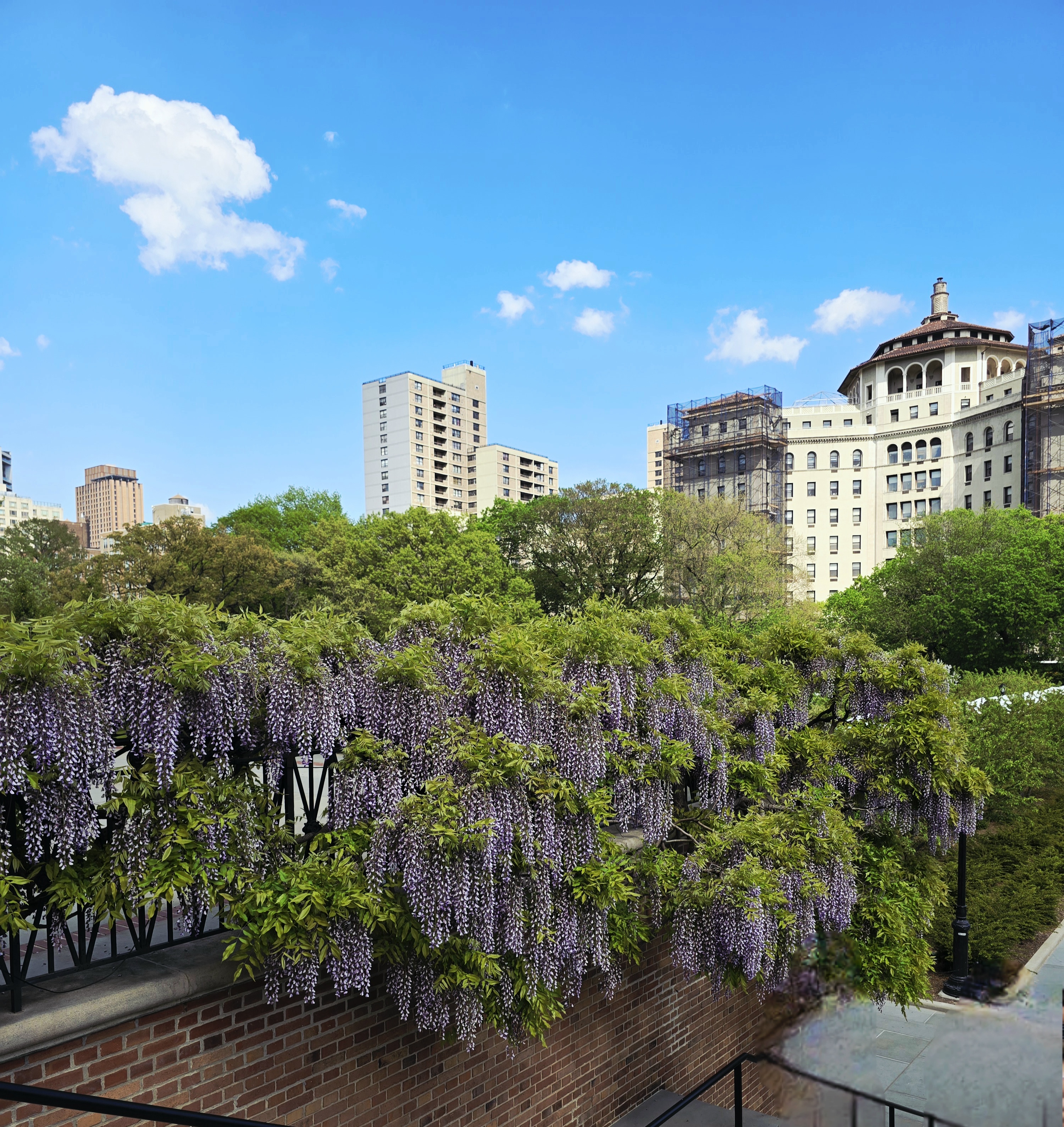
Of all of the bridges I’ve walked over or under the many times I’ve been to Central Park, the Bow Bridge will always be my favorite. The Victorian-era bridge was built in 1862 and stretches 60 feet across the Central Park Lake. It is probably one of the most photographed spots in the park. Other notable arches I saw were the Trefoil Arch, Glade Arch and Greywacke Arch.

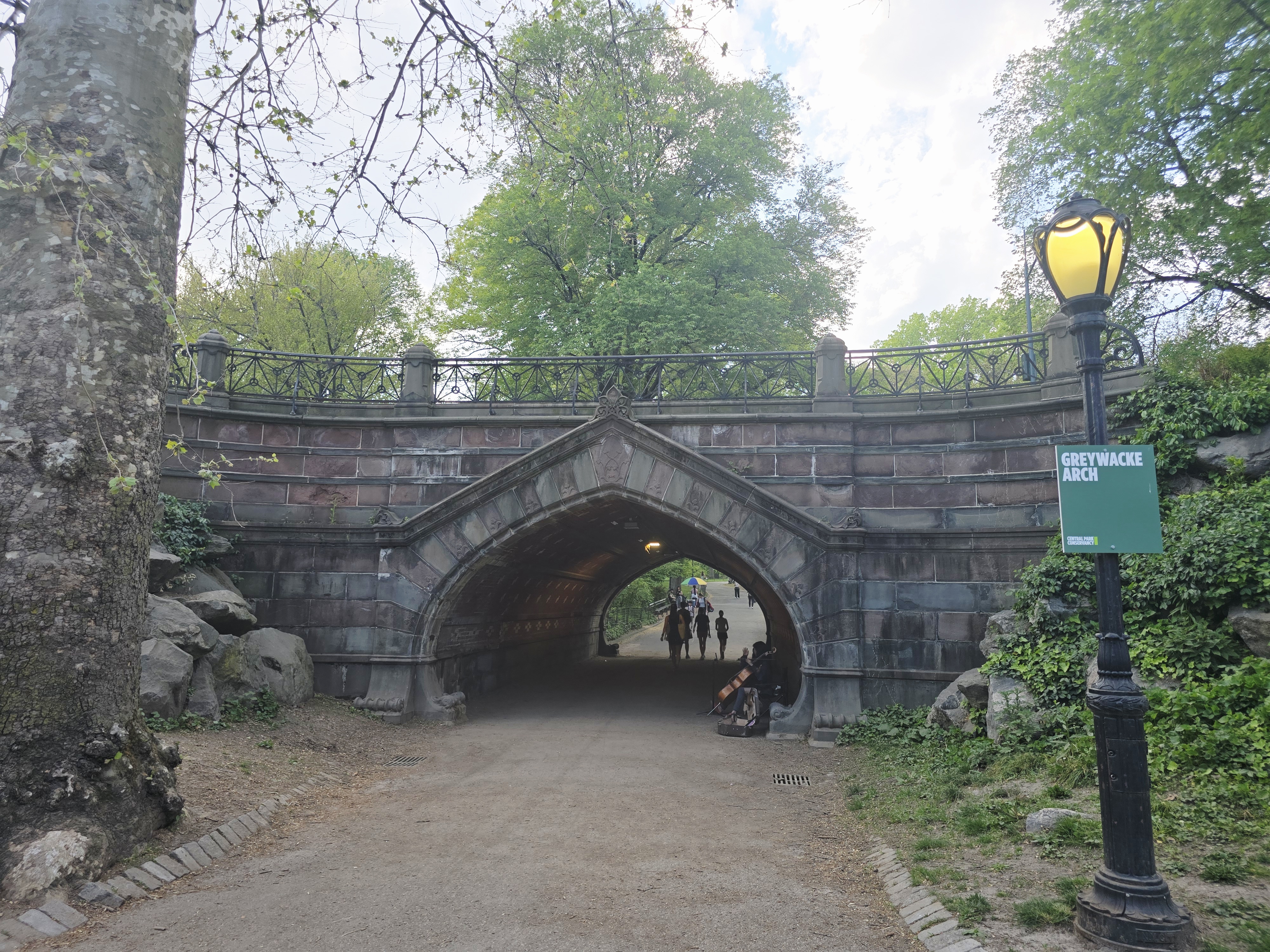

I only had a couple of hours, but I was able to see the Vanderbilt Gate, the Reservoir, many of the bridges, Central Park Boathouse, Bethesda Terrace and finally, Bow Bridge before I jetted off to see yet another Broadway show!

Early 18th Century Architectural & Historic Treasures: Merchant’s House Museum & Hamilton Grange
I took Saturday to explore a few parts of NYC that aren’t huge tourist destinations: the Merchant’s House Museum in Noho and Hamilton Grange in Harlem. Good call, because there weren’t many people at either, and I got private tours of both!


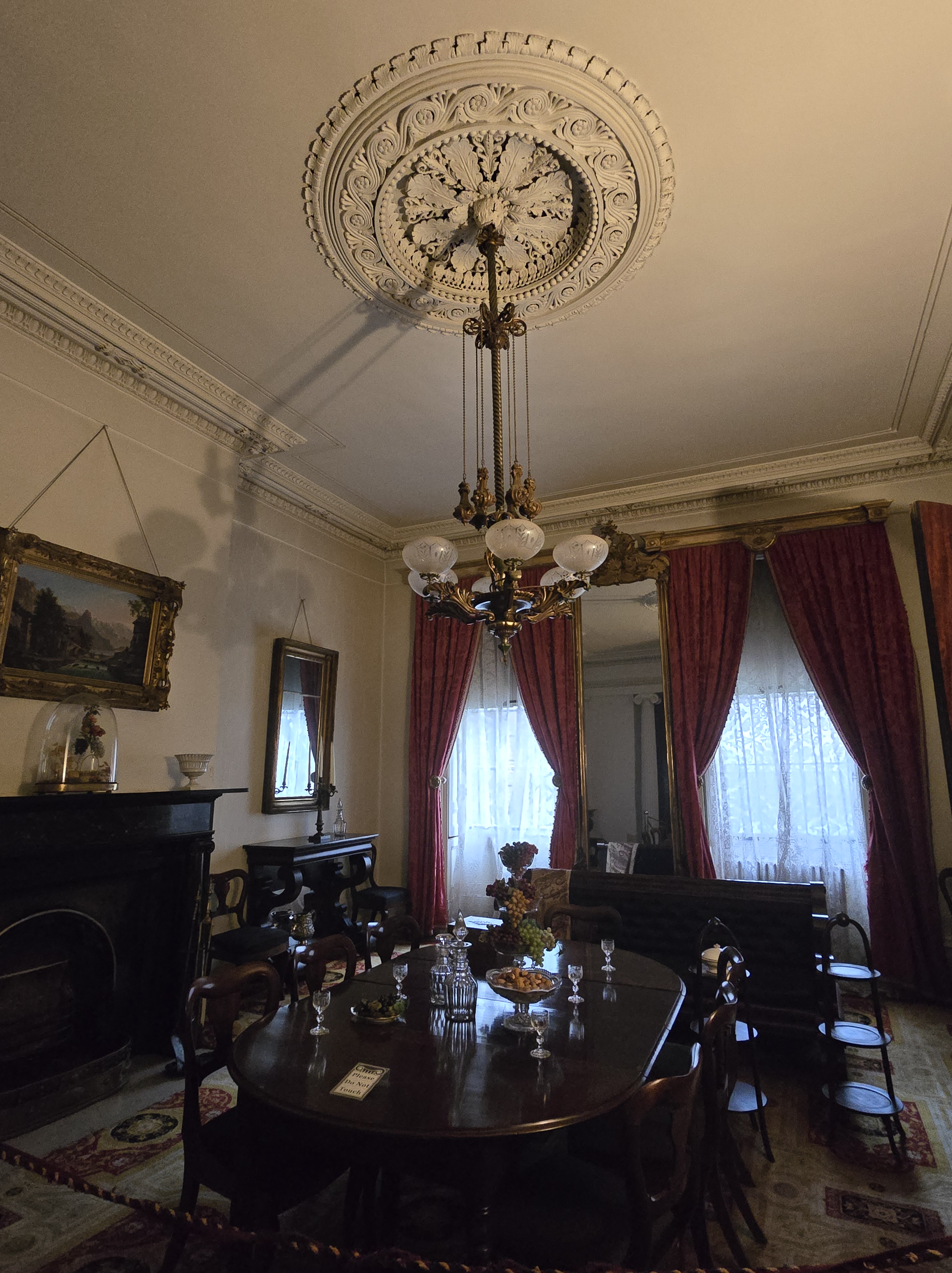
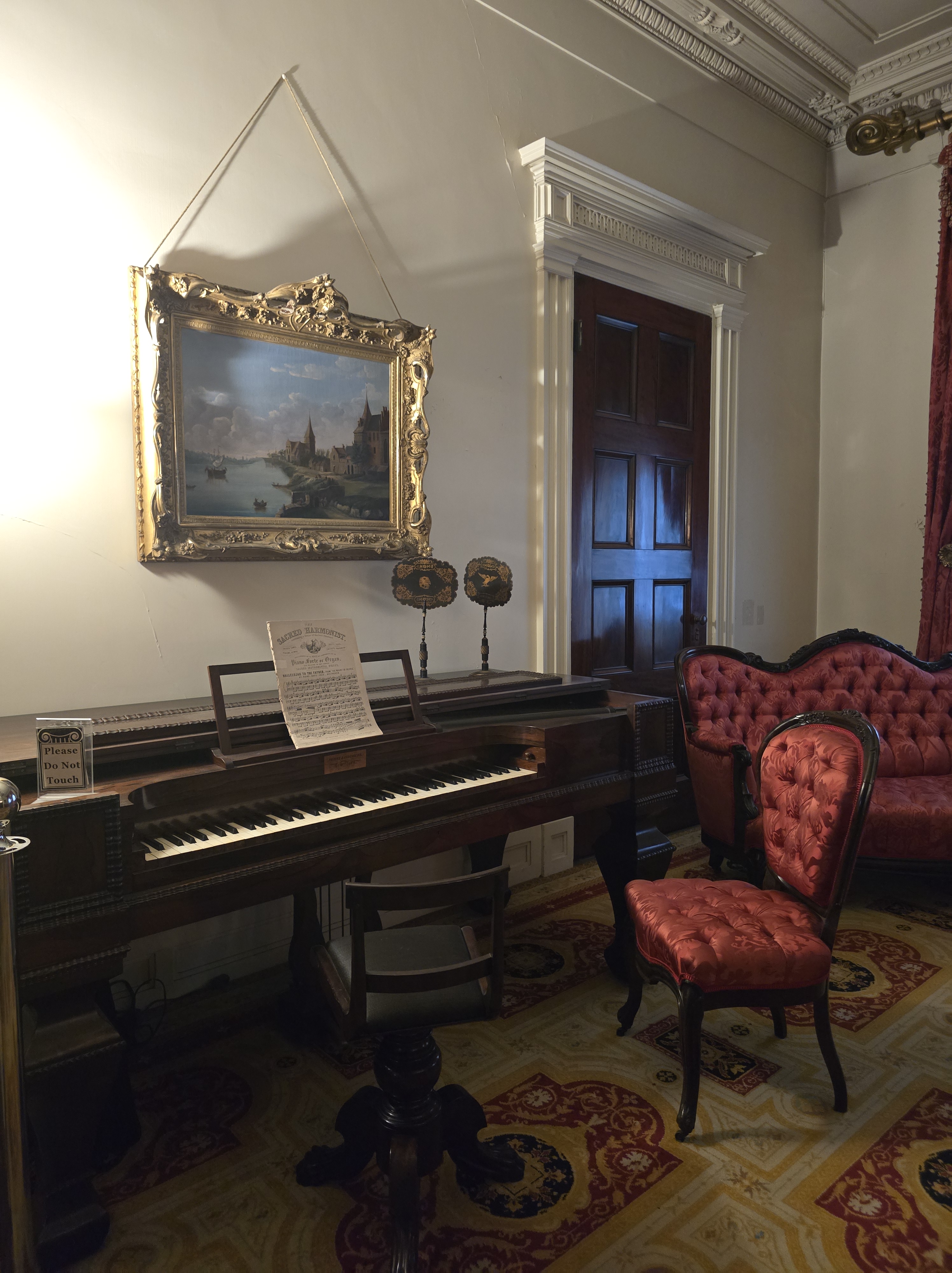
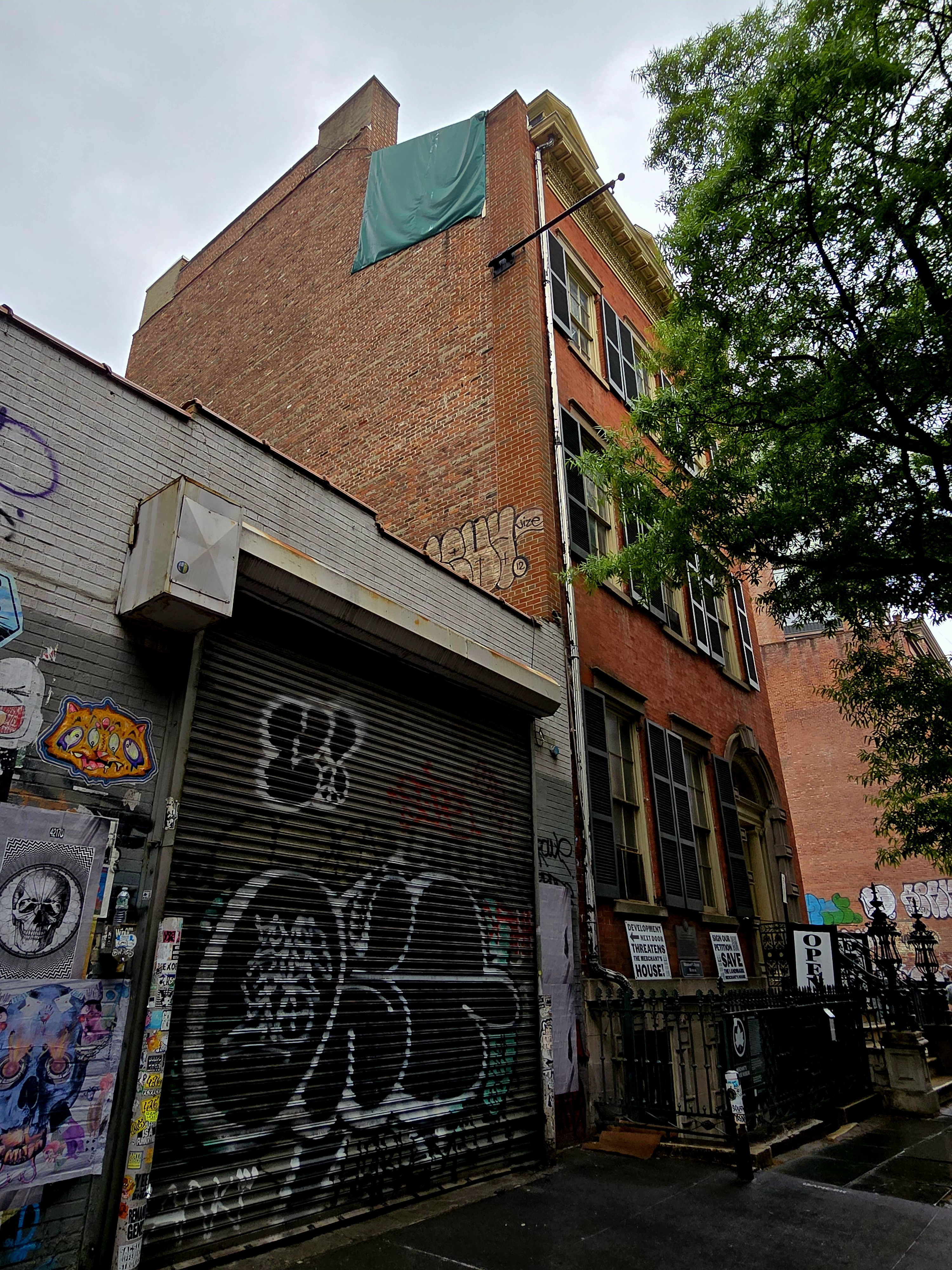
Merchant’s House Museum was built in 1832 in the late Federal and Greek Revival style in the neighborhood that is now mostly the NYU campus. It is the only historic house museum in the Greenwich Village, Soho and Noho neighborhoods, and the only 19th-century residence in Manhattan with the original exterior and interior, including the furniture and art.
It was named Merchant’s House Museum because the first owner, Seabury Treadwell was a wealthy merchant. The Treadwell family lived in this house from 1835 until 1933 after which it was turned into a museum in 1936. It contains the family’s original furniture, and is the only historic house museum in the neighborhood.
The structural integrity of the home and the precious moldings inside are in jeopardy from possible demolition of the garage next door being developed as an apartment building. The building is owned by the city of New York, and operated by the museum Trust. Hopefully the house and decorative elements can be saved if the development happens.

Hamilton Grange: Moving Uptown
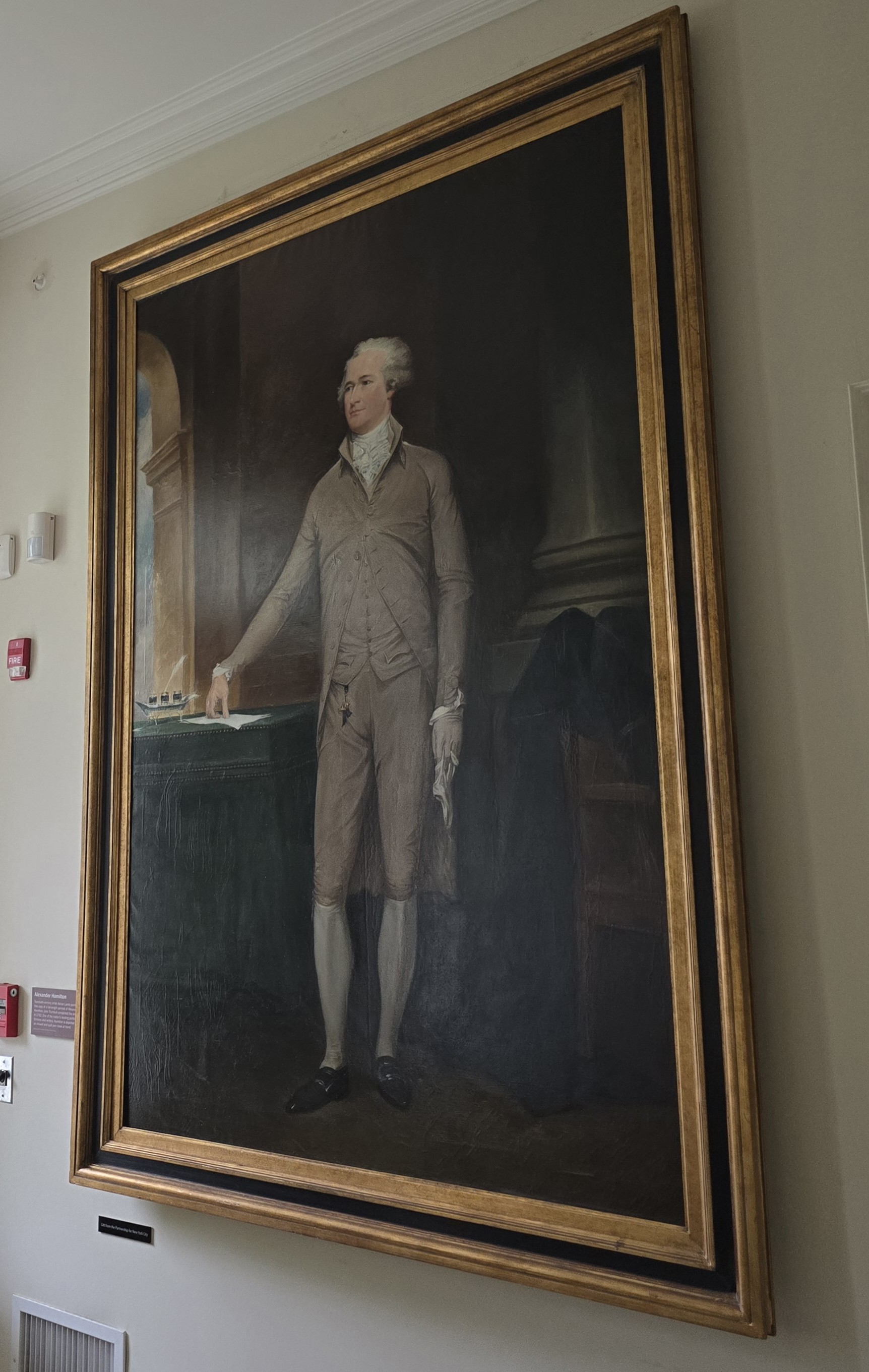
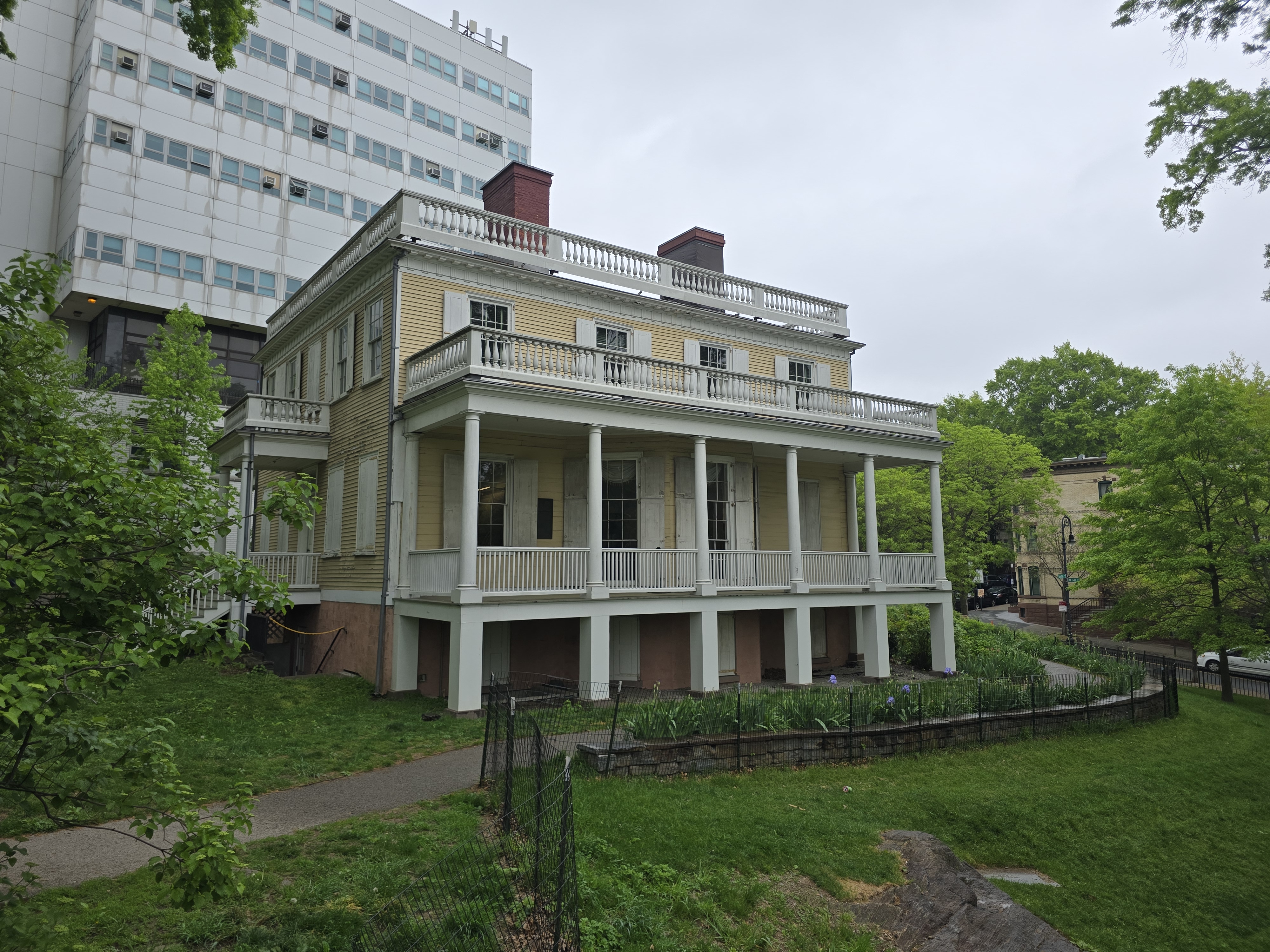
I moved uptown next. Way uptown to Harlem. I’ve been obsessed with Alexander Hamilton way before Lin Manuel Miranda brought him to the stage and made him a cultural star. Along with Benjamin Franklin, he is one of two faces on widely distributed currency who wasn’t a president. Hamilton Grange was built in 1802 near what is now 143rd Street. Hamilton had architect John McComb Jr design the federal style home. Hamilton died just two years later in that ingamous duel with then Vice President Aaron Burr. After the Hamilton family moved out and several other families had occupied it, the land was sold off, and the house moved in 1889 to 287 Convent Avenue to be part of a new church, St. Luke’s Episcopal Church, and again relocated to St. Nicholas Park in 2008.
Moving the house alone was a fascinating story. In 1889, they used horses and carriages to move the house. The 2008 move was much more complicated because the church it served had a small portion built in front of Hamilton Grange. This move involved raising the house two stories high so it could be lifted over the church, after which it was moved to St. Nicholas Park.
Check out the NPS website for more info, and be sure to watch the documentary they created about the move!
Hamilton served as George Washington’s right-hand man during the Revolutionary War and the first Secretary of the Treasury under Washington. The portrait of George Washington by Gilbert Stuart was a gift from William Constable. A wine cooler in the dining room is a replica of the one that Washington gave to the Hamiltons in 1789. The original stayed in the Hamilton family, and was auctioned by Christie’s in 2012 to a private owner for $782,500.

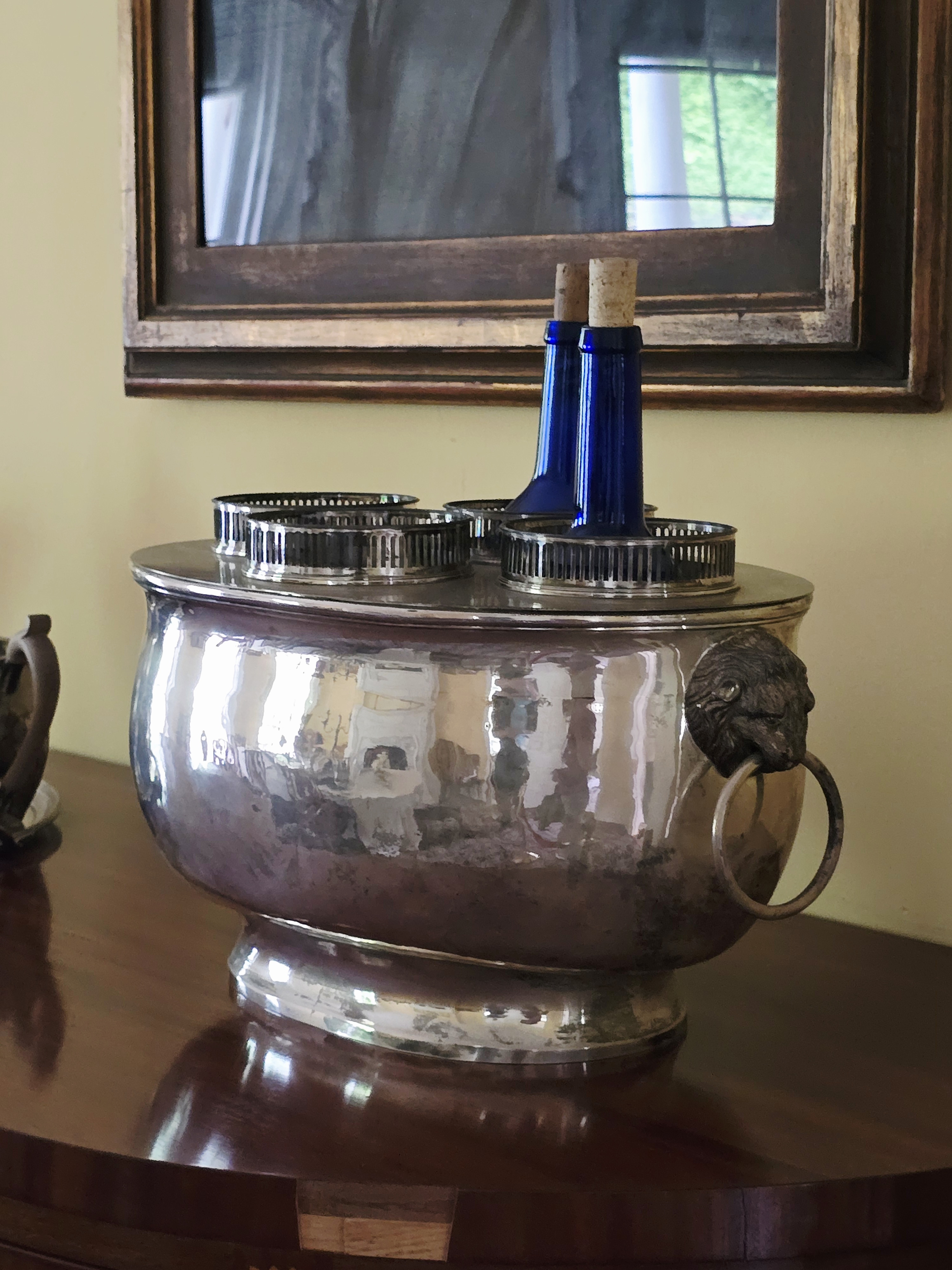


Hamilton Grange is owned by the Department of the Interior and operated by the National Parks Service. The ranger who led my tour was well-versed in Hamilton family history, and shared a lot of the information above with me.
Other Hamilton sites of interest:
- Hamilton Holly Place at 4 St. Mark’s Square served as Eliza’s home from from 1833 to 1842. Her next door neighbor was James Fenimore Cooper!
- Both Eliza and Alexander Hamilton are buried at Trinity Church on Wall Street. I’ve visited the church and graveyard many times, and my hotel this trip was right next door.
Walking Tour of Lower Manhattan
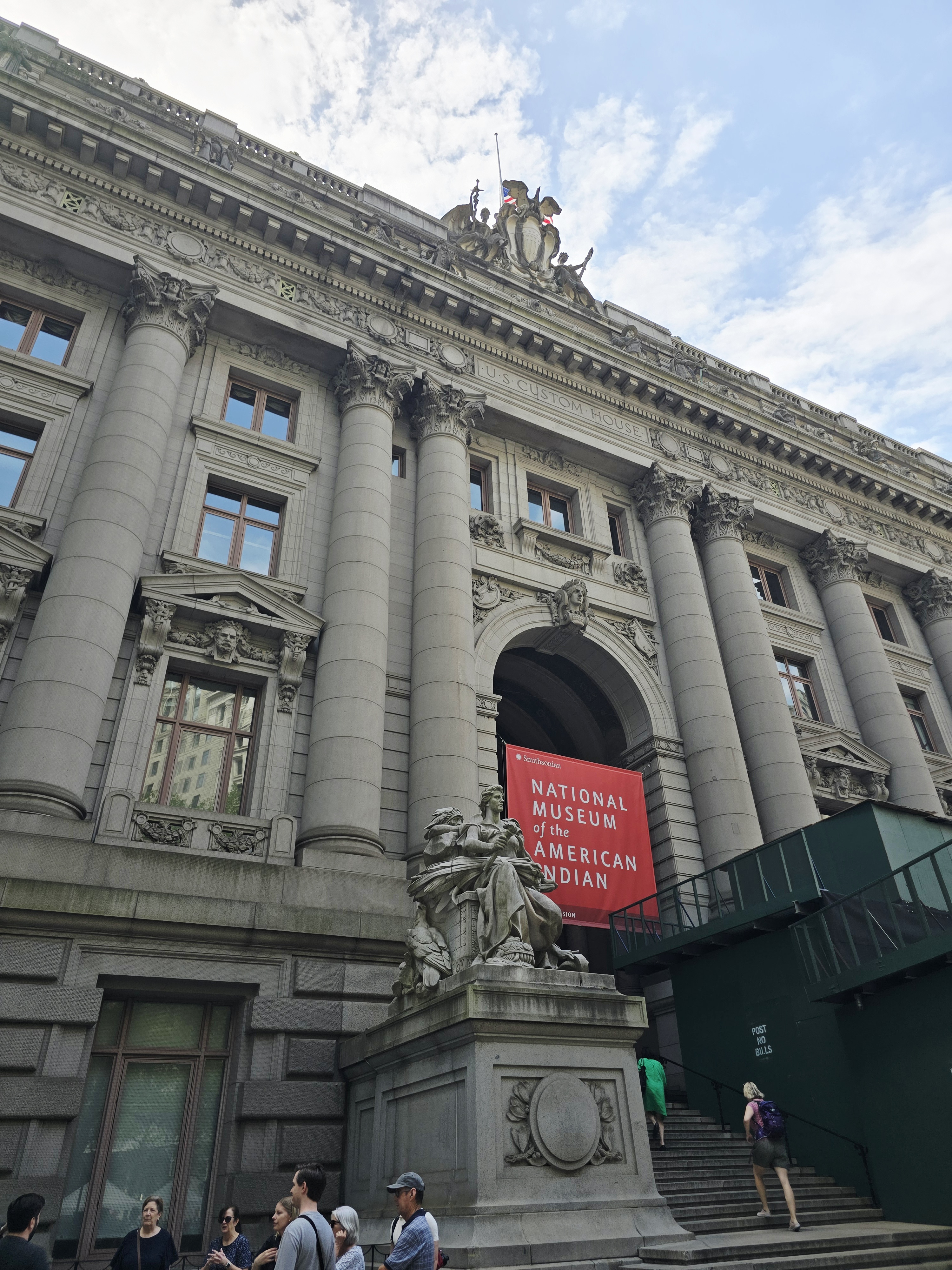
I’ve been following Thomas (Tommy) Silk, a NYC historian on Instagram for a few years now, and was excited that my visit overlapped with his walking tour of Lower Manhattan Sunday. We began at the National Museum of the American Indian which is located inside the historic U.S. Customs House. Tommy walked us through the history, from the known indigenous people who lived in the lower tip of Manhattan to the first white settlers in the area, the Dutch.

We walked down towards Battery Park, where we saw the James Watson House, as well as a bronze relief map of the area to show what it looked like in the 17th century. I’ve been fascinated by the James Watson House since my first visit to NYC in 2008. It astounded me that this 18th century home survived demolition, and it is surrounded by glass-covered skyscrapers.
The James Watson House was built in 1793, and added to until 1806. It is now the rectory of the Shrine of St. Elizabeth Ann Bayley Seton. How did the house of an importer-exporter and the first Speaker of the New York State Assembly become a rectory? When the house was built, State Street was filled with houses of shipping merchants facing the harbor to keep an eye on their goods.
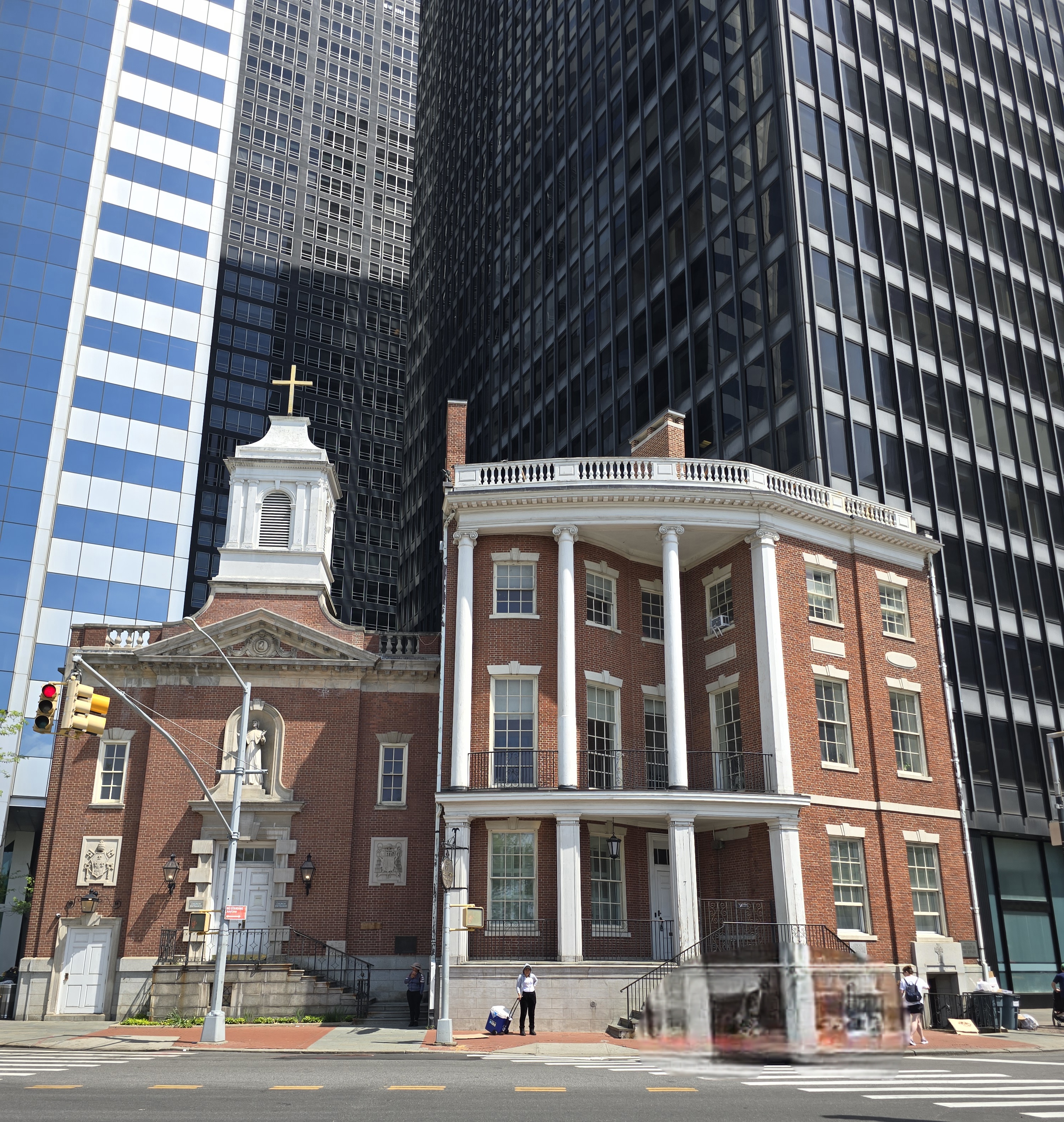
Moses Rogers bought the house in 1806, and combined it with the house next door. This house sat further back than Watson’s, so Rogers added the colonnade to bring the two houses together. The architect for the original Watson House is unknown, but John McCombs Jr designed the house with the colonnade that is next to the church. John McComb Jr also designed the 1824 City Hall and Hamilton Grange, the Harlem home of Alexander and Eliza Hamilton. The new homeowner of the James Watson House, Moses Rogers, was the brother-in-law of Archibald Gracie, who built Gracie Mansion, now the Mayor’s home.
When the wealthy families moved north, the house became offices, and eventually, a boarding house from Irish immigrant women and girls. The Church of Our Lady of the Holy Rosary was built in 1965, and the house became its rectory. The rector is named for Elizabeth Seton, who lived in the James Watson between the Watsons and Rogers families. Seton was the first person to be named a saint from the Americas after establishing the first Catholic girls’ school in Maryland, among other great deeds.
The James Watson House became a New York City Landmark in 1965, and was added to the National Register of Historic Places in 1972. We only spent 10 minutes in front of the Watson House and the bronze relief map, but I couldn’t pass up everything I’ve learned about the house in the past two decades I’ve visited it.
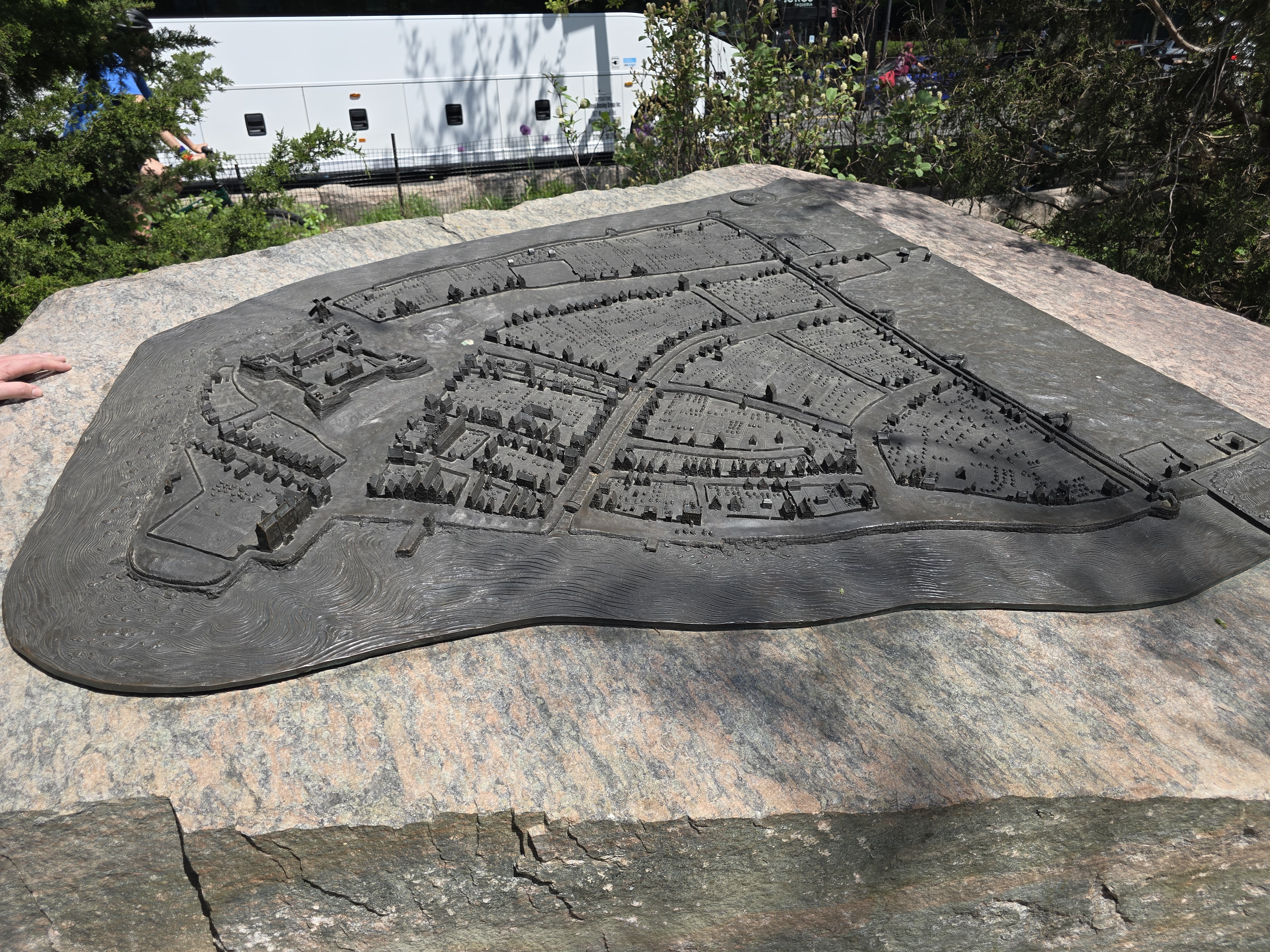


Next, we walked along Water Street. In the 17th and 18th centuries, Water Street ran along the southern shore. They weren’t very creative with the names. The street to the north was Pearl Street which its name from the oyster shells which washed ashore.

On Water Street, Tommy pointed out 55 Water Street, which is owned by the State of Alabama. Wait… what? Completed in 1972, it was then the world’s largest privately owned office building by floor area. The building’s owners were in finanical trouble in the early 1990s, and Retirement Systems of Alabama, who administers the pensions for state of Alabama employees, purchased the building in 1993. And yes, RSA still owns it!
On Pearl Street, we stopped in front of Fraunces Tavern, supposedly the oldest continuously occupied building in Manhattan. Étienne “Stephen” DeLancey, son-in-law of Mayor Stephanus van Cortlandt, built the mansion in 1719. His family sold it to Samuel Fraunces in 1762, and it became The Queen’s Head, and taverns known by other names. The Sons of Liberty, and group of colonists who fought the British, met in the tavern throughout the Revolutionary War. They even had their own version of the Boston Tea Party, dumping tea into New York Harbor. The first Board of Governors meeting for what would become New York-Presbyterian Hospital was held at Fraunces Tavern on July 24, 1771. Then, after the British conceded defeat, George Washington delivered his farewell to the Continental Army officers on December 4, 1783. Quite a history for this building, and we haven’t even gotten to the 19th century.

A number of groups, including the Daughters of the American Revolution sought to keep up maintenance on the building considering all of the historic events that took place here. In 1904, the Sons of the Revolution in the State of New York purchased the building, and brought in William Mersereau, an early historic preservation architect, to undertake a massive historic renovation in 1907. There were questions over the authenticity of some of his renovations like the hipped roof, though the removal of the top floors was deemed to be correct. Fraunces Tavern was declared a NYC Landmark in 1965 and added to the National Register of Historic Places in 2008.
Also on Pearl Street was the site of the first city hall for what was then New Amsterdam, built in 1642 by the Dutch. It was structurally unsafe, and demolished in 1690. During construction on the site, the foundation for the building was discovered. Its location at 73 Pearl Street is marked with a plexiglass cover over the 17th century foundation, but the writing on the plaque was illegible. A site like this deserves more respectable recognition!

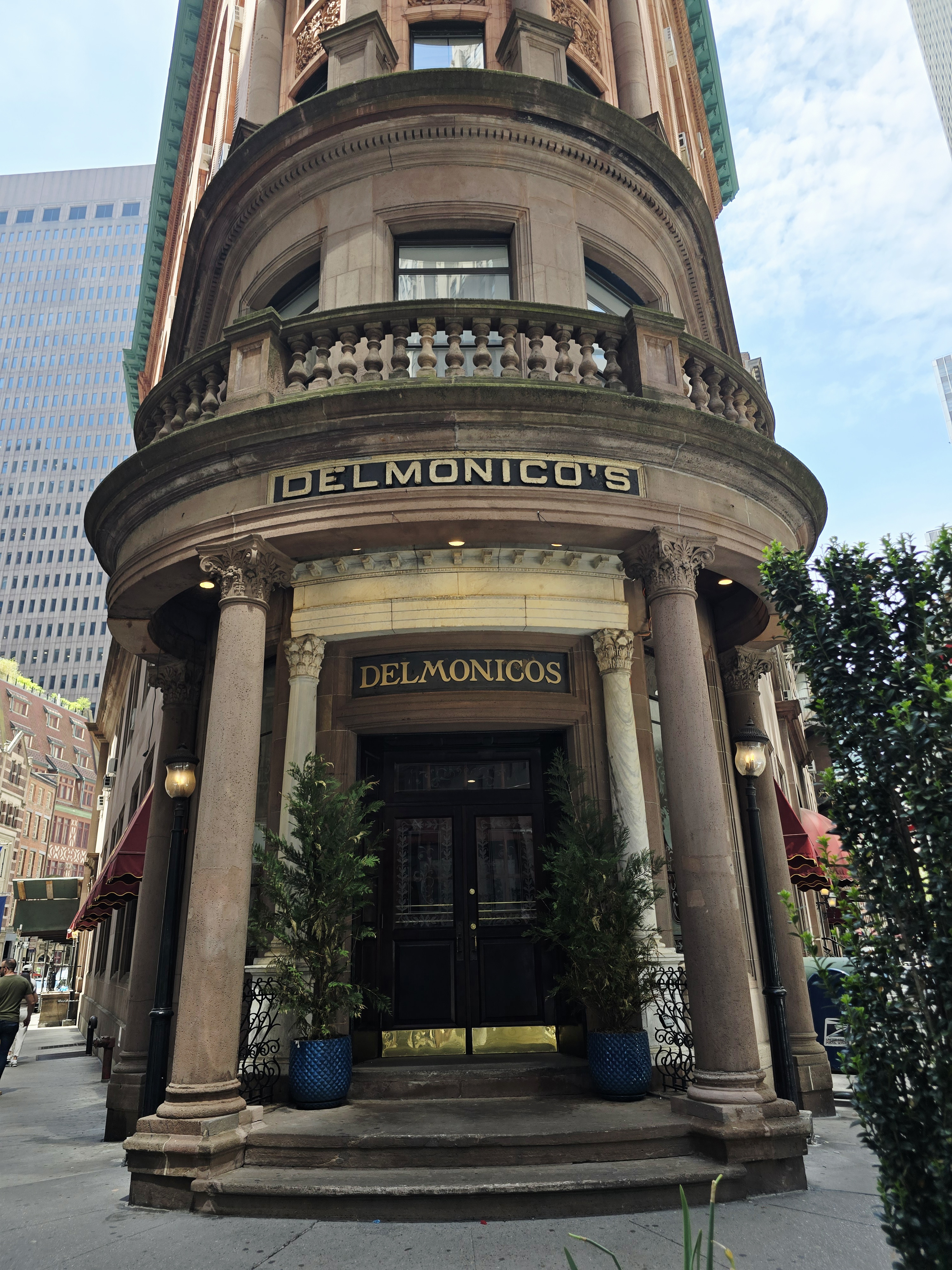
A can’t miss stop was Beaver Street. Like I said, no creativity in street names. Beaver melts were a huge part of the Dutch economy in New Amsterdam, so I guess naming a street after the rodent was in homage to their service. We stopped in front of the current location of Delmonico’s. It was founded as a café and pastry shop bt Italian and Swiss immigrants Giovanni and Pietro Delmonico in 1827 at 23 William Street, and became a world famous restaurant with multiple locations. Delmonico’s under that iteration closed in 1923, and reopened in 1926 under the ownership of Italian immigrant Oscar Tucci at 56 Beaver Street, its current location.


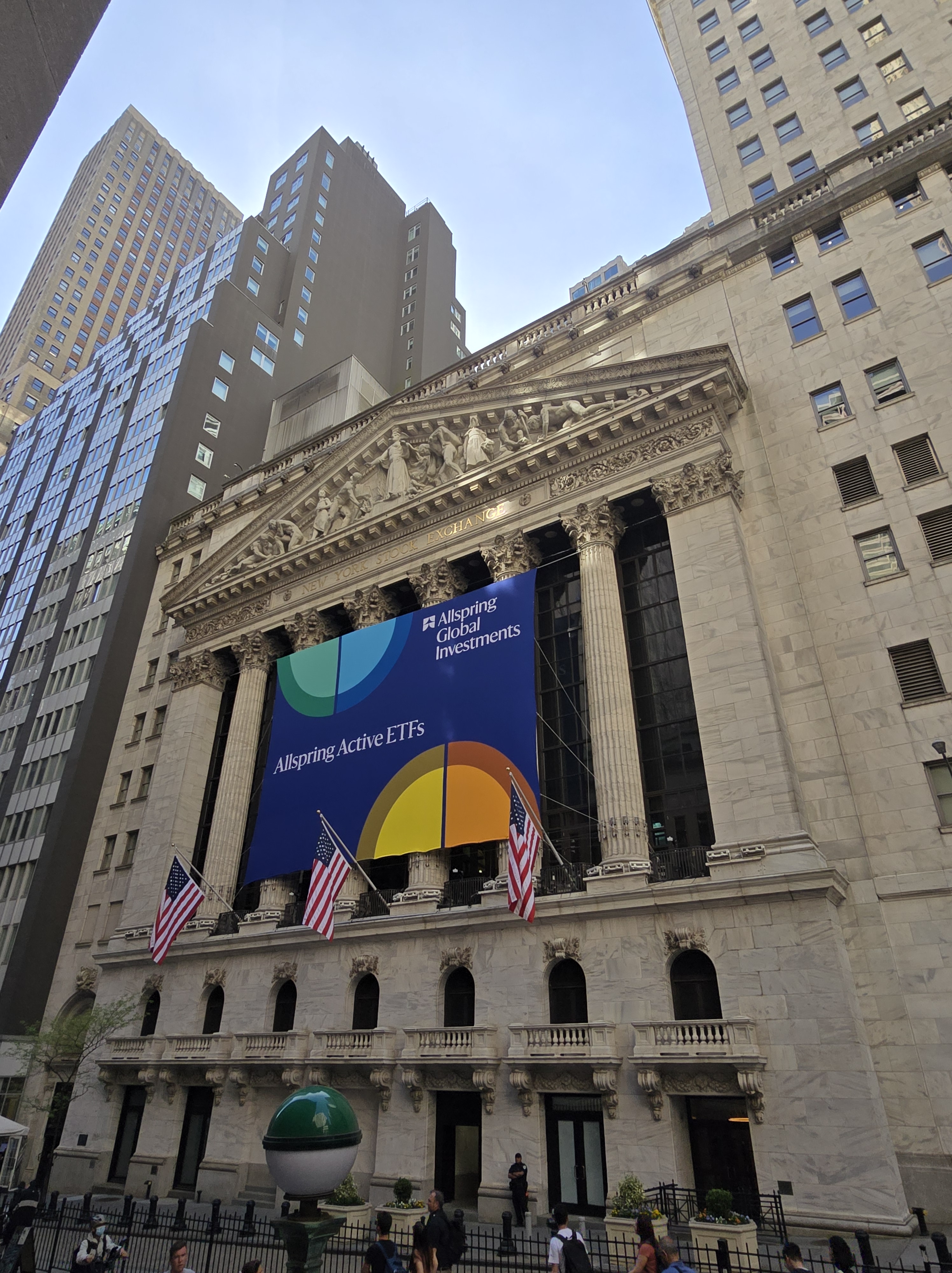
Next stop: We walked over Wall Street, with Federal Hall National Memorial and the New York Stock Exchange on either side, both Greek Revival Federal style buildings. While the NYSE itself was founded in 1792, the building we see on CNBC and Fox was built in 1903 in the Beaux Arts style and designed by George Post. It was designated a National Historic Landmark in 1978.
Federal Hall National Memorial isn’t open on weekends, but my hotel was only a few blocks away on the other side of Trinity Church, so I came over during my lunch break Thursday. The Greek Revival Federal style building on the site was designed by Alcander Jackson Davis and Ithiel Town and completed as the U.S. Customs House in 1842. It then housed the Subtreasury from 1862 to 1925. But before the current structure, another building stood on this site.

The first building on this site was completed in 1703 as New York’s second City Hall to replace the one on Pearl Street. It also housed a public library. It was remodeled into Federal Hall in 1788, and stood until its demolition in 1812. As Federal Hall, it served many functions, including Nee York City Hall, hosting the 1765 Stamp Act Congress before the American Revolution, the first capitol building of the United States under the Constitution, the meeting place of the First United States Congress where the Bill of Rights was adopted, and where George Washington gave his first presidential inauguration.
The National Parks Service runs the museum at the Federal Hall National Memorial, and gives a thorough history of Lower Manhattan, and other key federal structures in the area. The foundations of the original City Hall and Federal Hall building area located in the basement of the current structure. A statue of Washington was erected on the steps in 1883, and you can even see the platform Washington stood on to give his speech inside the museum.


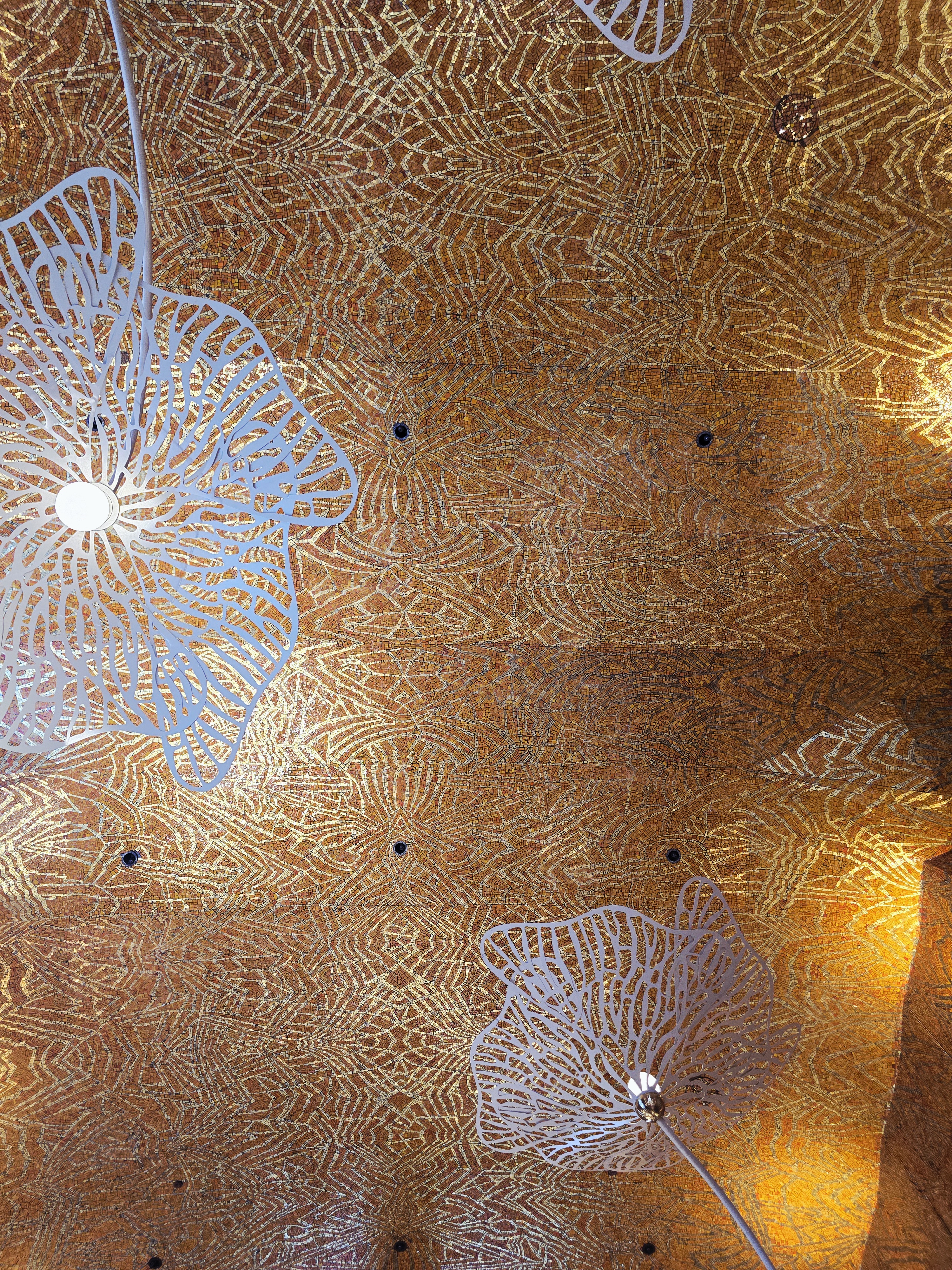
I had walked by 1 Wall Street a few times during this trip, but didn’t think the fancy French store, Printemps, had anything for me. Tommy took the tour group inside and told us about the history of the building. The building was designed by Ralph Thomas Walker of Vorhees, Gmelin and Walker in the Art Deco style, and built between 1929 and 1931 for Irving Trust, an American bank. The exterior of the building was beautiful with its inverted Art Deco windows. We walked into the original lobby known as the Red Room, with brightly colored mosaics. Of course, the Red Room is now the shoe department for Printemps.


We walked up to Trinity Church and along Broadway as Tommy explained how the Equitable Building built between 1913 and 1915, contributed to a lack of sunlight reaching the streets and lower levels of buildings. Other buildings had achieved similar results before, but apparently the Equitable Building was the last straw. The city in turned changed its building and zoning laws, including establishing setbacks, in thr 1916 Zoning Resolution. The Equitable Building was designated a National Historic Landmark in 1978 and a NYC landmark in 1996.


We walked over to the City Hall and Municipal Buildings. The third City Hall was built between 1803 to 1812, designed by Joseph-François Mangin and John McComb Jr. (of James Watson House and Hamilton Grange fame) in the French Renaissance Revival on the outside and Georgian Revival inside. The 1812 City Hall building is still used to this day. It was added to the National Register of Historic Places in 1966, and to the NYC Landmarks in 1966 for the exterior and 1976 for the interior.
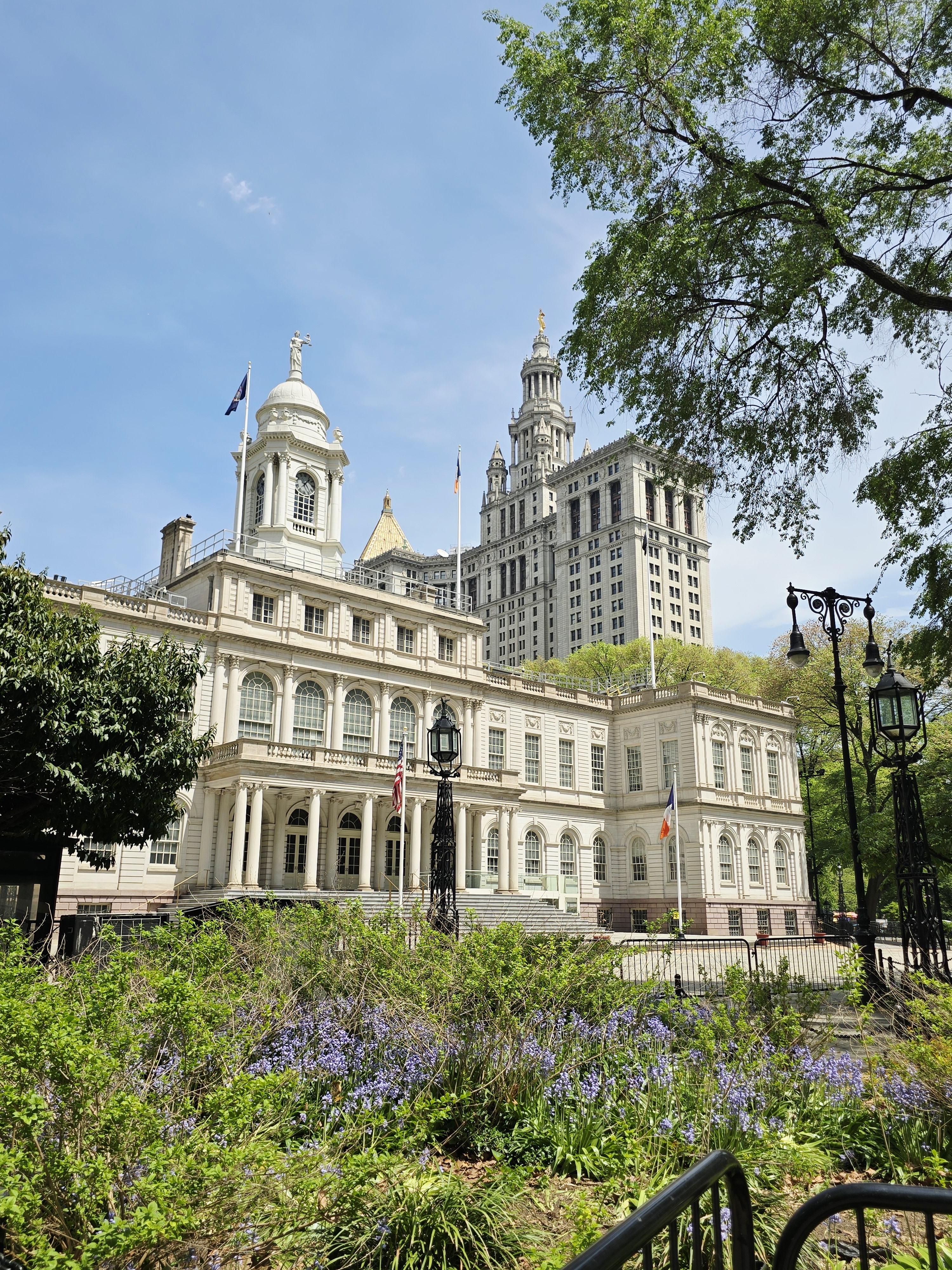


We walked by the Municipal Building, which was built after the five boroughs were incorporated in 1898 and the new government ran out of space in the existing City Hall. The Municipal Building was designed by William Kendall of McKim, Mead & White and built between 1909 to 1914. The style is a combination of Roman Imperial, Beaux Arts and French Renaissance, and was at the tail end of the City Beautiful movement in New York.
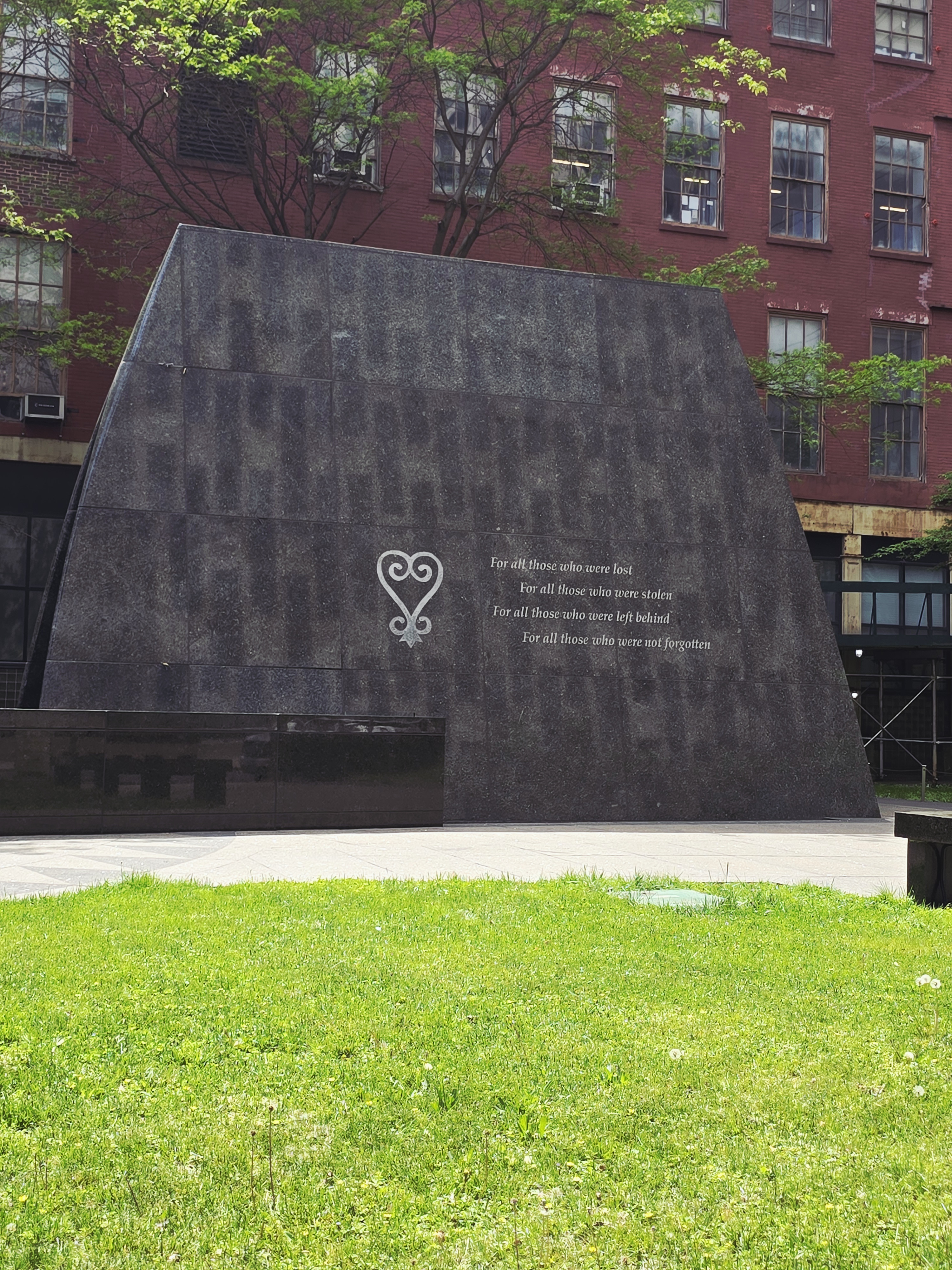
Our last stop of the walking tour was the African Burial Ground National Monument. From the 1690s to 1794, somewhere around 15,000 enslaved and free Africans were buried here, both during Dutch, British and American rule. The remains were discovered during the construction of a federal building in the 1990s. The monument is hard to find because it’s surrounded by federal buildings, and it’s on a side street, so you have to walk around to find it, and it is very intimidating with road barriers set up everywhere. Appropriate, but this is where they they were buried, long before the federal buildings and most of these streets existed.


The entrance is meant to resemble the hull of a slave ship, dark and desolate. Genetic testing was performed on some 400 of the 15,000+ remains, and some of their genders and approximate ages are inscribed in this labyrinth path in the memorial. The monument was a haunting reminder that while history isn’t always pretty, it is important to remember what happened, and not just erase it.

 Sravanthi Meka