I visited Hearst Castle as the summer of 2007 started. I had just finished MBA school, and would start a new job a week later, and took my first solo trip ever, up and down the California coast. Hearst Castle was on my must-see list after watching countless episodes of America’s Castles on A&E. Coincidentally, I had just watched Citizen Kane for the hundredth time before that trip, so I kept drawing parallels in my mind between Kane’s Xanadu and Hearst Castle. I don’t like Hearst’s yellow journalism tactics, but he had a keen eye for art, architecture and the antiquities that I can appreciate.
After almost 20 years, I decided I was due for a return trip while on the coast for a work trip, and it was just as beautiful as I remembered. This time, I took two days to explore and did every tour they offered — five tours over two days. My tour guides were Spencer, Terrence, Lynn, Kim, Kevin and Richard and special thanks to the ticket rep, Renata, for booking all of the tours to maximize the time I had. My wallet is more open to all five tours now, but my body regrets all those stairs!
The History of the Hearsts
In 2025, you would pay $50,000 per acre in this area. George Hearst paid 75 cents per acre in 1865 when he bought his first 40k acres, which was along the coastline. George Hearst bought the land from the Pico family, Mexican vaqueros who lost money during droughts when their cattle couldn’t graze. The Hearst family would camp here in elaborate tents with all the comforts their wealth could provide. Hearst continued to operate the property as a cattle and horse ranch.
The property totaled 250k acres at its height which the Hearsts continued to purchase in the Santa Lucia Mountains and to the northeast of the inherited land. Hearst called it his little ranch because he had a million acre ranch in Mexico. It is currently 83k acres, and the state park portion is 270 acres, while the family owns the remaining 82+k acres. The family-owned portion is still a working cattle farm. The Hearst family donated the land around the castle to the state in 1958, and in return, they don’t have to pay taxes on the land they still own. The Castle property is self-reliant, providing income for the state of California.

During its height, the property stretched 37 miles all around Hearst Castle – to what is called the double hump mountain. The Hearst family still comes to visit, and they can land one of their two jets on the runway that replaced the one that William Randolph Hearst originally built, which is still visible on the drive up the mountain. The original runway is located where the visitor center is now. The largest jet to land on the Hearst Castle runway? Malcolm Forbes’ 727. The Hearst family had a wedding here in 2024 that was featured in Town & Country magazine, owned by Hearst Media, of course.
While George Hearst made his fortune in silver and copper, and later, cattle ranches, his son W.R. Hearst built his empire in publishing. George had purchased the San Francisco Examiner in 1880, and W.R. Hearst took over ownership of the still failing newspaper in 1887 when his father was elected to the U.S. Senate. This paper, along with much of Hearst’s fledgling publishing empire based its success on “yellow journalism” or sensationalized stories and headlines to increase sales, or what we call “fake news” now.
W.R. Hearst Takes Over San Simeon Property
After George died in 1891, the San Simeon property went to Phoebe Hearst, and then to William after his mother’s death in 1919. Construction on the first cottages and Casa Grande began in 1920. Hearst was heavily inspired in his design choices by a 16-month ‘European tour’ that he and his mother, Phoebe, took in 1873 when he was 10 years old. They visited the British Isles, Spain, France, Italy, Switzerland, and what is now Germany. Hearst worked with Julia Morgan, California’s first registered female architect, who had already worked with Phoebe Hearst to design Hacienda del Pozo de Verona in Pleasanton and the Asilomar Conference Center for the YWCA on the Monterey peninsula in 1913, and with William Randolph Hearst on the Los Angeles Examiner Building in 1914. See my previous post about Julia Morgan here.
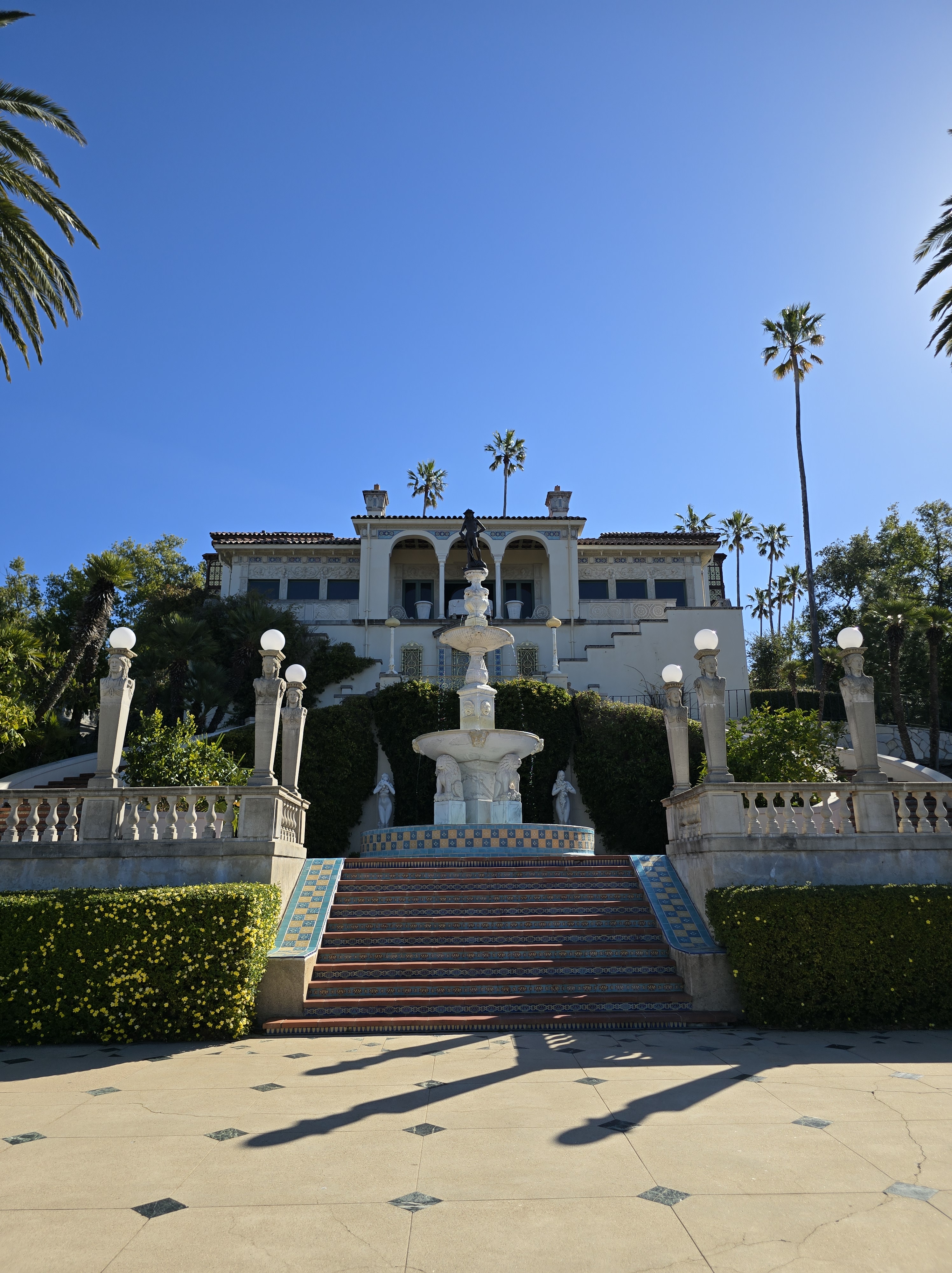
Hearst originally called the property The Ranch at San Simeon, and later La Cuesta Encantada, or The Enchanted Hill. The exterior is a mix of Southern Spanish with lots of Moorish influence and Italian Renaissance. The inside is Spanish Moorish, Italian Renaissance, plus Gothic Revival along with heavy influence from all of the antiques Hearst purchased, like Persian tapestries and Indonesian woodwork. La Cuesta Encantada became Hearst’s primary home in 1928.
Everything was done intentionally. The road up to the castle was built so that your views alternated among the coastline, the hills, and the castle. Several rooms were designed and built to accommodate antiquities that Hearst acquired, like ceilings, tapestries, and fireplaces. Bedrooms and loggias were situated to capture the best views.
La Cuesta Encantada was built for entertaining first and foremost. Guests could swim in the Neptune pool or the indoor Roman pool or play tennis on the court located ABOVE the Roman Pool. Sleeping in was frowned on, but congregating was celebrated. Spaces were designed to be enjoyed in the company of others. Visitors included Charlie Chaplin, Calvin & Grace Coolidge, Cary Grant, Winston Churchill, Charles Lindbergh, the Marx Brothers, Hedda Hopper, Walt Disney, and Greta Garbo, among many others.
The Grounds
While outdoors, you could go horseback riding, a favorite of Hearst, or visit the zoo animals. Yes – he had a zoo. Didn’t every wealthy man of this time? See Asa Candler Jr, or Buddie Candler, in Atlanta. Hearst had lions, tigers and bears, and of course, kangaroos and elephants. These were all given to zoos in San Francisco and San Diego in 1937 after he experienced some financial issues. He also imported Sambar deer from India, aoudads, more commonly known as Barbary sheep, and zebras, all of which still roam the property.
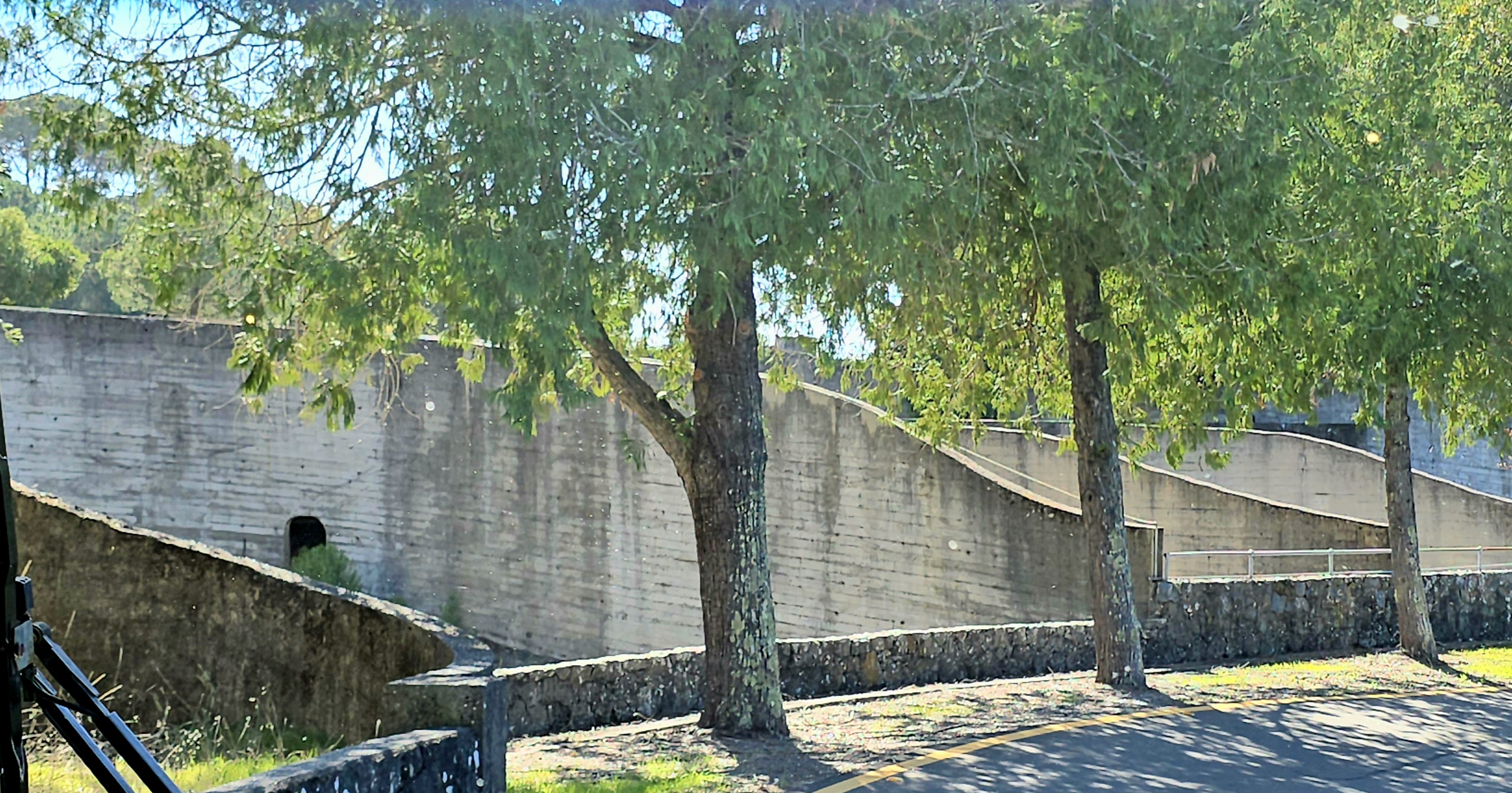
If you went horseback riding, you could be gone for a couple of days. The hardiest of riders would go to the edge of Hearst’s property where he had yet another cabin built. This cabin is on the land that the Hearst family still owns, and I was told that they still use the house!
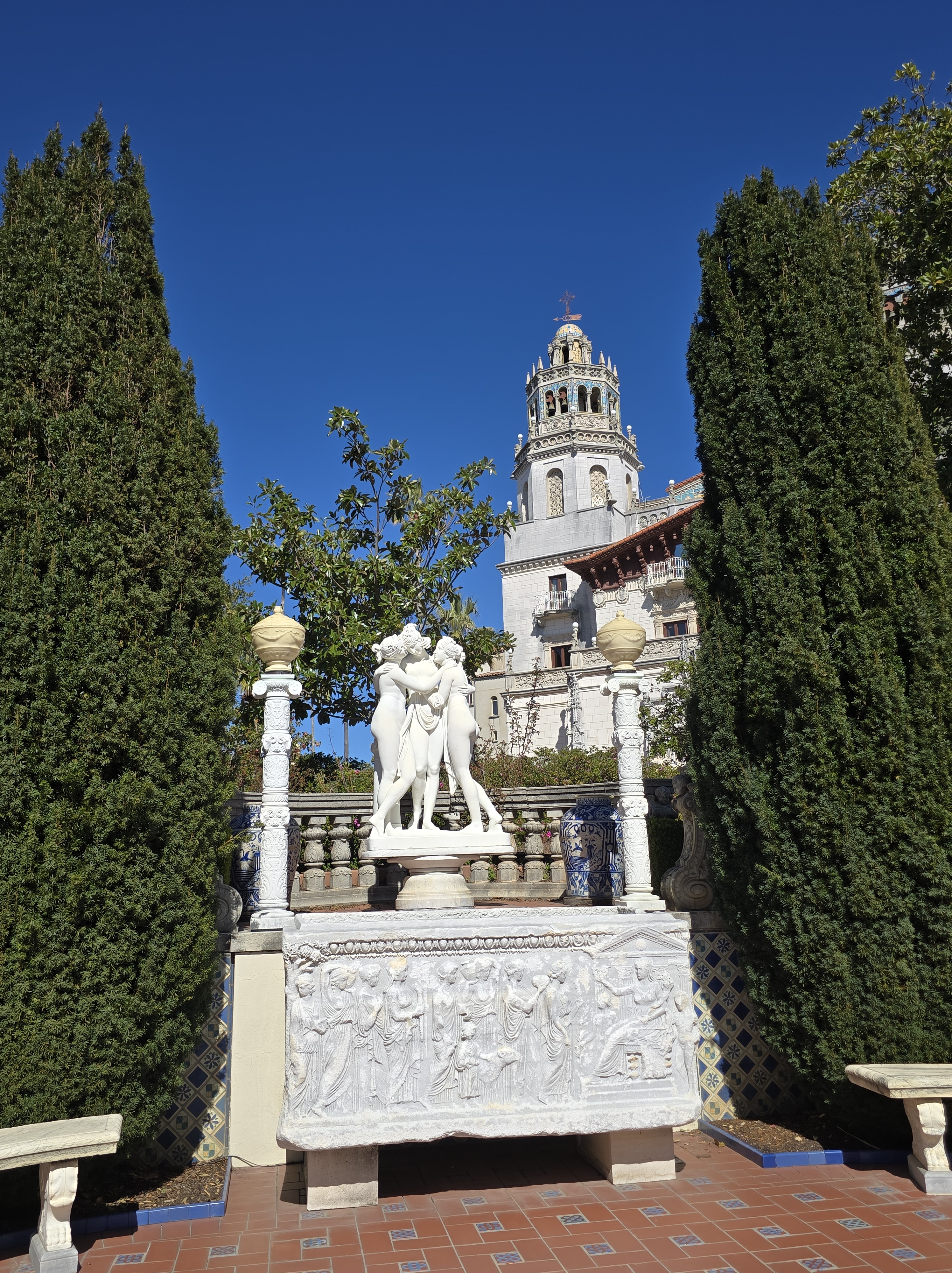
Statuary is placed throughout the grounds, including sarcophagi, statues, and fountains. The Egyptian statues are made of diorite, which is harder than granite, but not as hard as diamond, of course. Hearst bought the statues from Egypt. Egyptian and European governments were still reeling from WWI when Hearst was buying up antiques, and they sold these artifacts to get back on their feet. Many of the religious pieces were bought from the Catholic church, who was also unloading their possessions to fund operations. There are 23,000 antiques throughout the property including ceilings, tapestries, fireplaces, furniture, statues and sarcophagi.
About La Casa Grande
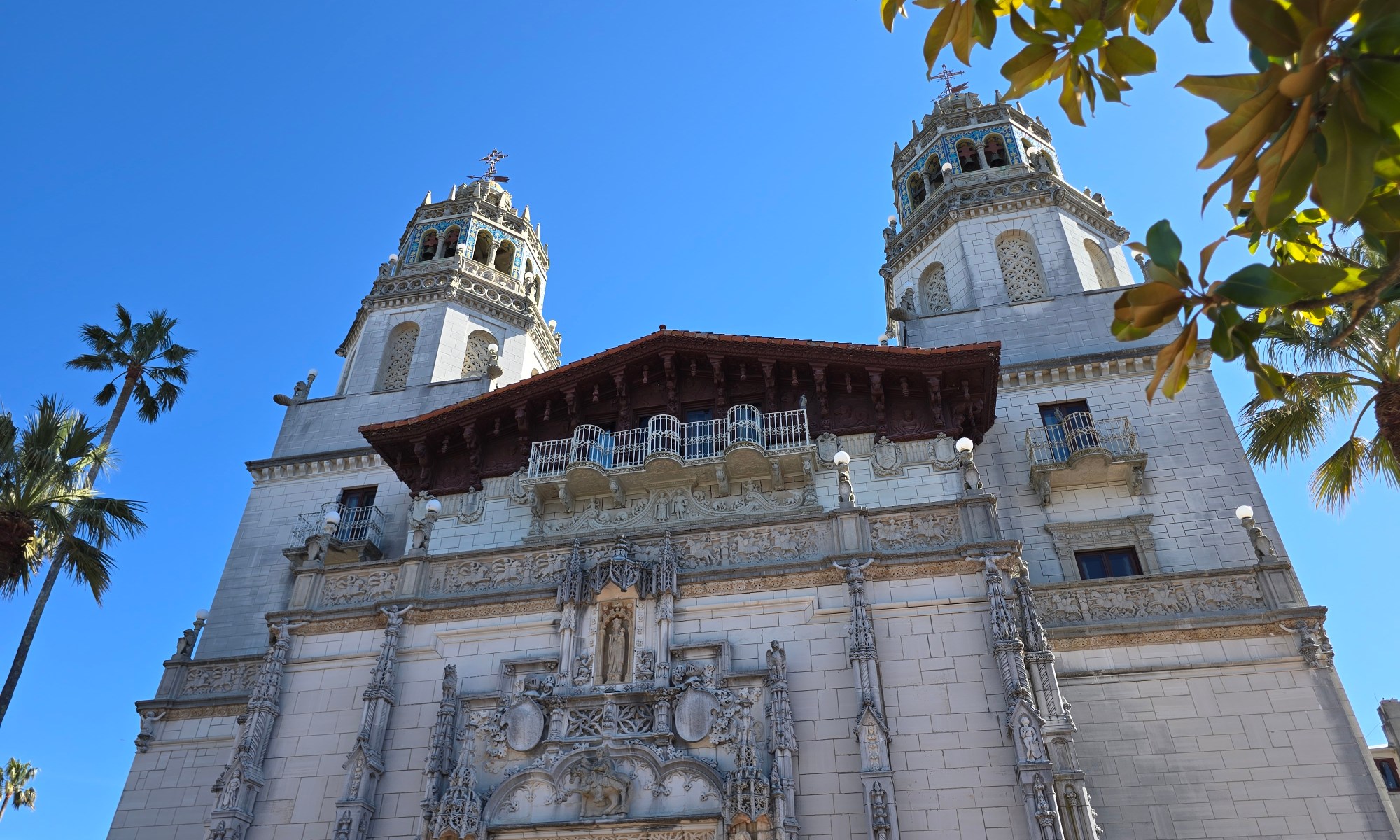
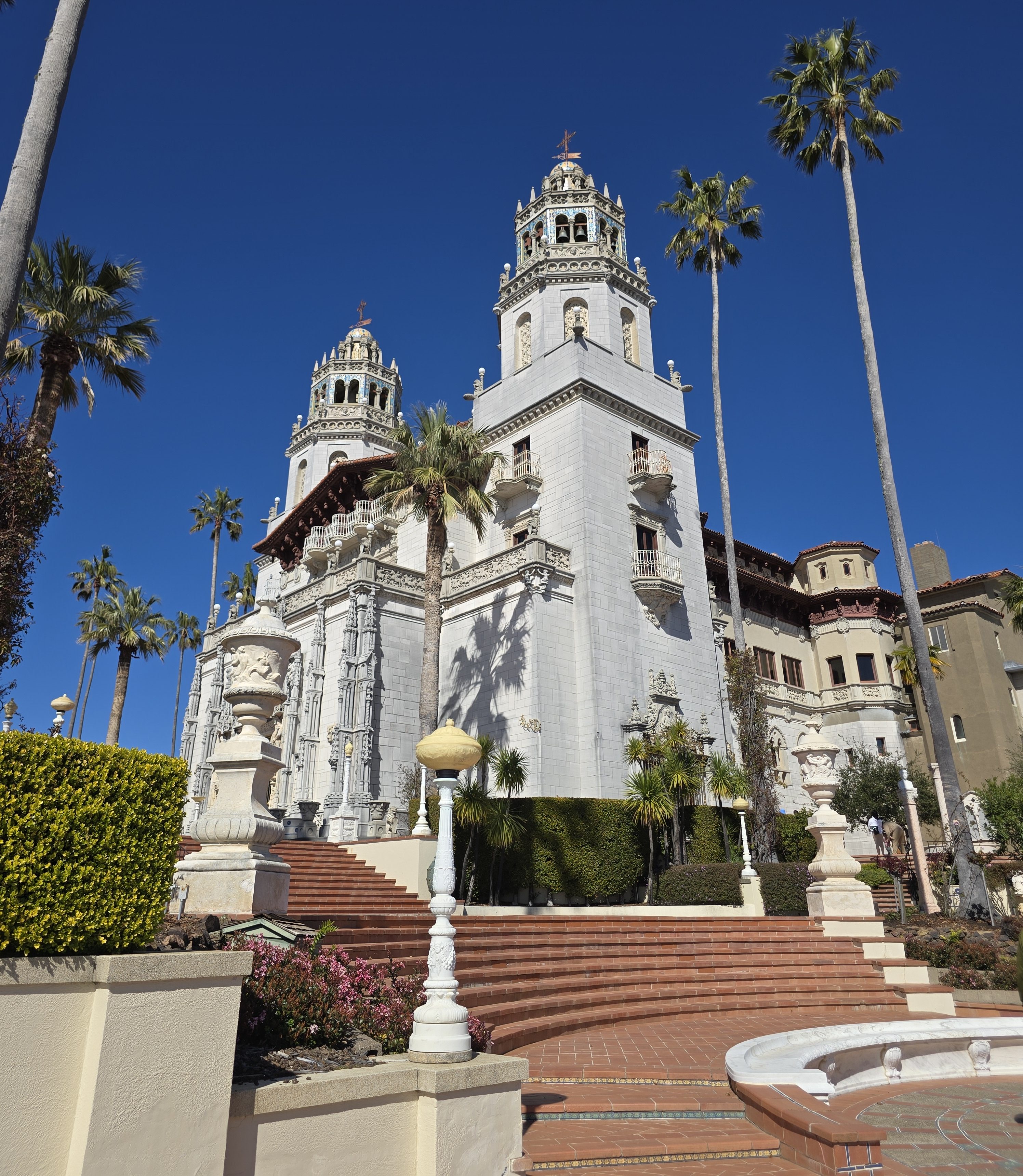
Casa Grande, the main house, totals 69,500 sq ft with 115 total rooms and 32 bedrooms. 137 feet tall without the weathervanes. Casa Grande is designed to look like a church, complete with a grand façade and the two bell towers. Churches were often at the highest points in European towns, and Hearst sought to emulate this design.
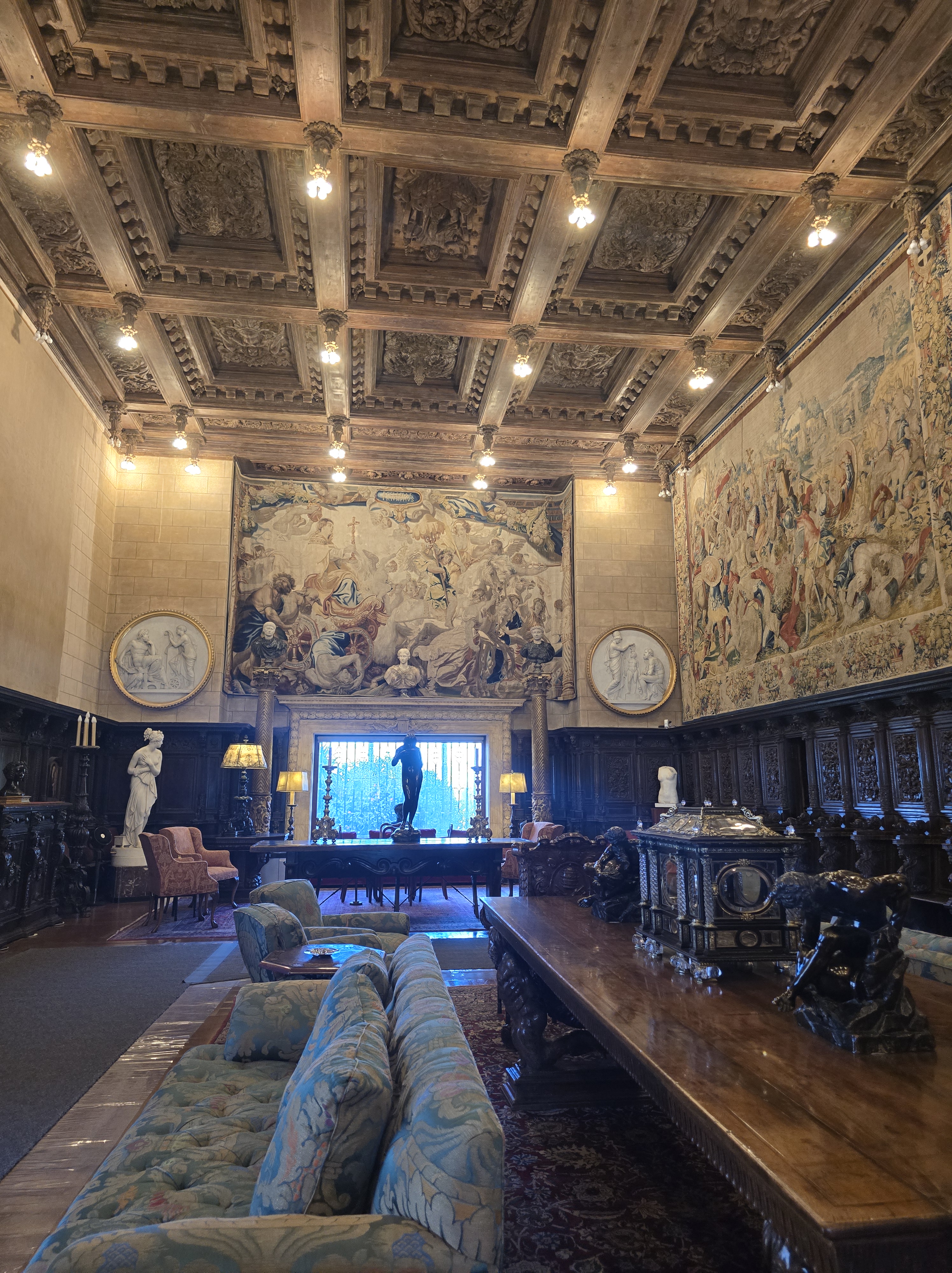
The Assembly Room was built to accommodate four antique tapestries. The tapestries show the ancient Roman legend of Scipio Africanus defeating Hannibal. As in most of the house, concrete was scored to look like stone. The exception was where the tapestries were hung; here, the walls were left unscored since they would be covered by the tapestries, but you can see the unscored wall here since one of the tapestries is being cleaned. The fireplace came from the home of NYC financier Charles Barney, who procured it from a French estate in Burgundy. Eight of the 15 ceiling coffers are original 16th century Italian Renaissance walnut, while the rest are reproduction plaster casts painted to look like wood.
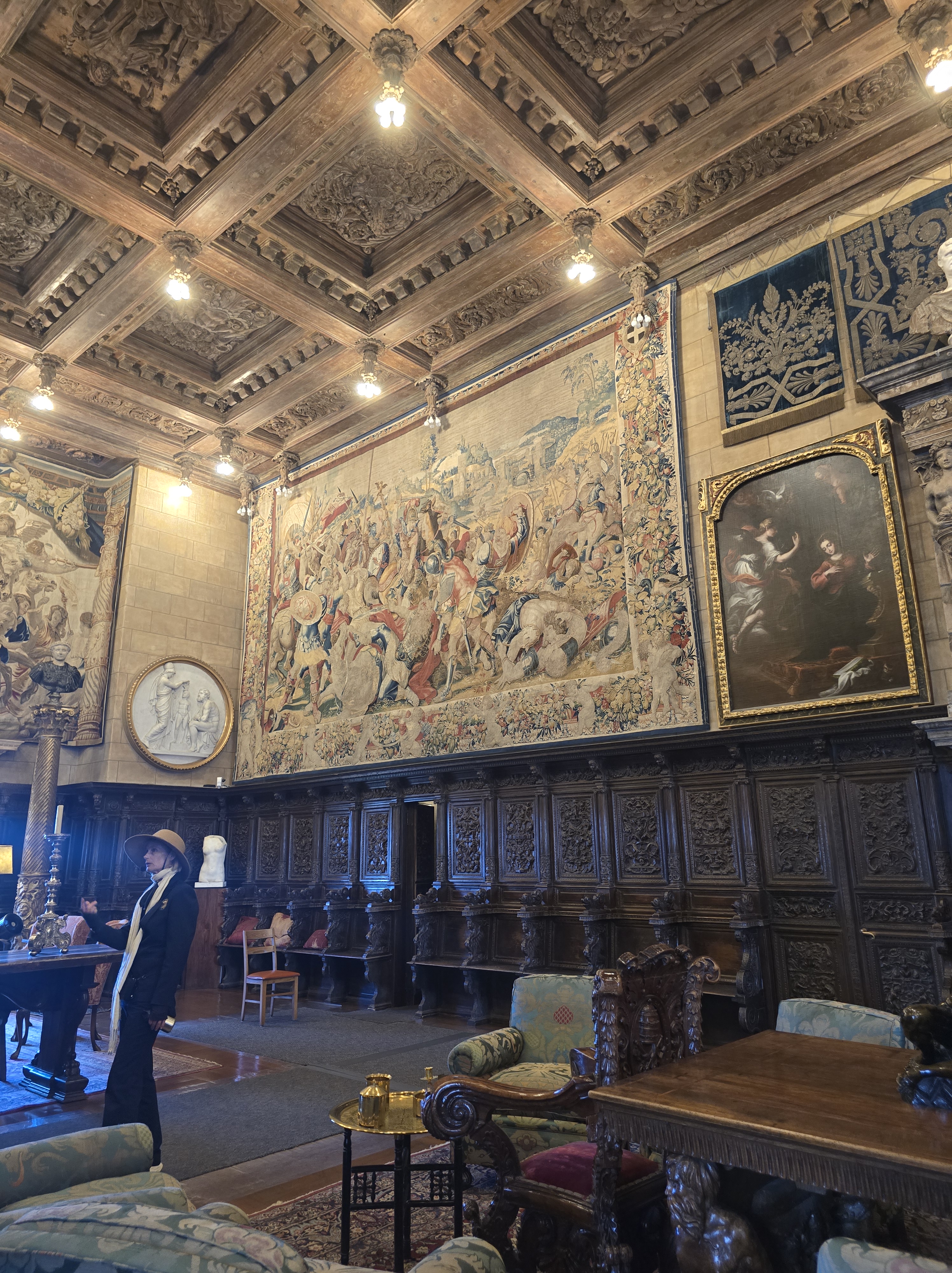
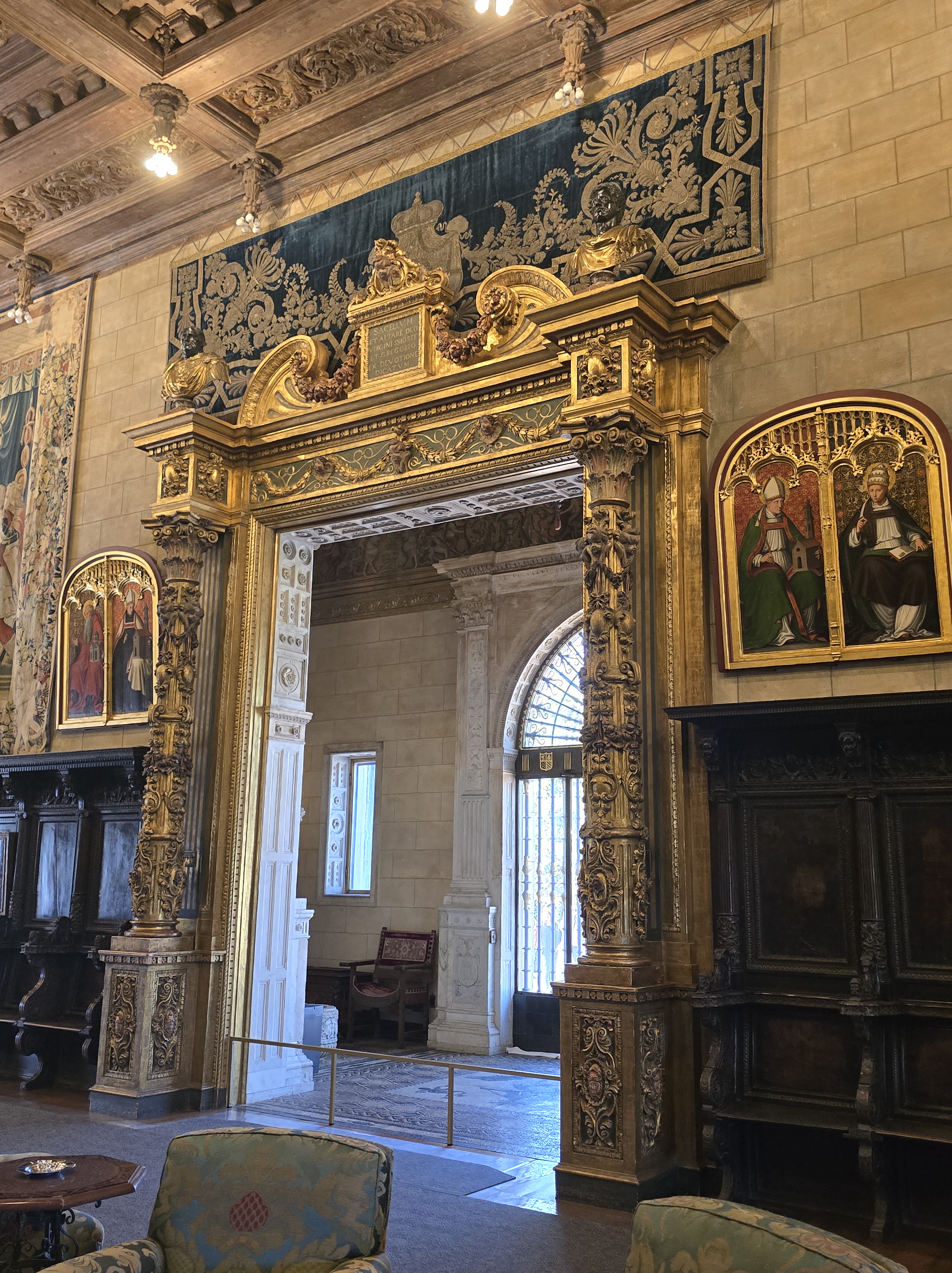
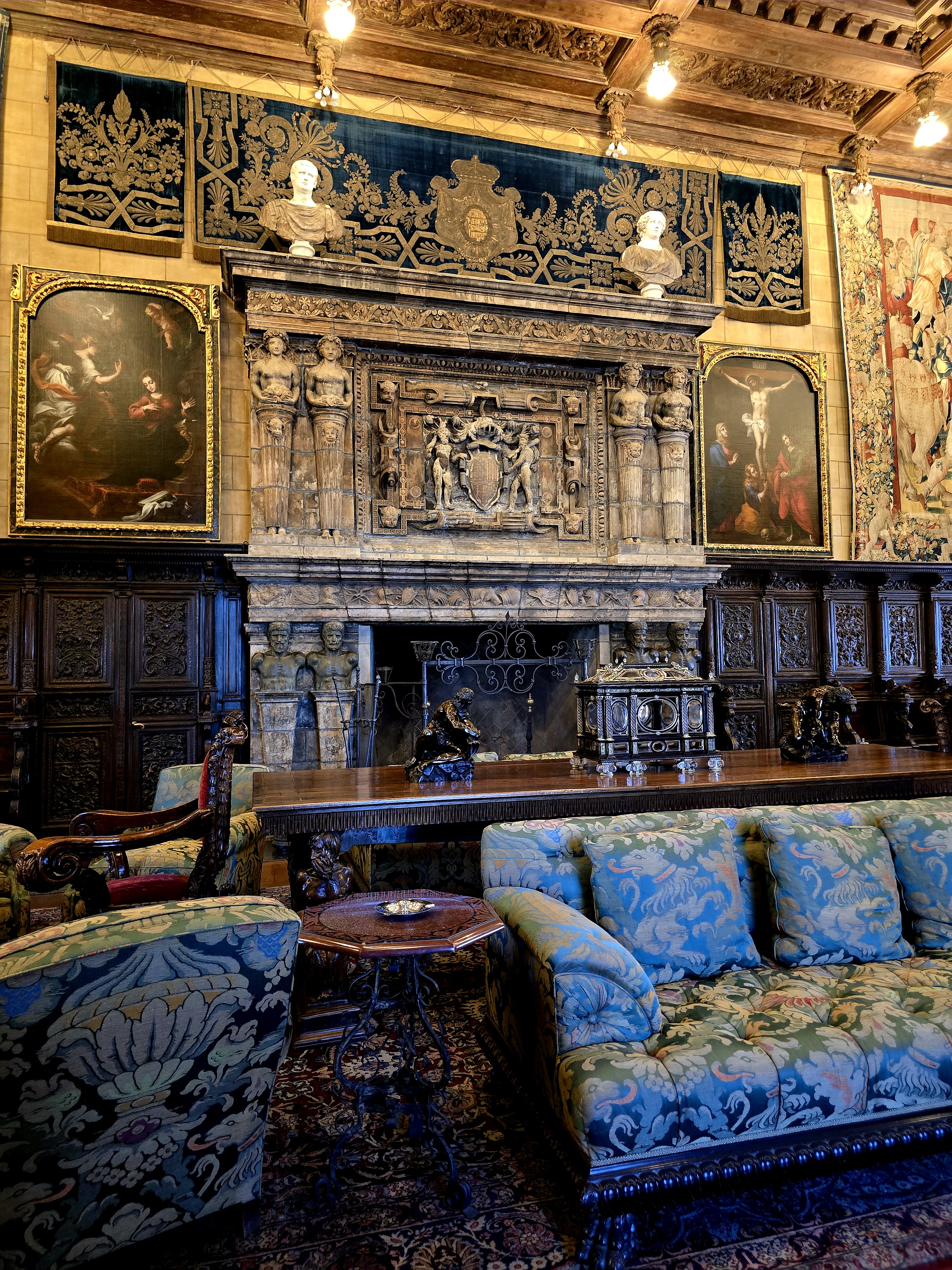
The Gothic style refectory, or dining room as us mere mortals would call it, features pointed arches and 15th century choir stalls. The ceiling is 16th century Italian Renaissance walnut, and the flags are replicas from Siena – the originals are in storage to maintain their integrity. The silver candlesticks and ketchup and mustard bottles show that while Hearst appreciated the finer things, life at “the ranch” was pretty laid back. The word “refectory” would be used in monasteries or colleges for dining halls.
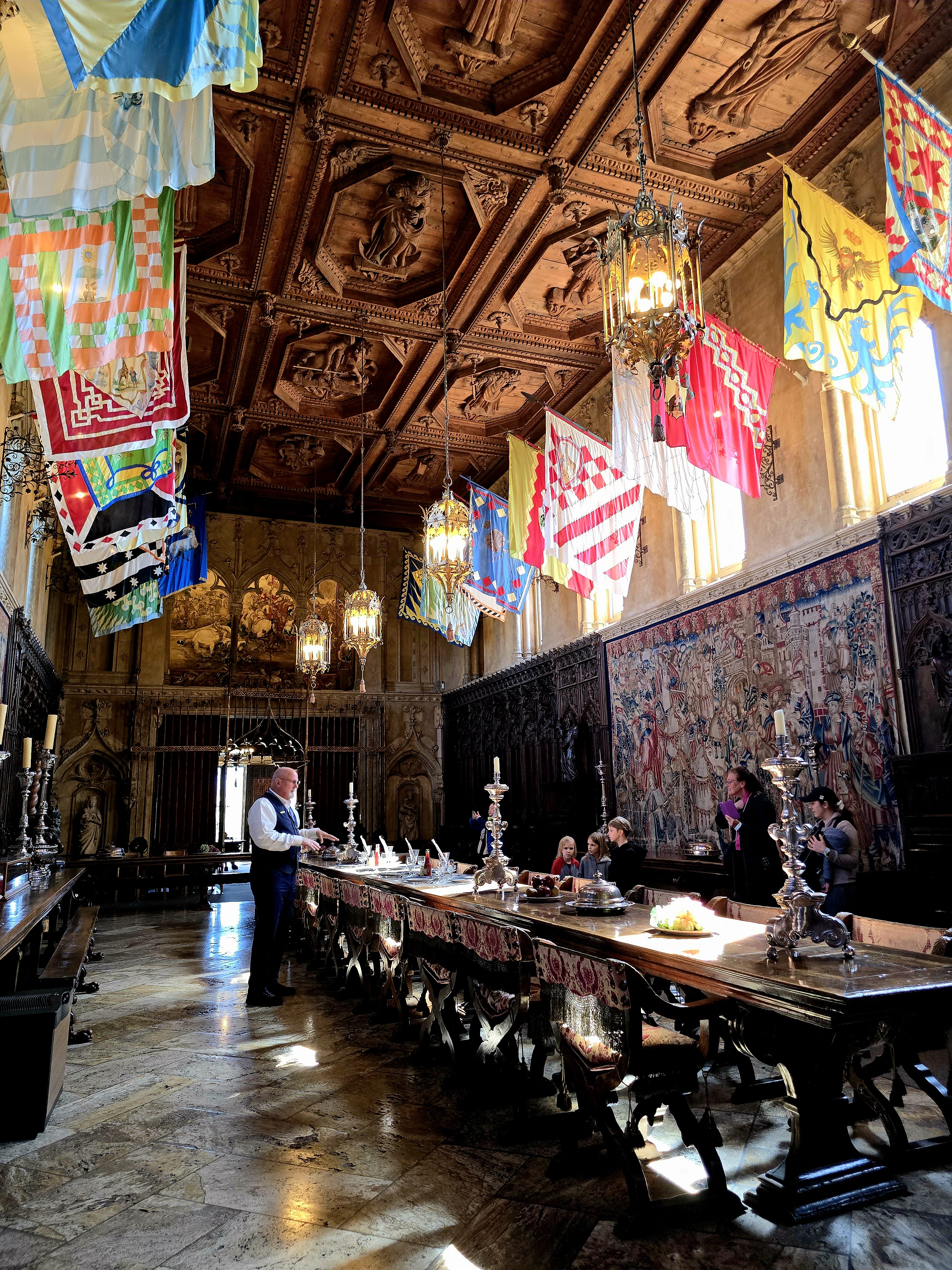
Hearst and Davies would be seated across from each other at the center of the dining table, and the guests closest to the center and hosts would be the newest arrivals. The longer you stayed, the farther away from the hosts you found yourself. Guests could not have food sent to their room. This encouraged camaraderie and conversation, and also kept rodents from the bedroom floors!
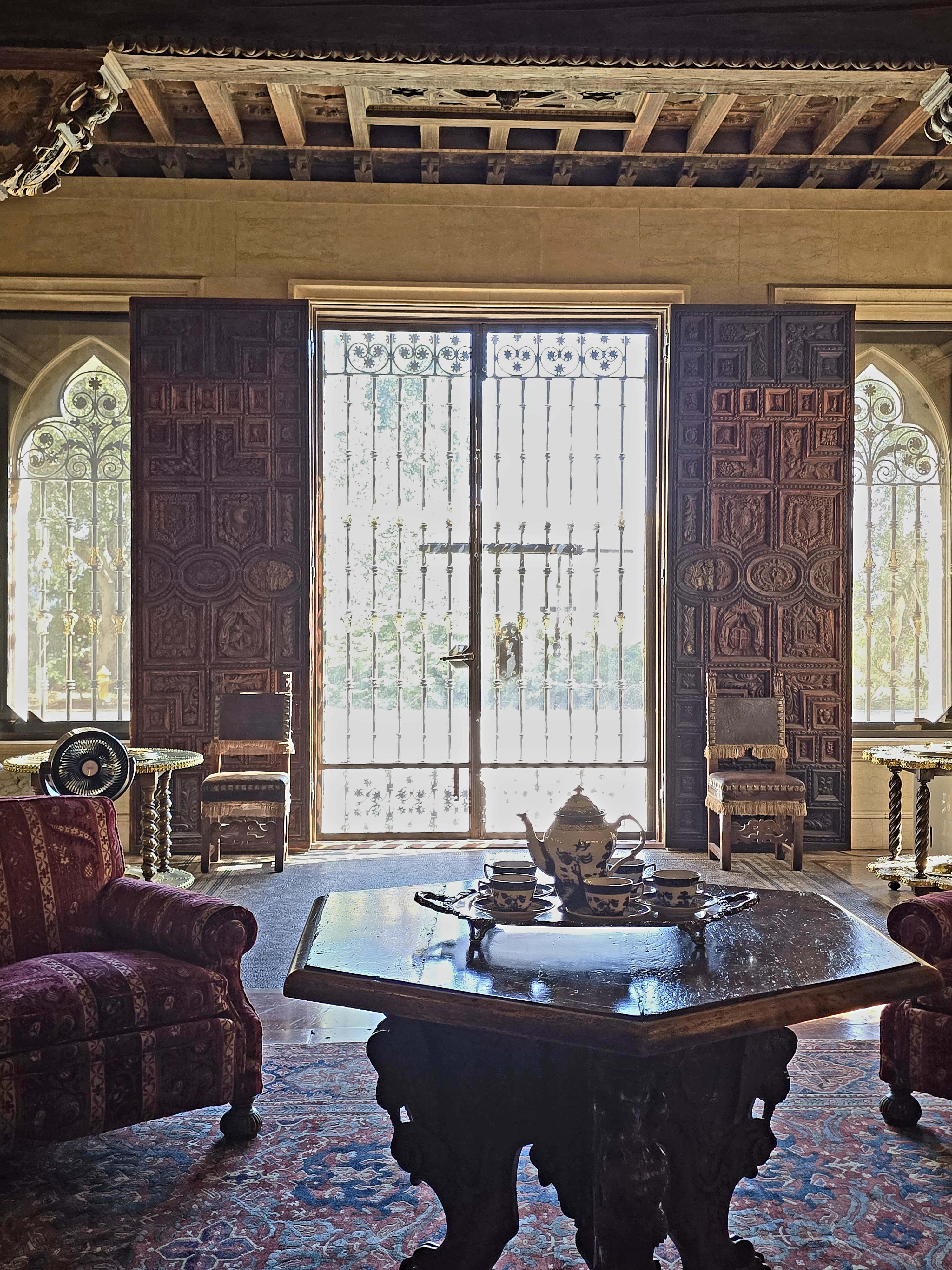
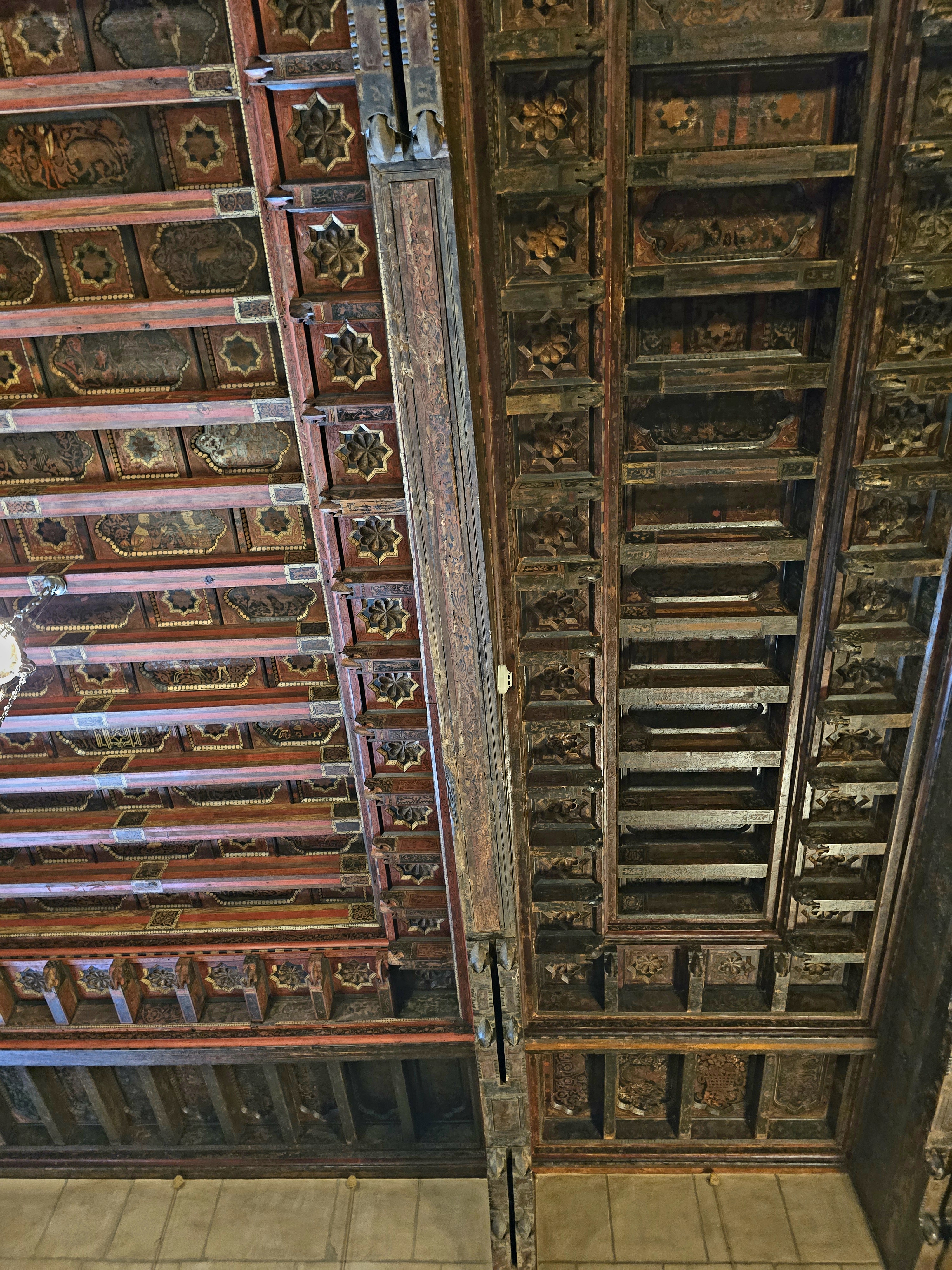
The morning room was next, and again featured an antique ceiling, this time from 15th century Spain. While Hearst Castle was closed from 2020 to 2022 during the pandemic, the restoration team removed centuries of dirt, soot and cigarette smoke from the ceiling. Hearst was in such a hurry when the ceiling was first installed that they did not clean it then. The morning room was originally called “The East Room”, and while it is called the “Morning Room” it was usually used as a sitting room after dinner.
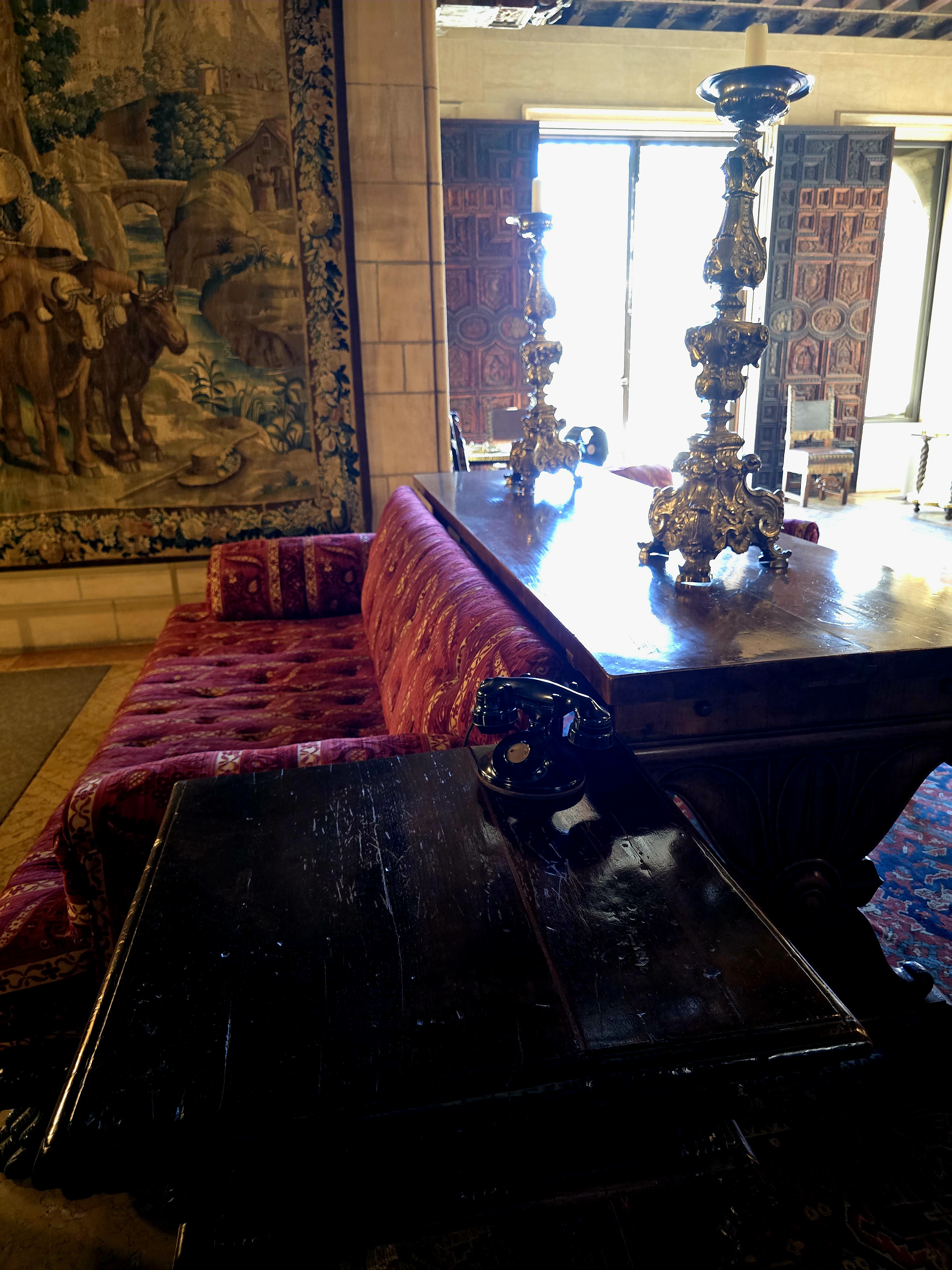
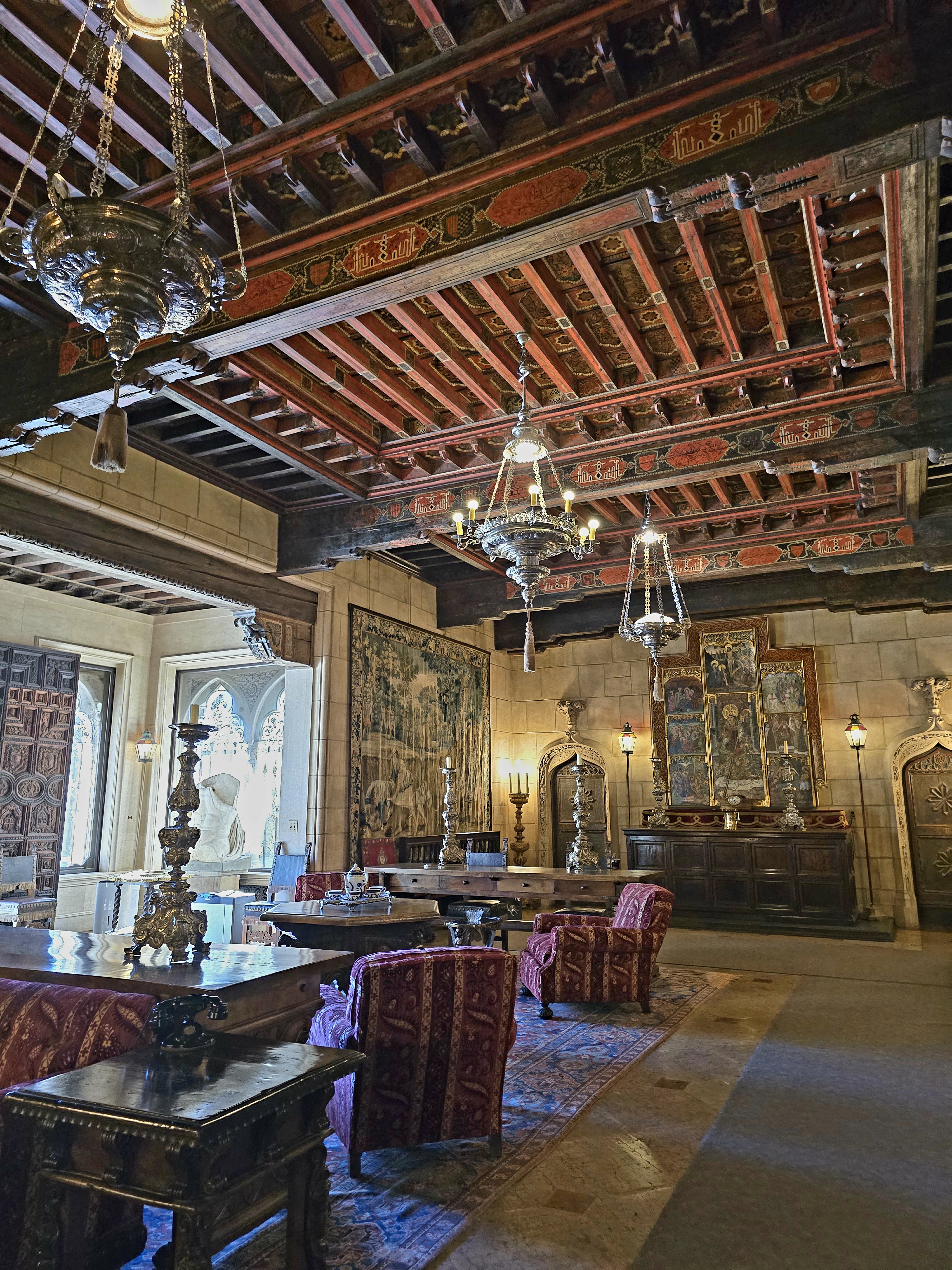
The Gothic Suite is located on the third floor, and includes two bedrooms for Hearst and Marion Davies, a sitting area between them, and a private study across the hall that Hearst used as his boardroom and office. Private study is an understatement. It’s the size of the refectory, or the dining room on the ground floor. There was some water damage from a roof leak, so some of the books had to be removed to be restored, and to allow the woodwork to dry out and be refinished. On one tour that I took, we couldn’t go off the “blue tour carpet” but on the Designing the Dream tour… we went all around the study, and even the office which had three-way views of the mountains and ocean.
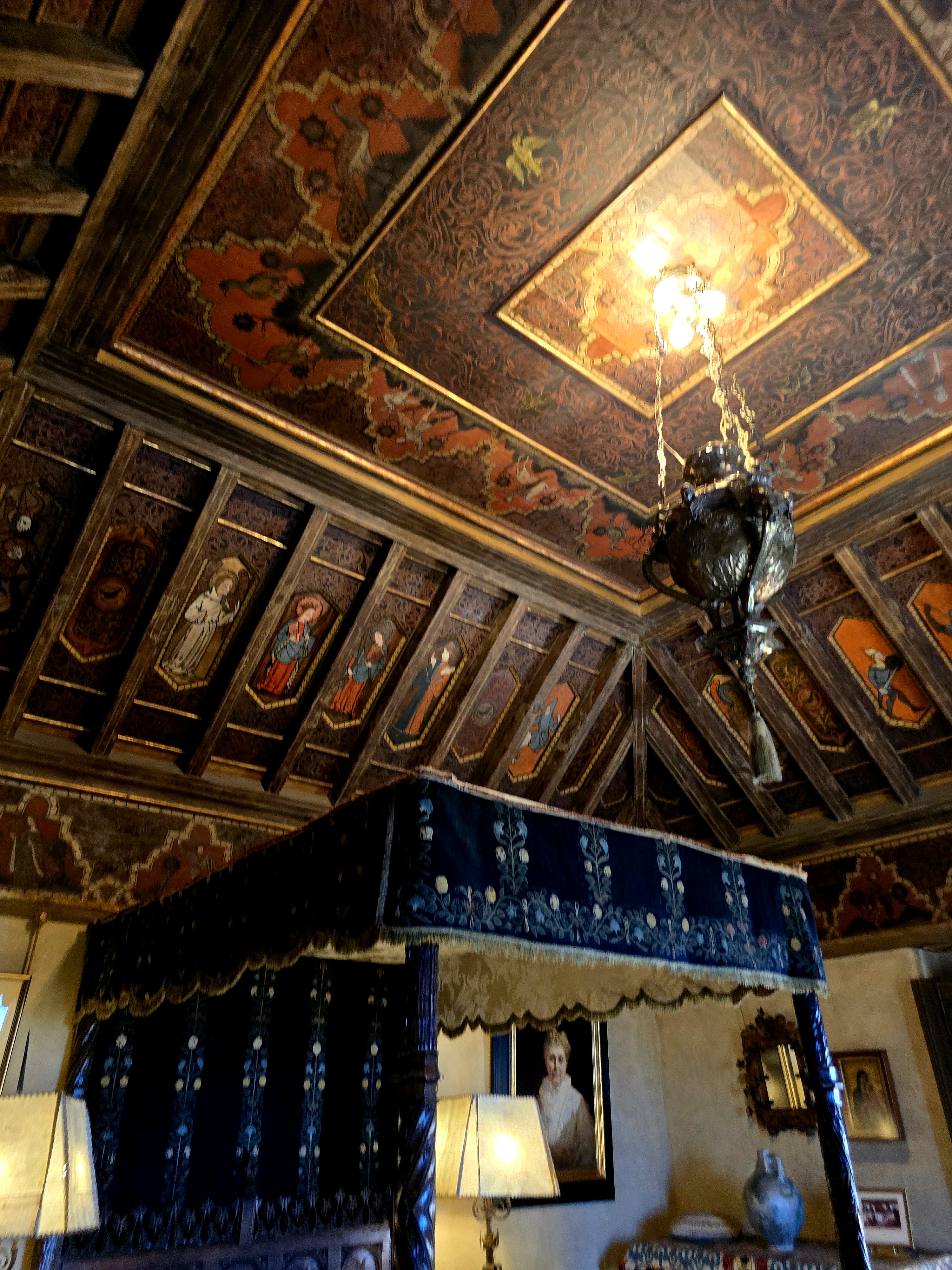
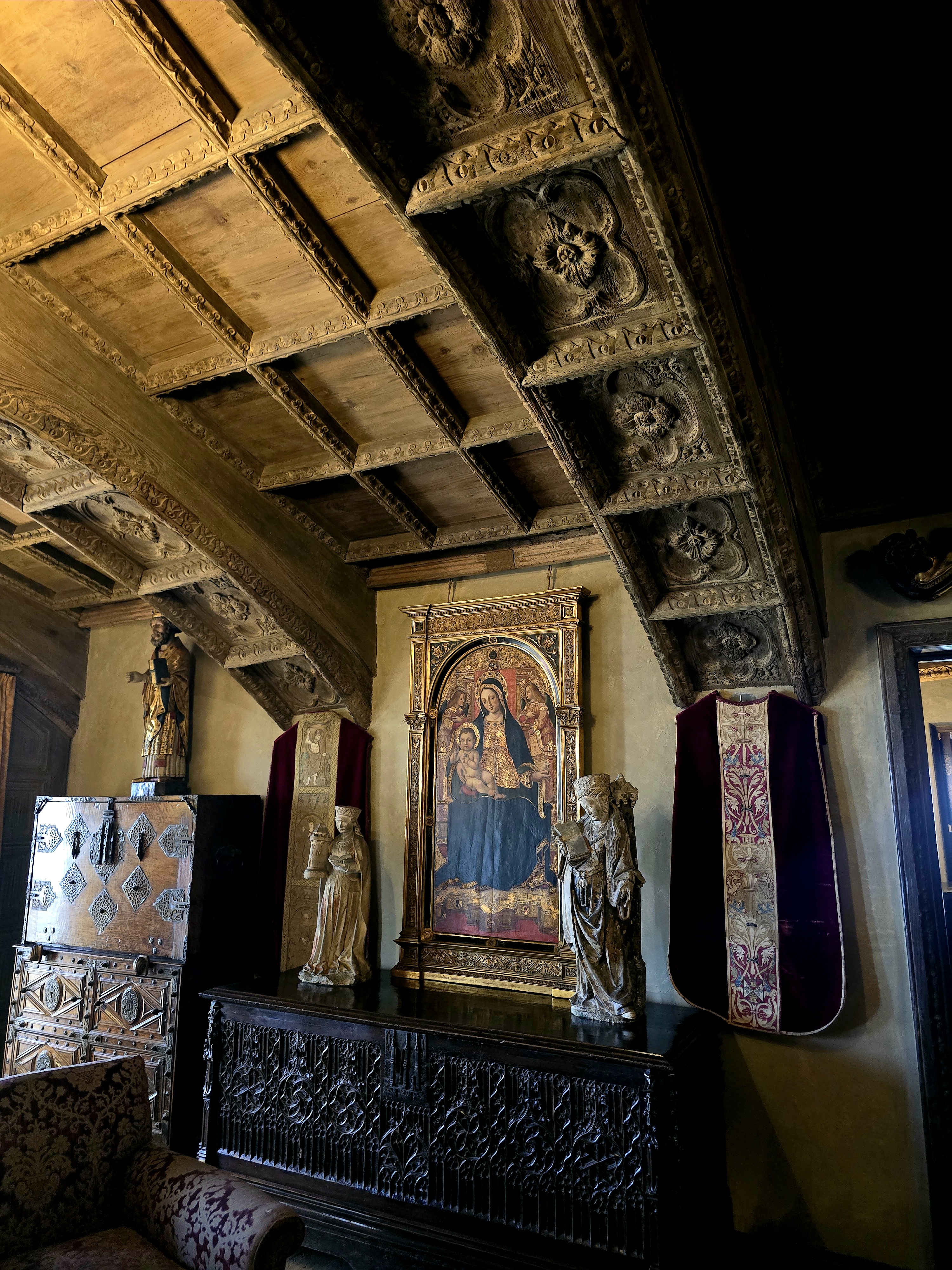
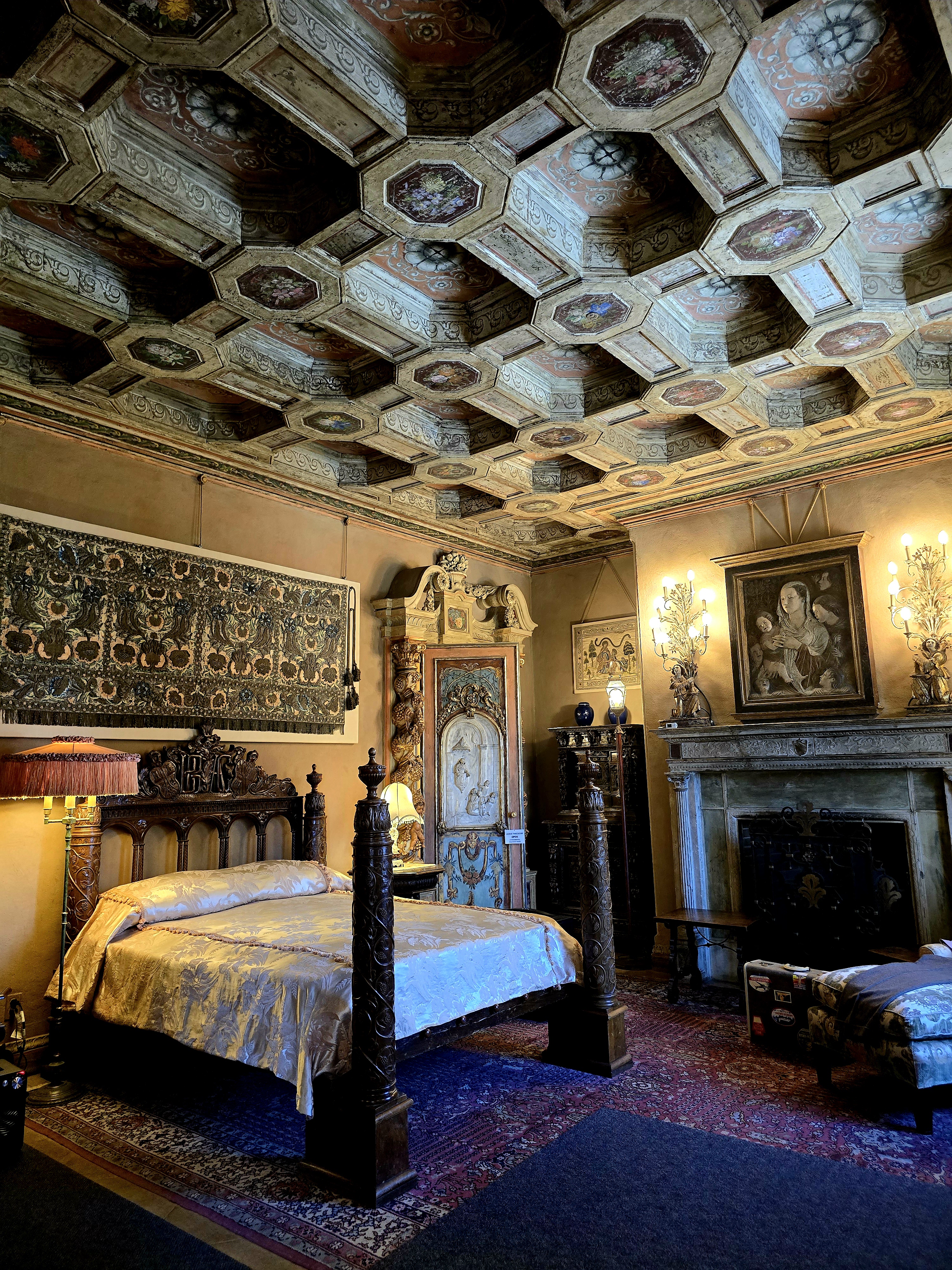
Hearst’s bedroom ceiling came from a 14th or 15th century Spanish home (tetuacita) and the rest of that ceiling is at Casa del Herrera near Santa Barbara/Montecito. A 14th century Madonna and Child painted in tempera with gold leaf on a wood panel is probably the most valuable piece of art on the property, worth an estimated $65 million today. It is rumored to have been painted by Sienese painter Duccio di Buoninsegna or one of his students. Hearst did not purchase this painting; Cissy Patterson, publisher of the rival Washington Times-Herald, gifted it to him.
The Doge’s Suite may be my favorite suite – both for the exquisite blue silk lining the walls, the view through the quatrefoil windows and Venetian balcony. The Venetian balcony was created out of a salvaged loggia from… you guessed it, Venice! The ceiling, with a 18th century Italian fresco, came from the estate of architect Stanford White of the acclaimed McKim, Mead and White firm. White had installed the ceiling in his New York City townhome. Unlike much of the rest of Casa Grande and the guest cottages which are more Renaissance Italian and Spanish, this room is decorated in a lighter 17th century Italian baroque.
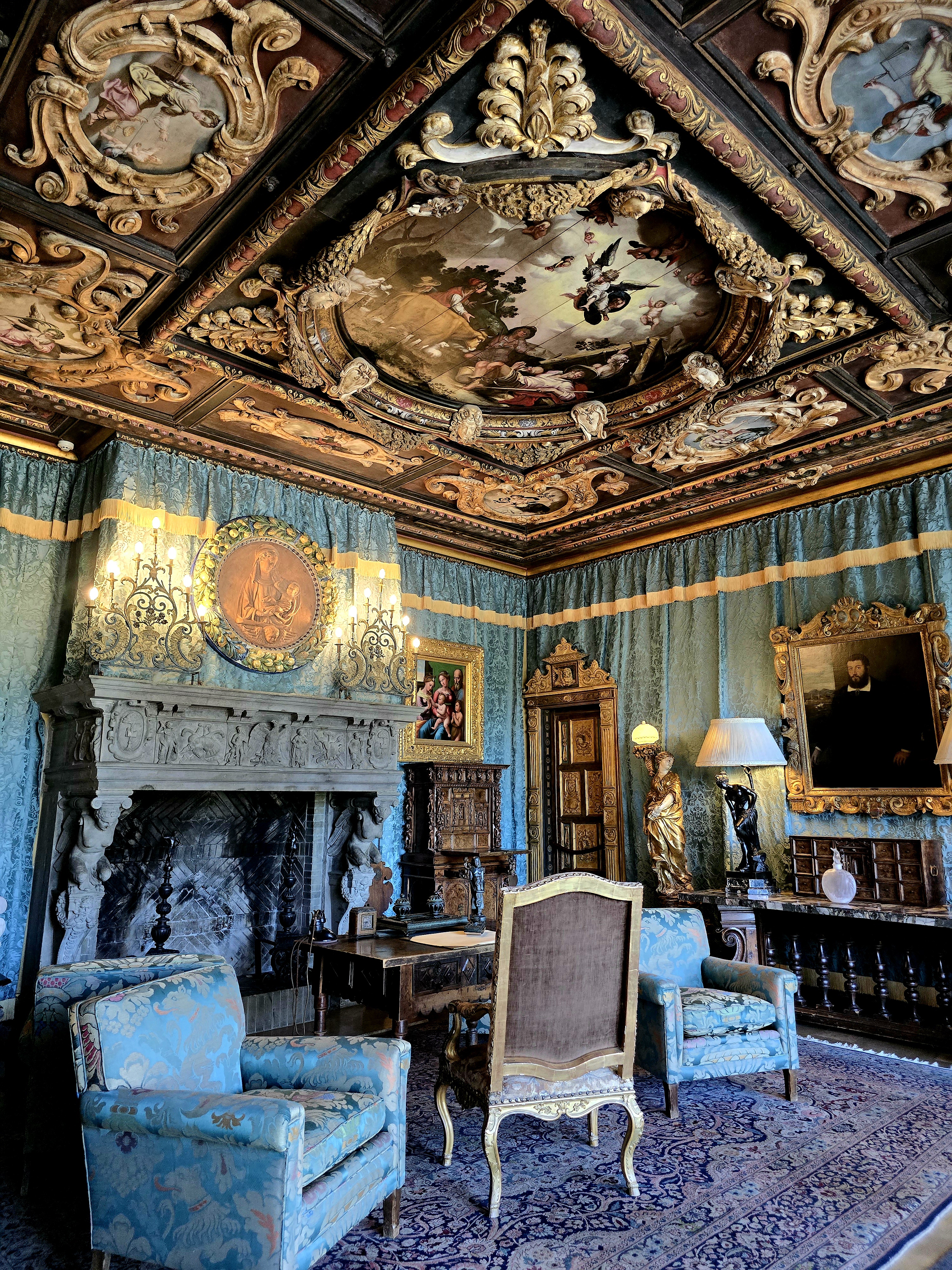
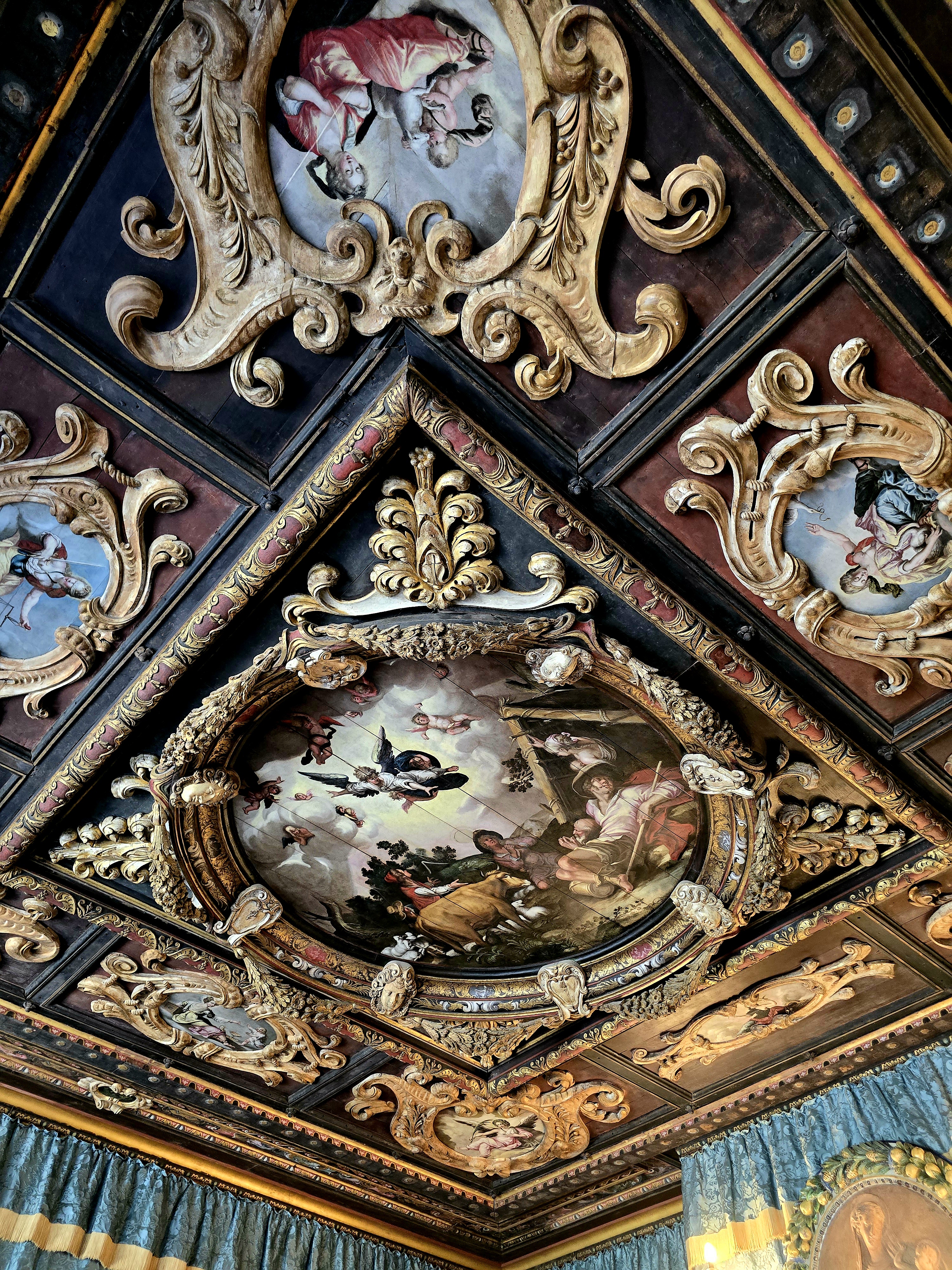
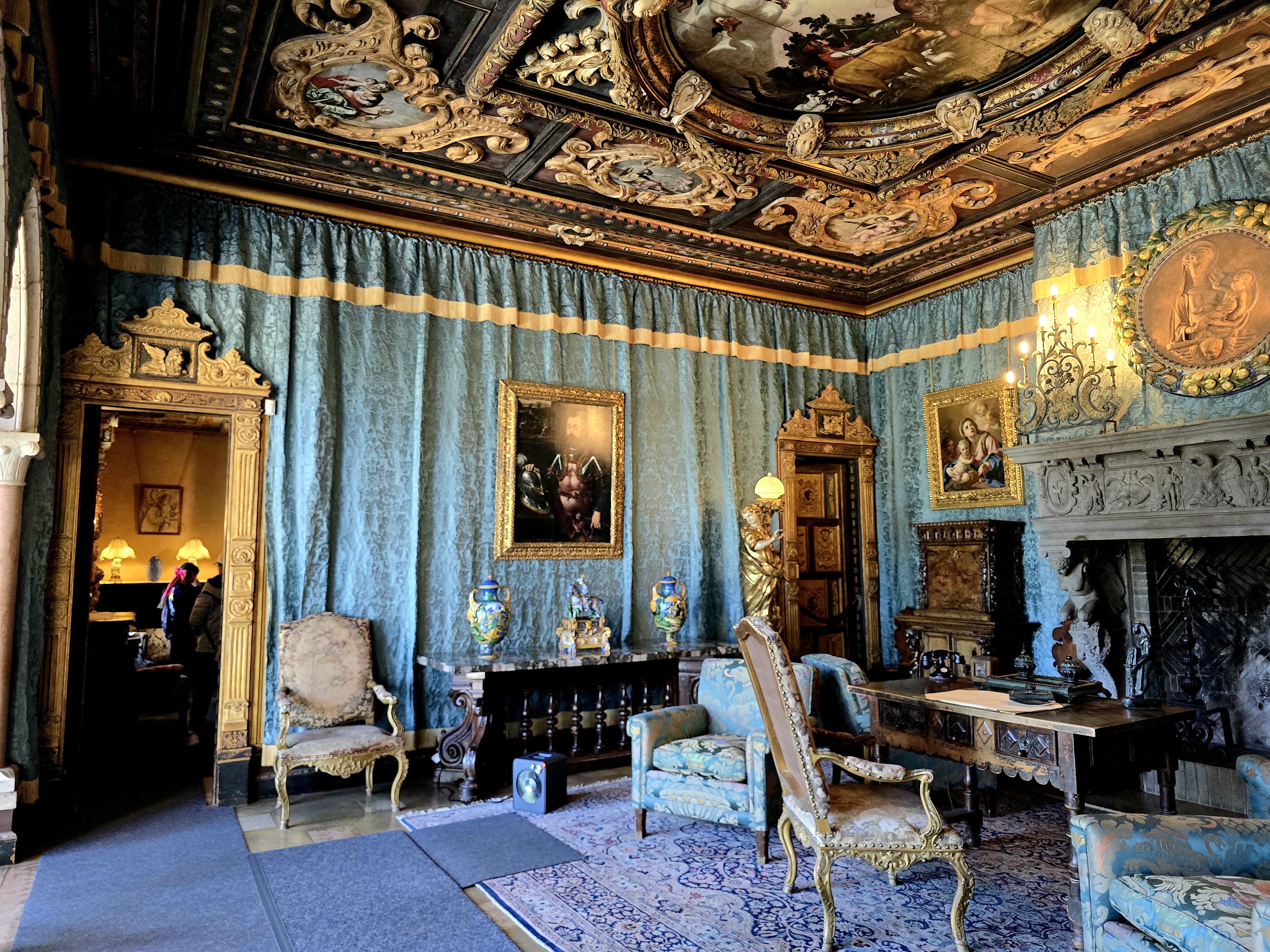

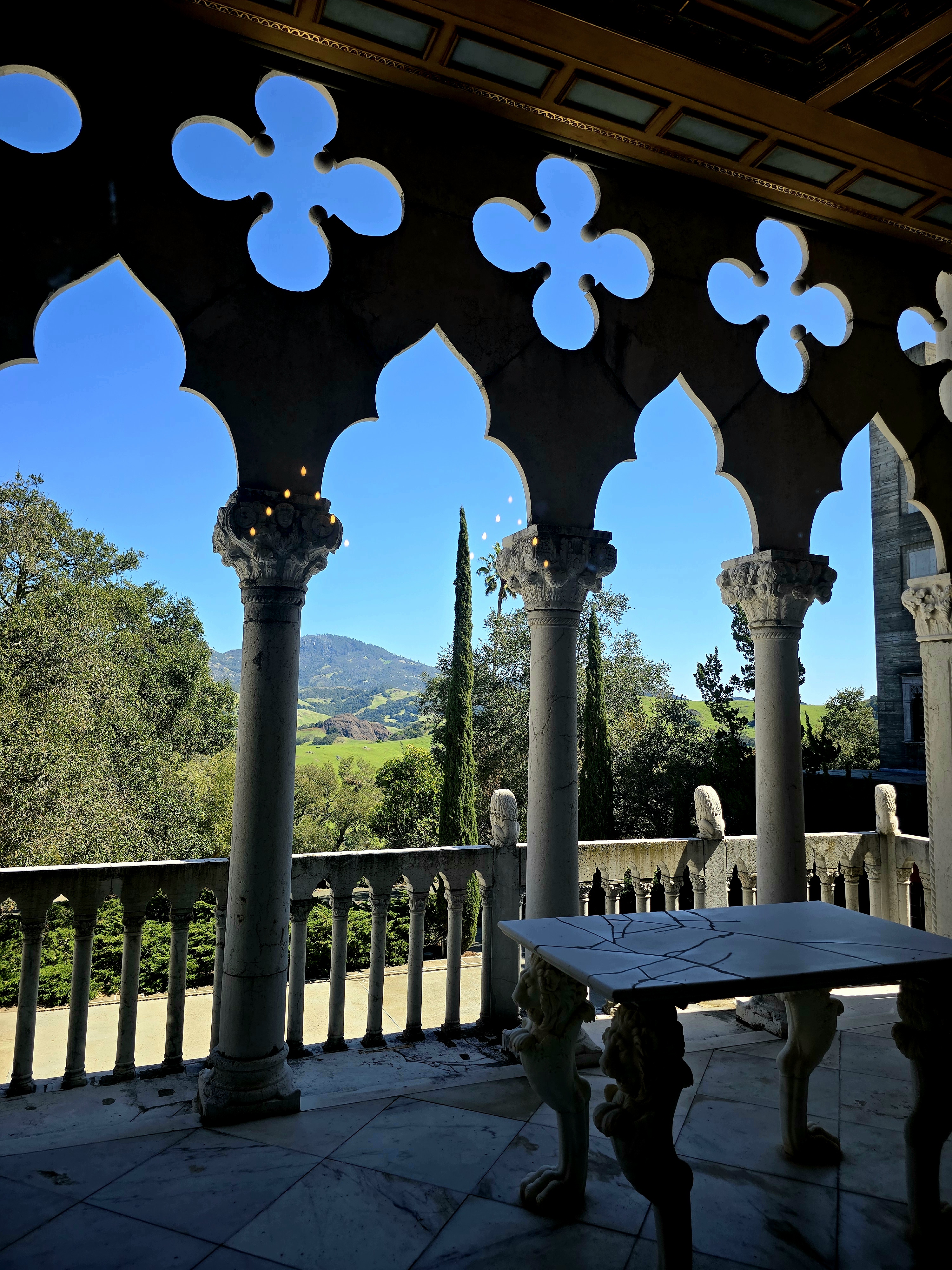
The Doge’s Suite was part of the initial design of Casa Grande envisioned by Hearst and Morgan, and completed in 1926 as the first bedroom in Casa Grande. It was considered the most prestigious room for a guest to stay. On the rare occasions when Millicent Hearst visited Hearst Castle after the separation, she would stay in this suite.
Celestial Suite
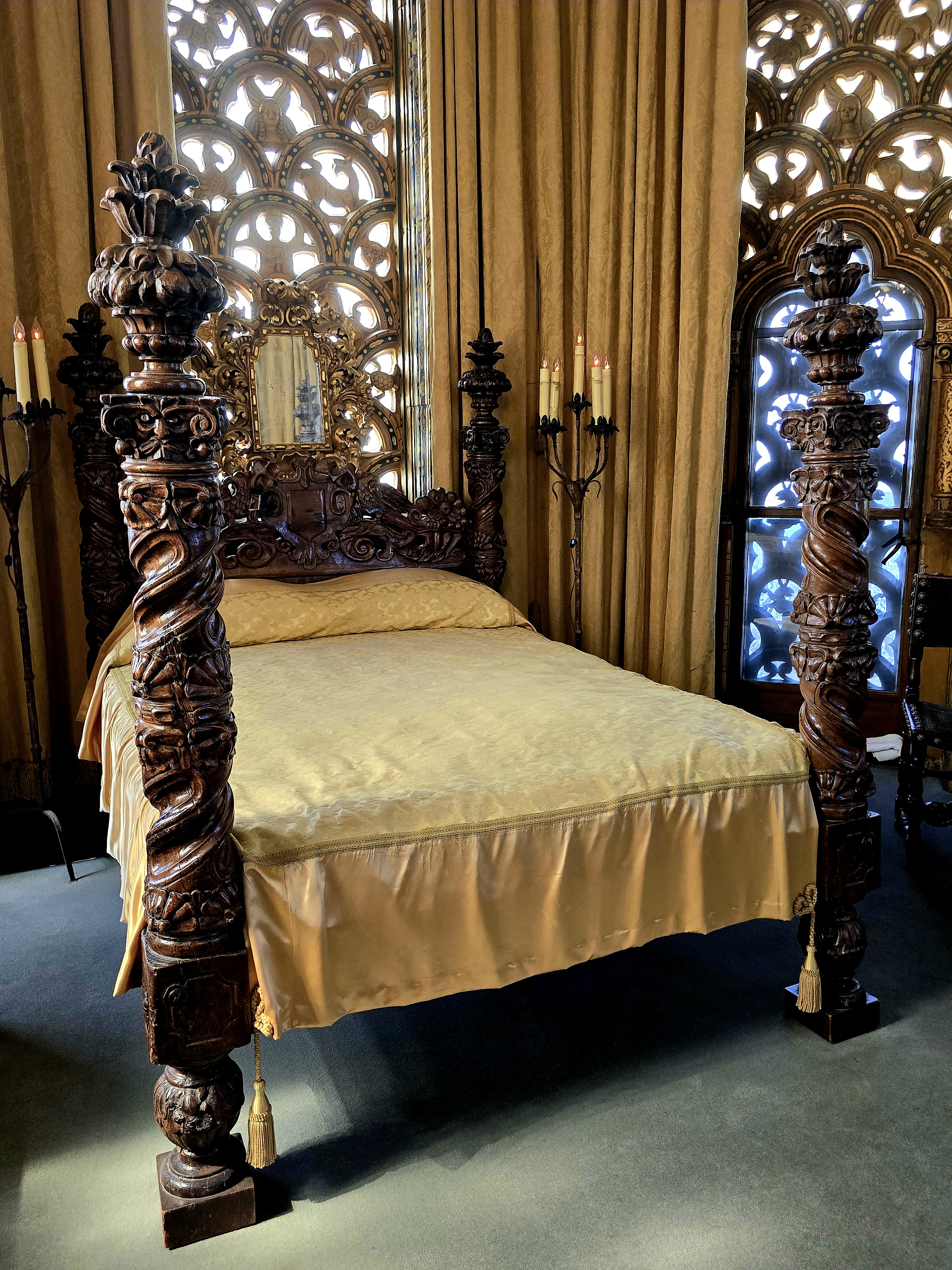
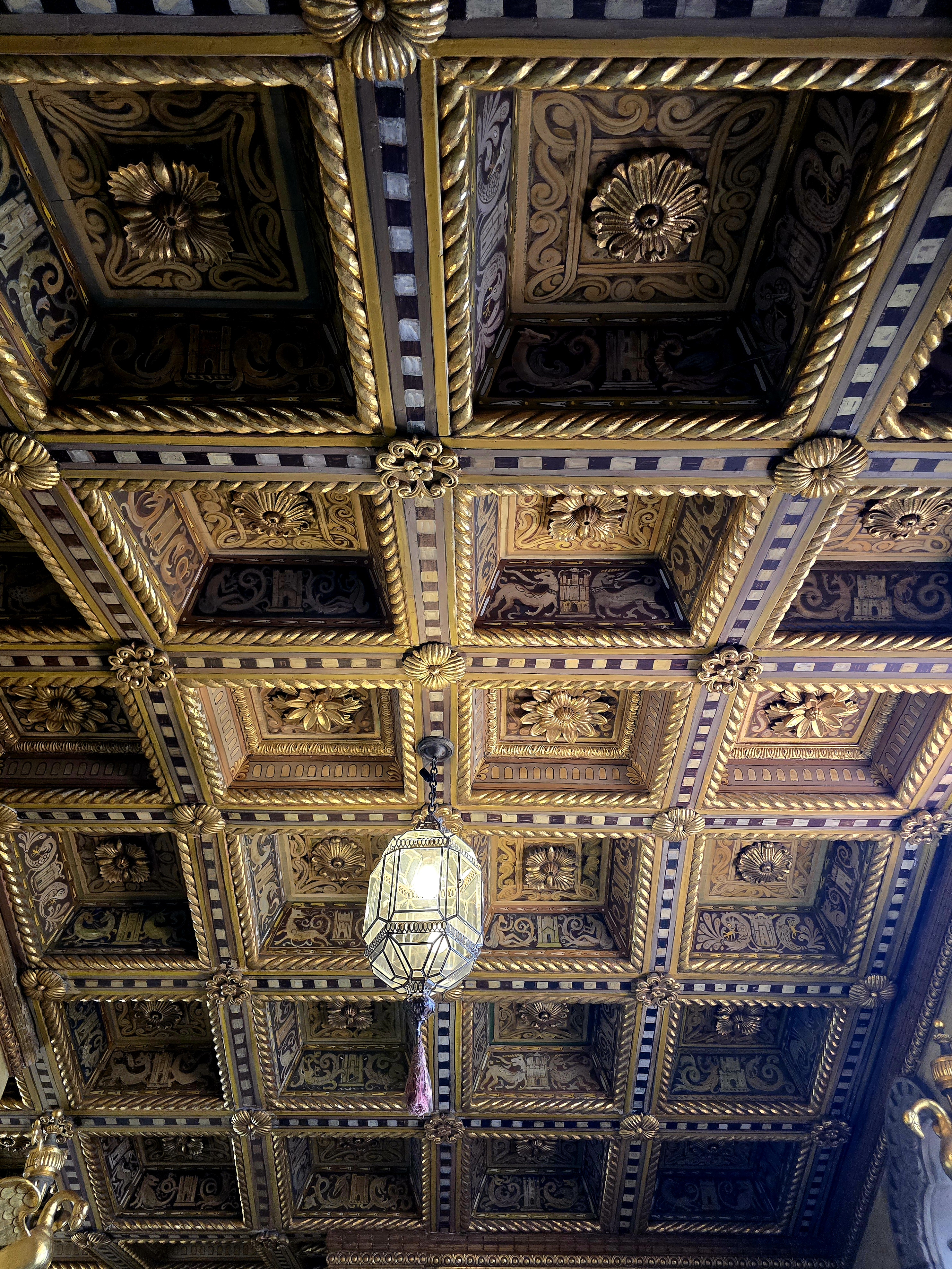
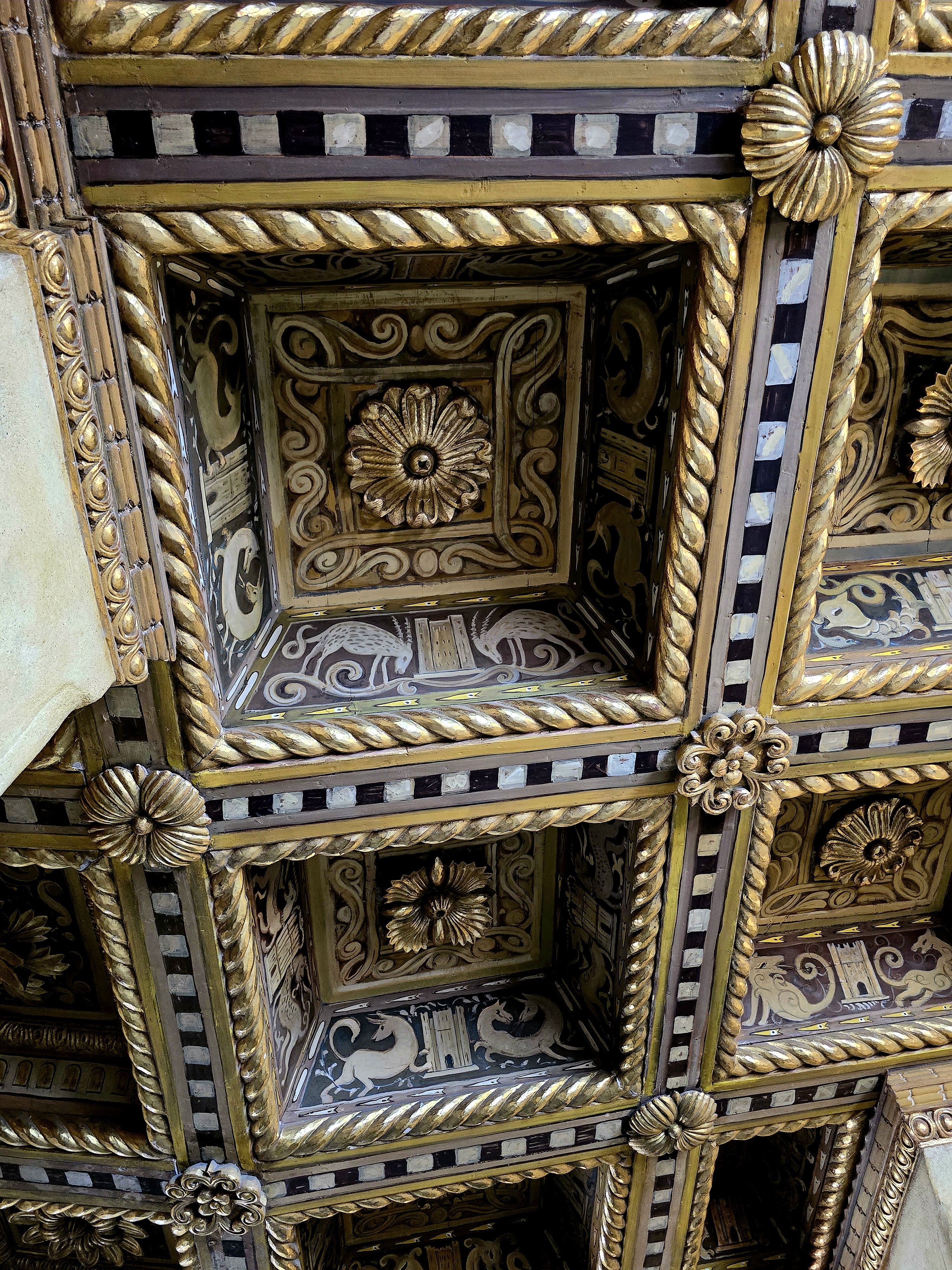
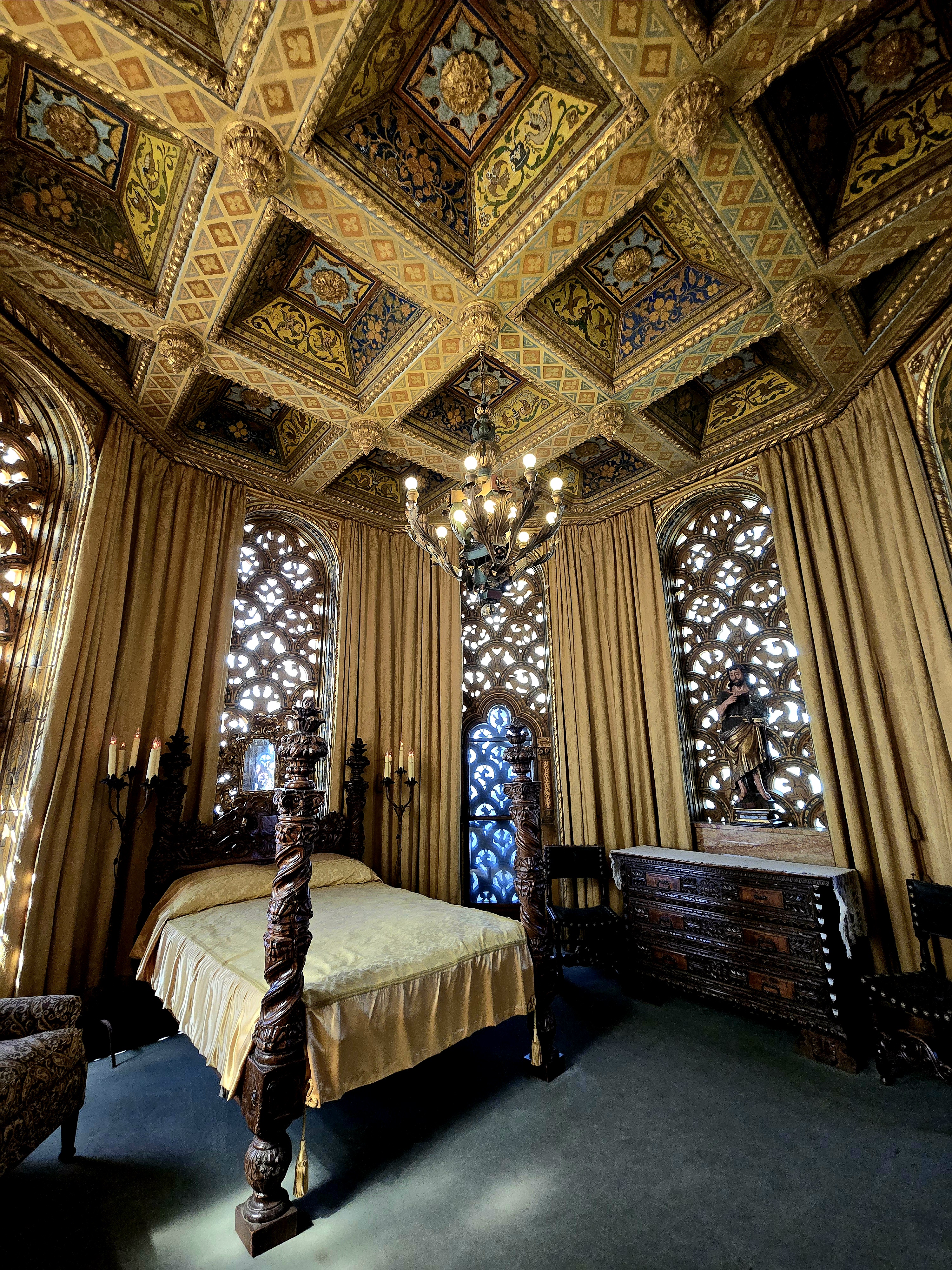
Another prestigious suite for guests was the Celestial Suite. Whenever frequent guest Hedda Hopper stayed in this suite, she said it was like sleeping in a jewel box. The Celestial Suite, opened in 1932, is located on the fourth floor in the base of one of the bell towers, situated between a sitting room and another suite bedroom. The sitting room and suites offer the highest views from Casa Grande. The Romanesque style interior with round arches and animal motifs was popular in the 11th and 12th century Europe. The walls are hung in silk and linen gold-colored damask. Hearst initially envisioned the space as open air bedrooms, but didn’t want to sacrifice space in bad weather.
Let’s Take a Dive
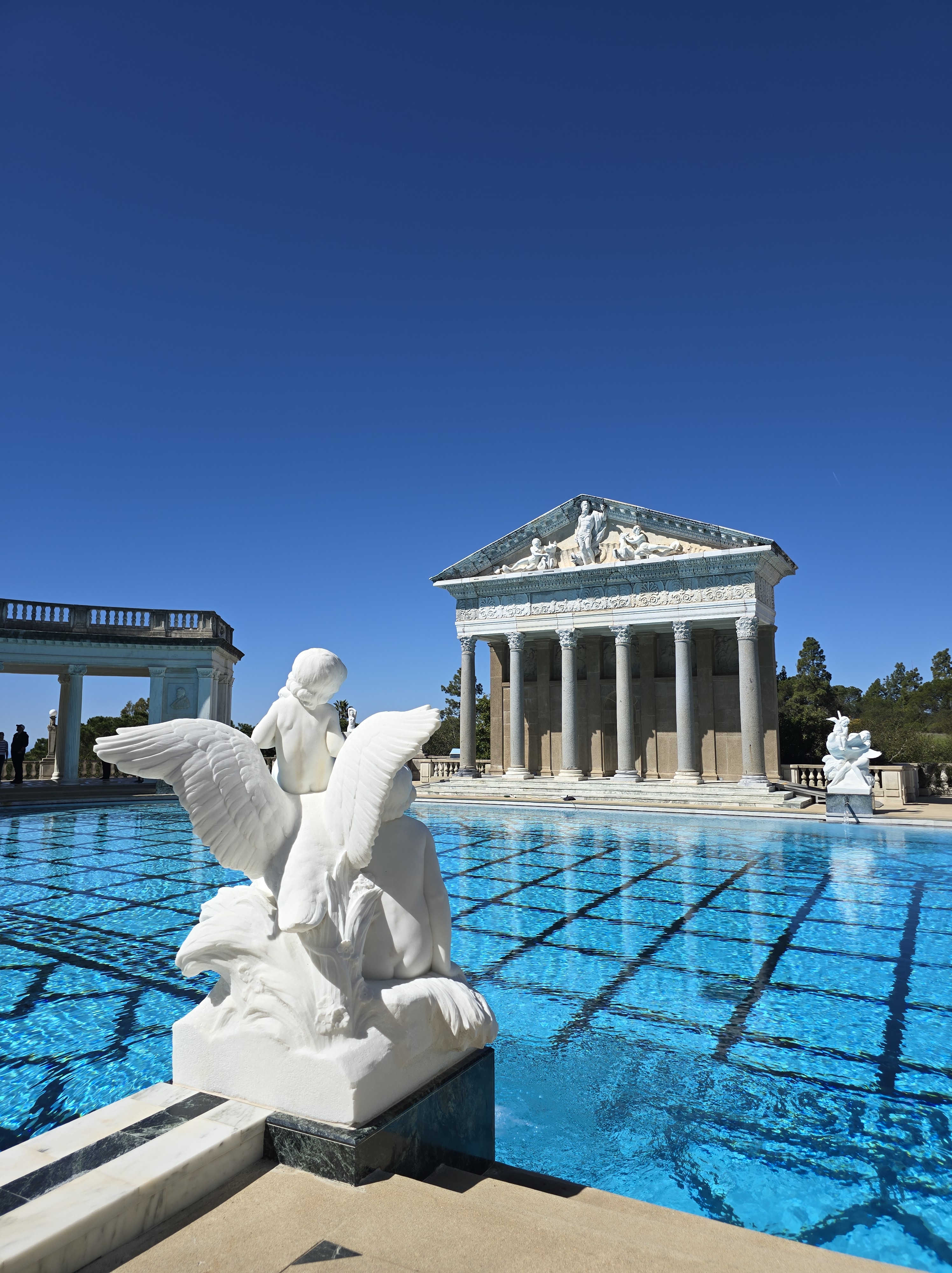
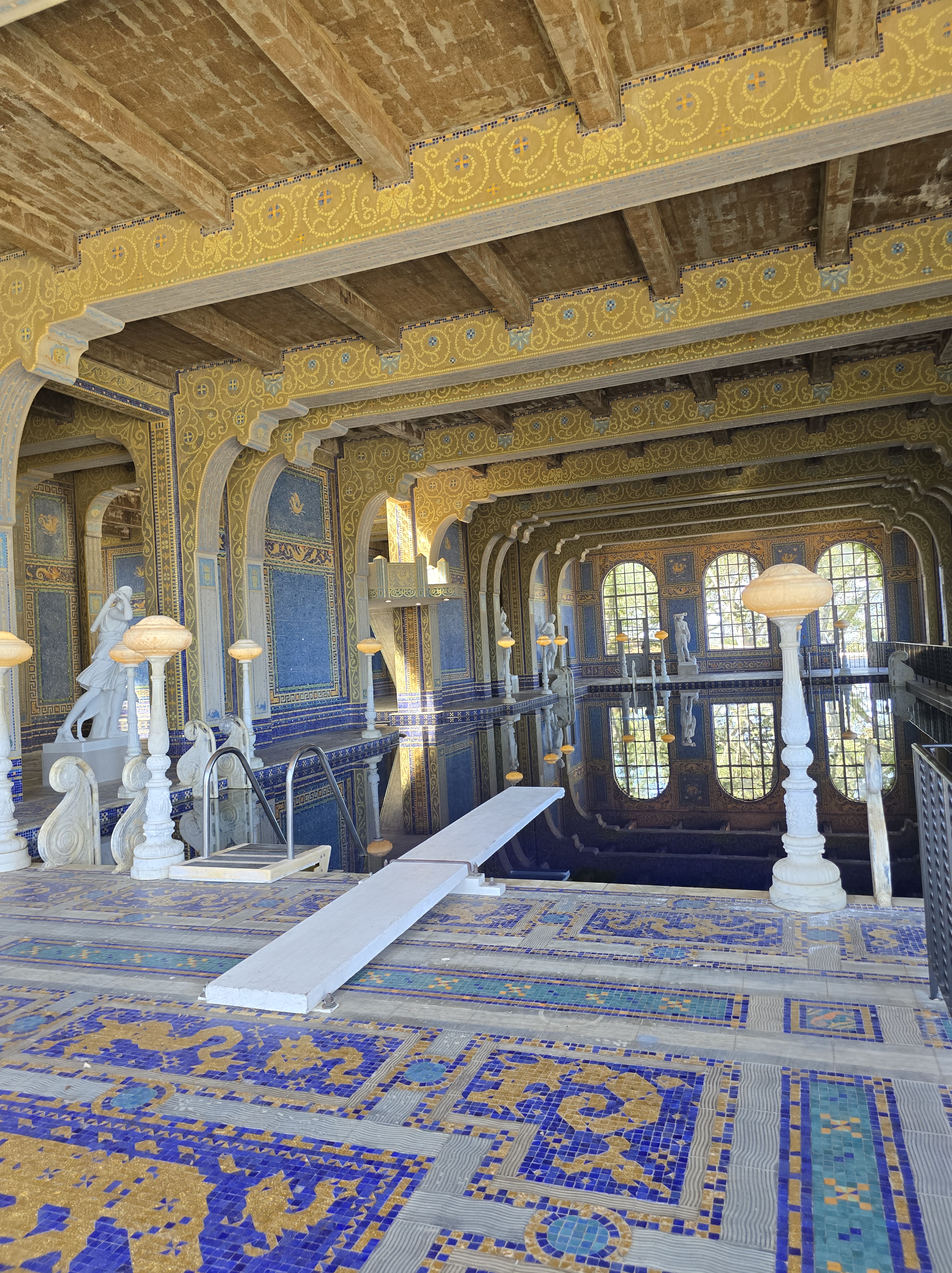
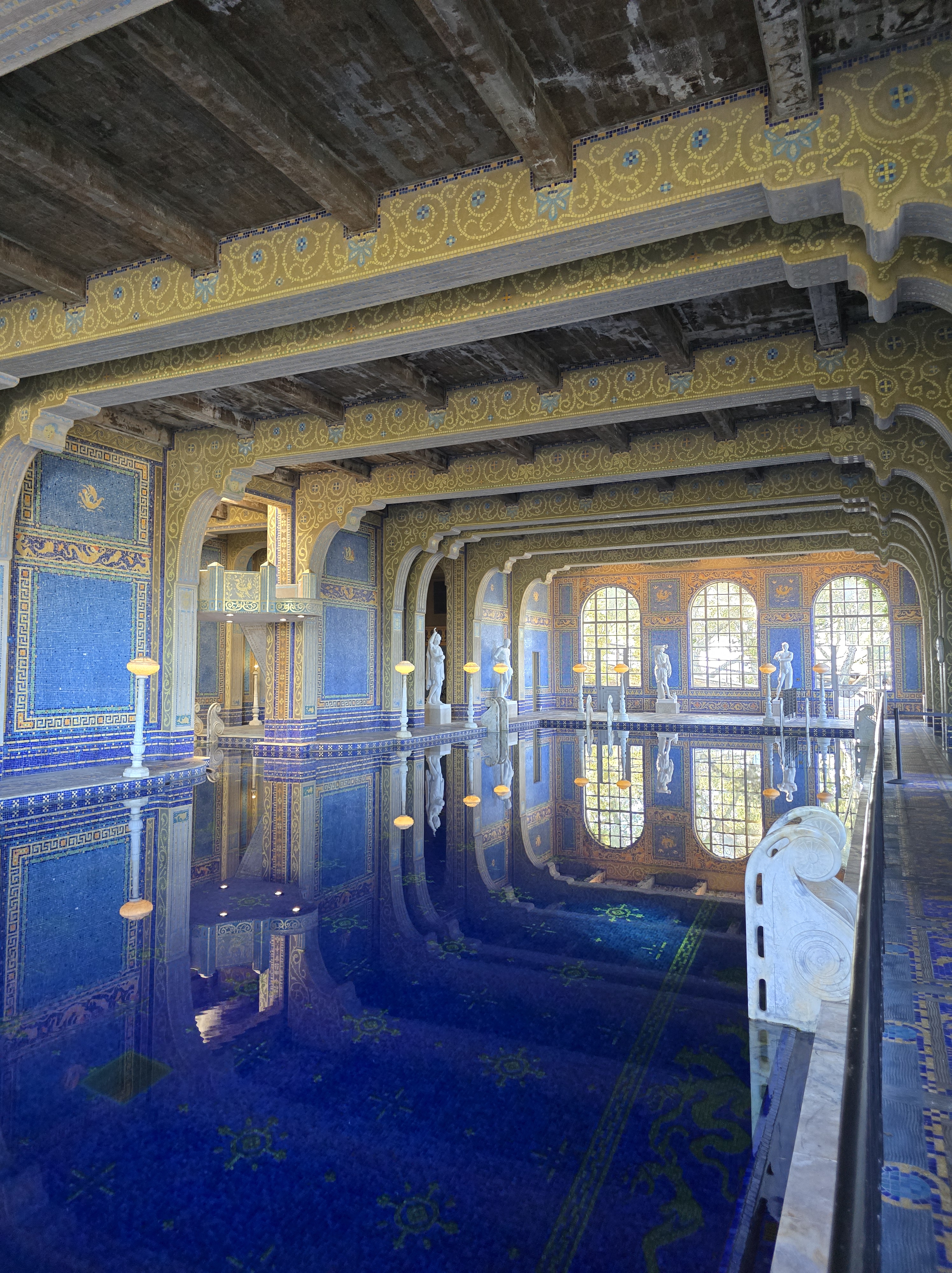
Hearst Castle includes two pools: the Neptune Pool is the large outdoor pool, and the Roman Pool is the indoor pool located under the tennis courts.
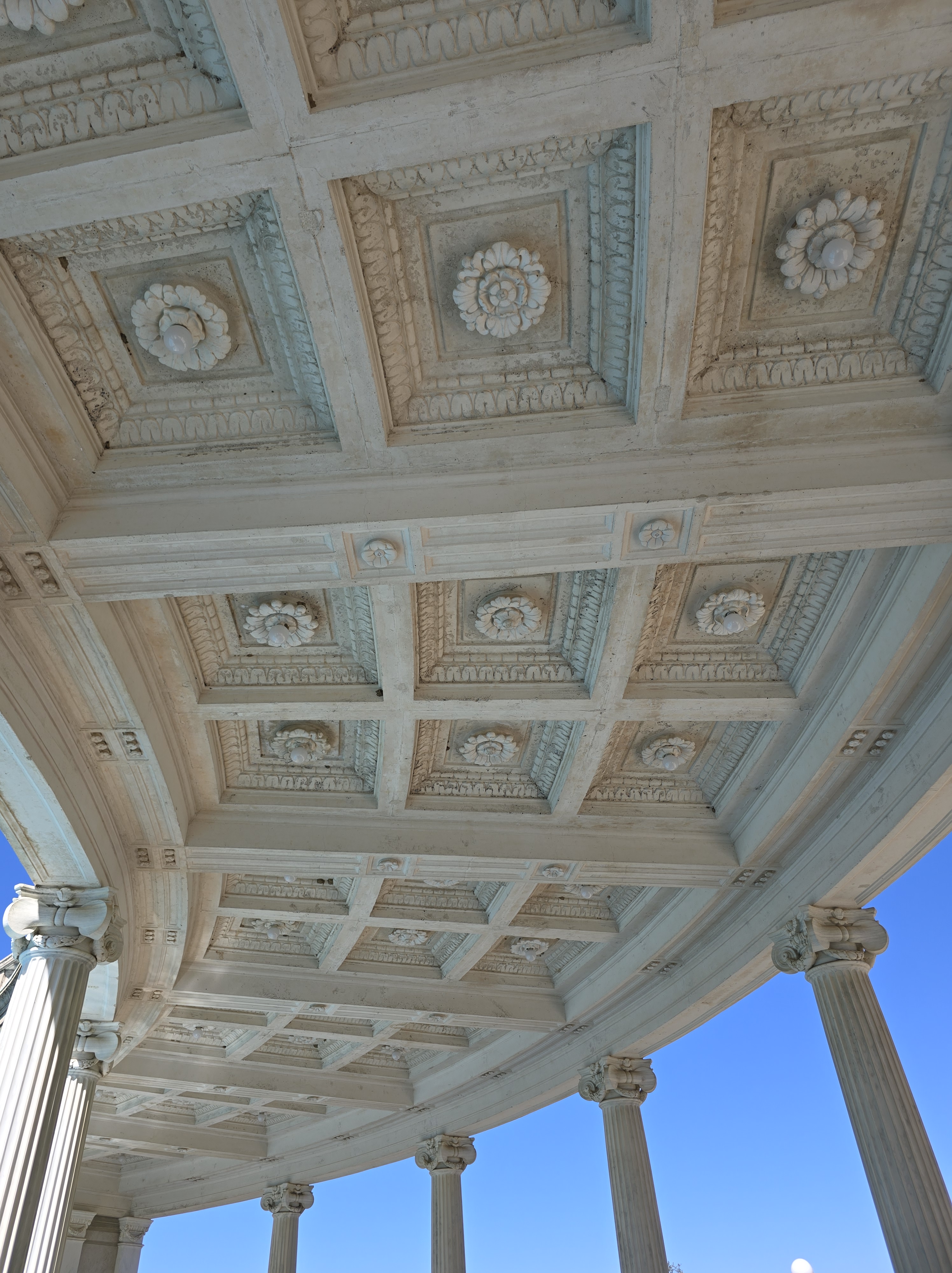
When Hearst Castle was initially built, Morgan and Hearst designed a small wading pool for the children. As Casa Grande grew, so did Hearst’s vision for the pool. A larger house meant a larger pool. The current version that you see is the third rendition of Morgan’s designs (1924, 1926-1927, 1934-1936). The sculptures of Neptune and two nereids in the temple were added during the second iteration, while the colonnades and temple were added during the final design. The columns in the Roman temple came from Roman ruins in Turkey that were salvaged after an earthquake.
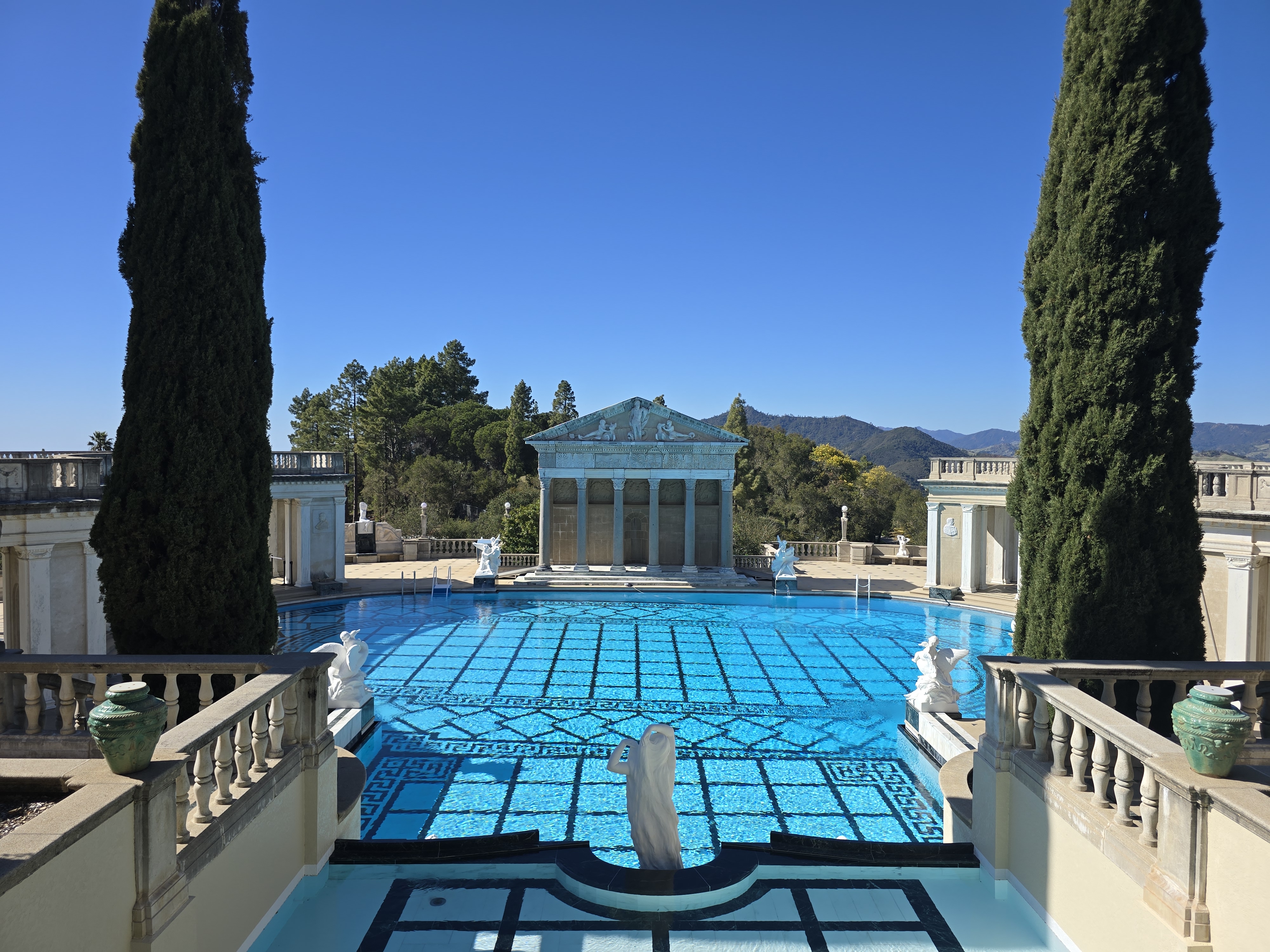
The current version of the Neptune Pool measures 104 feet long by 58 feet wide, and 95 feet wide at the alcove, ranges from 3.5 to 10 feet deep, and holds 346,000 gallons of water. The dressing rooms were added in 1928, and decorated according to Hearst’s instructions.
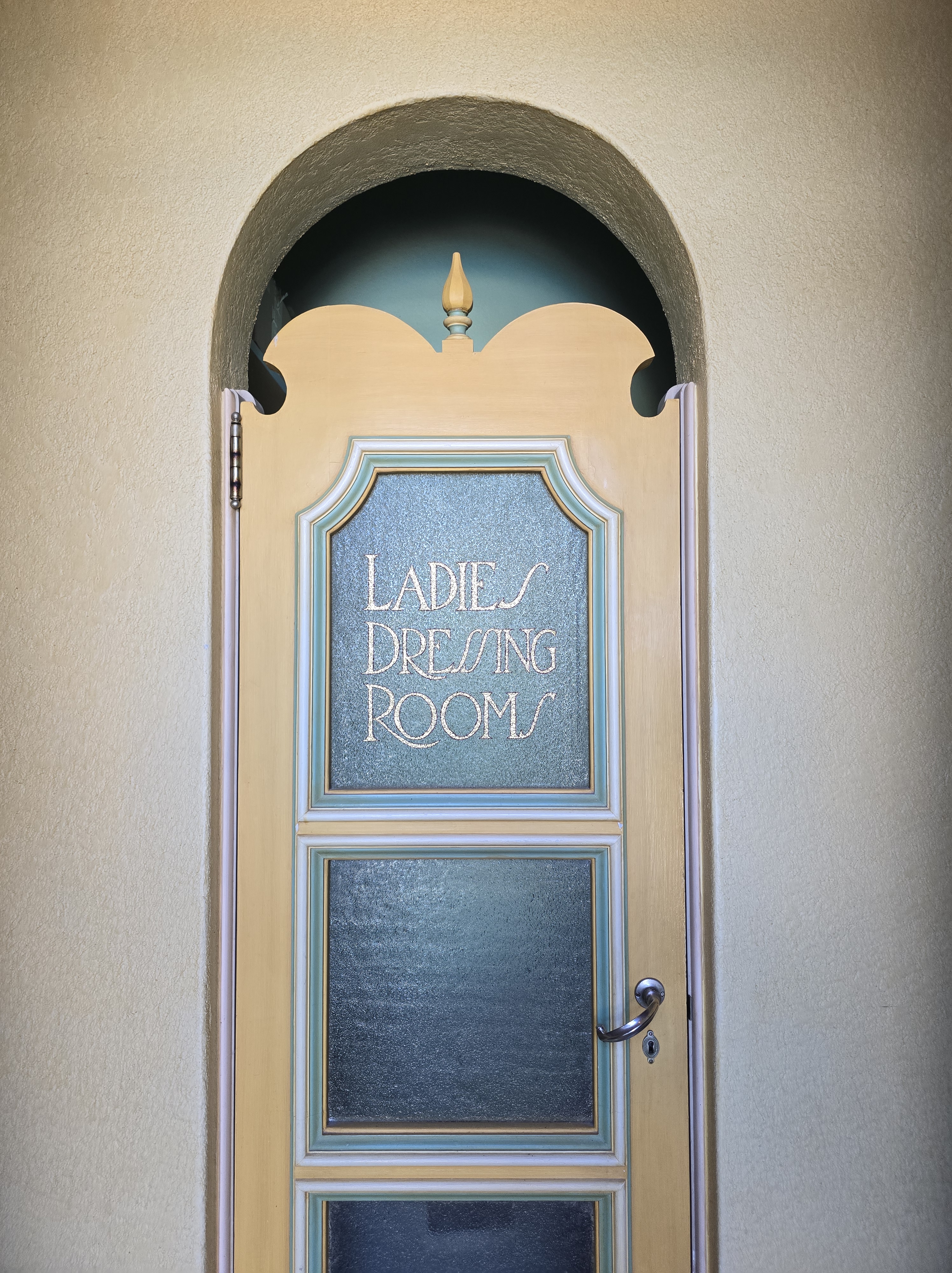
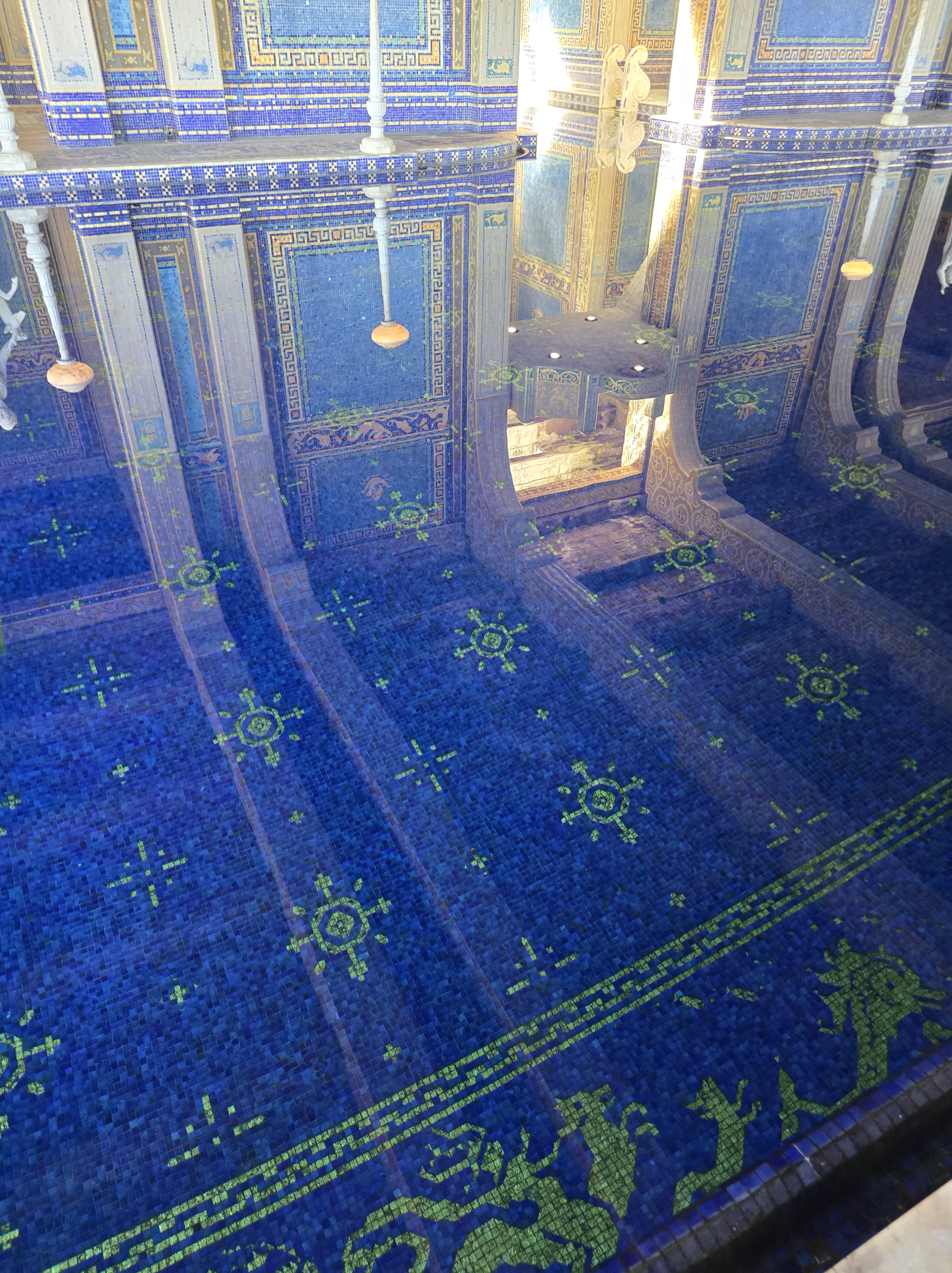
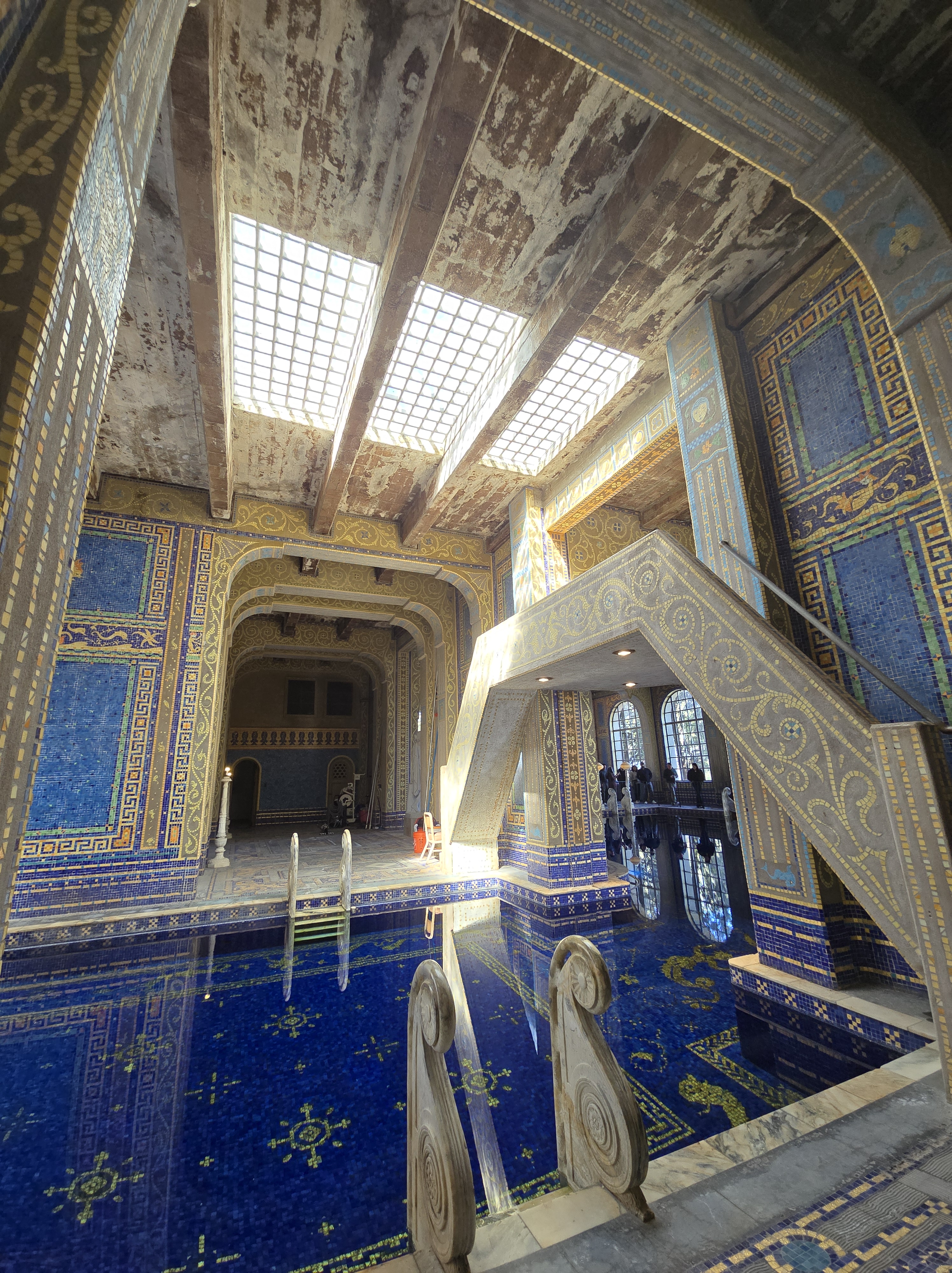
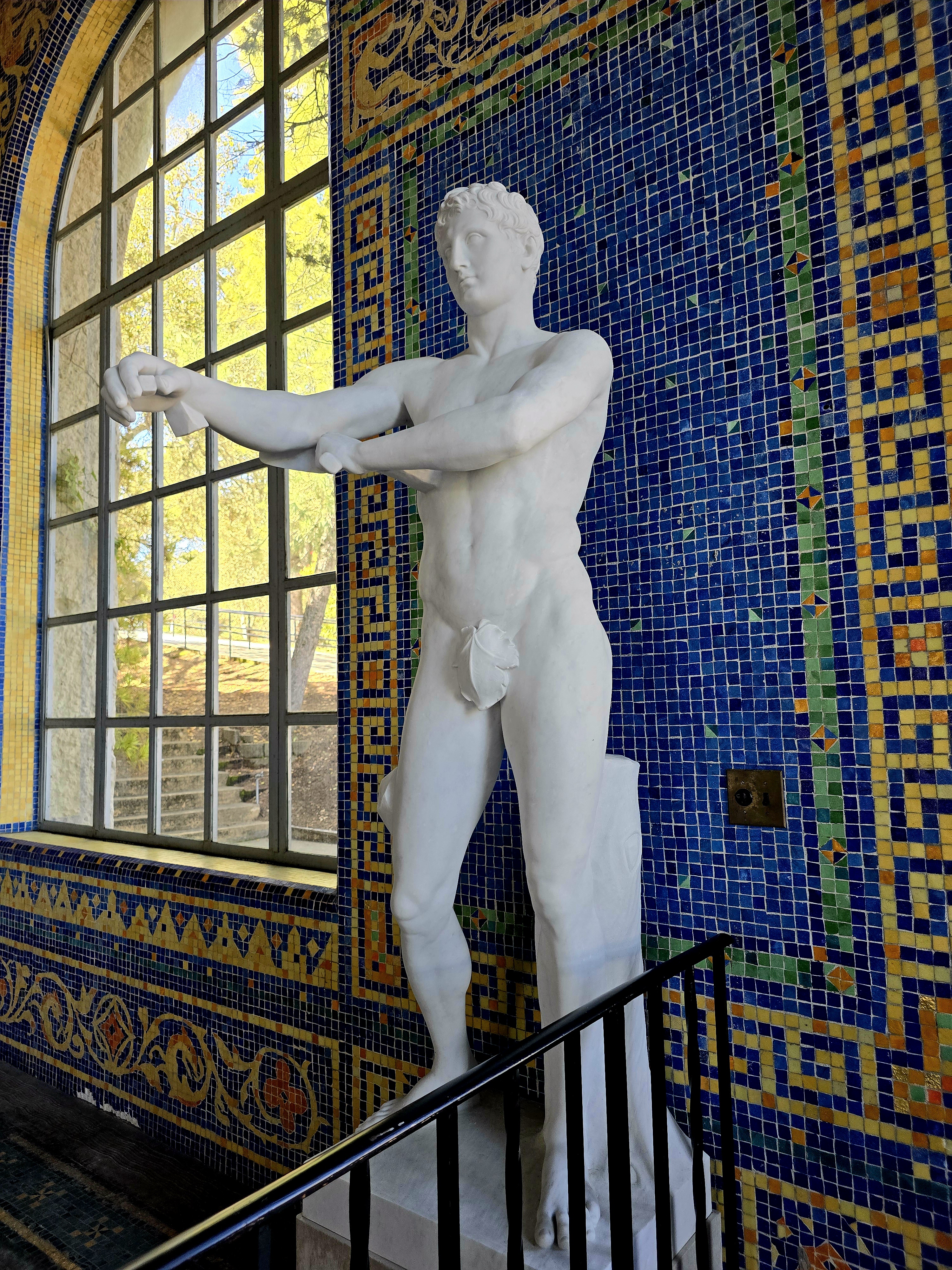
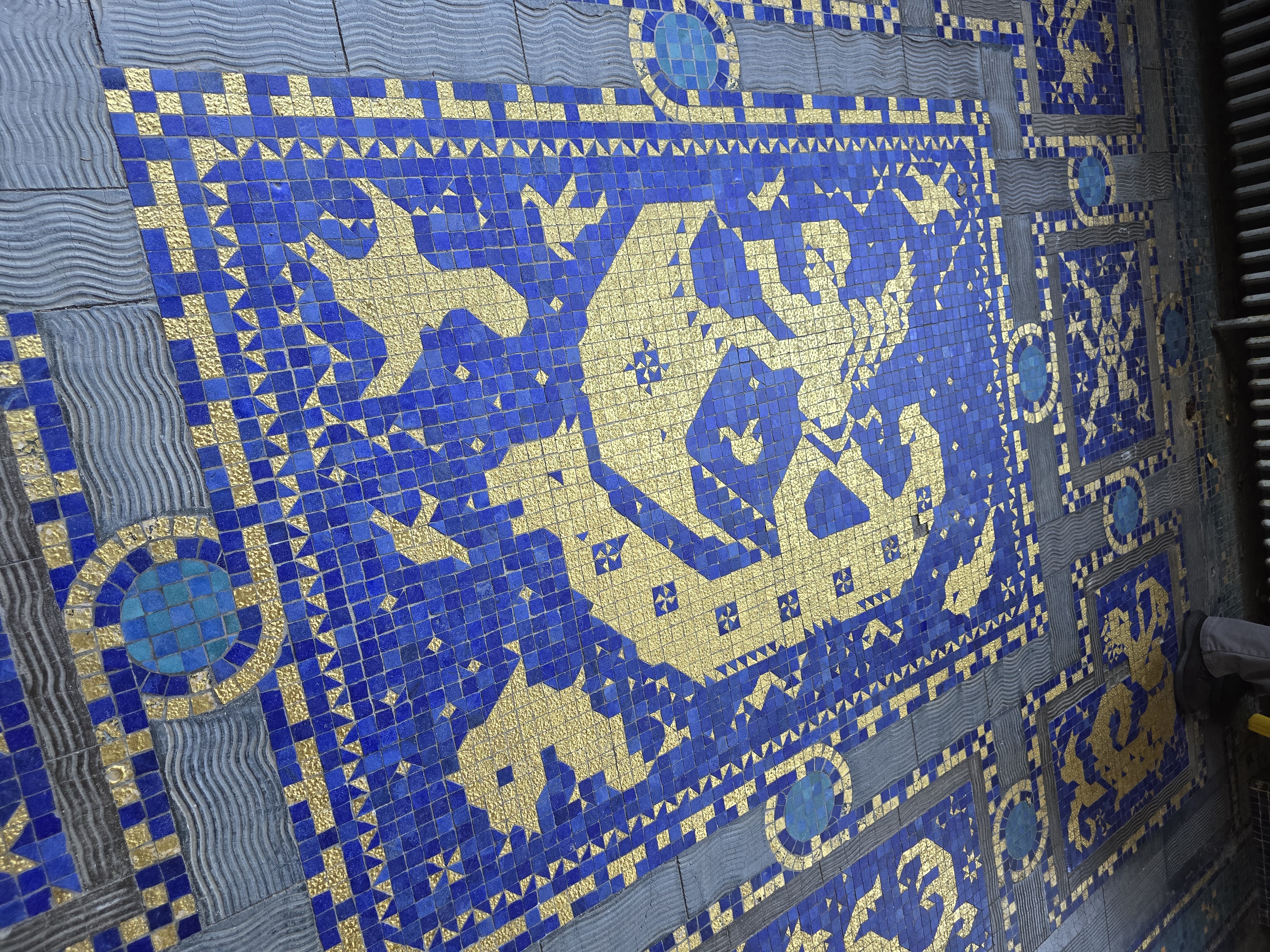
The Roman Pool, built from 1927-1934, is designed to resemble ancient Roman baths, but with modern conveniences like lights, diving boards, and dressing rooms. The floor is laid with 3.5 MILLION Murano 1-inch glass tiles, colored mostly in orange and blue, while others are clear with fused gold inside. The eight Roman statues were designed and carved by Italian sculptor Carlo Freter in 1930, and based on ancient Greek and Roman statuary. As with the Neptune Pool, the Roman Pool also comes with its own dressing rooms. The entire space is beautiful, but I think my favorite part may be the diving platform and the space behind the platform where you have to climb the steps to be able to dive!

About the Guest Cottages
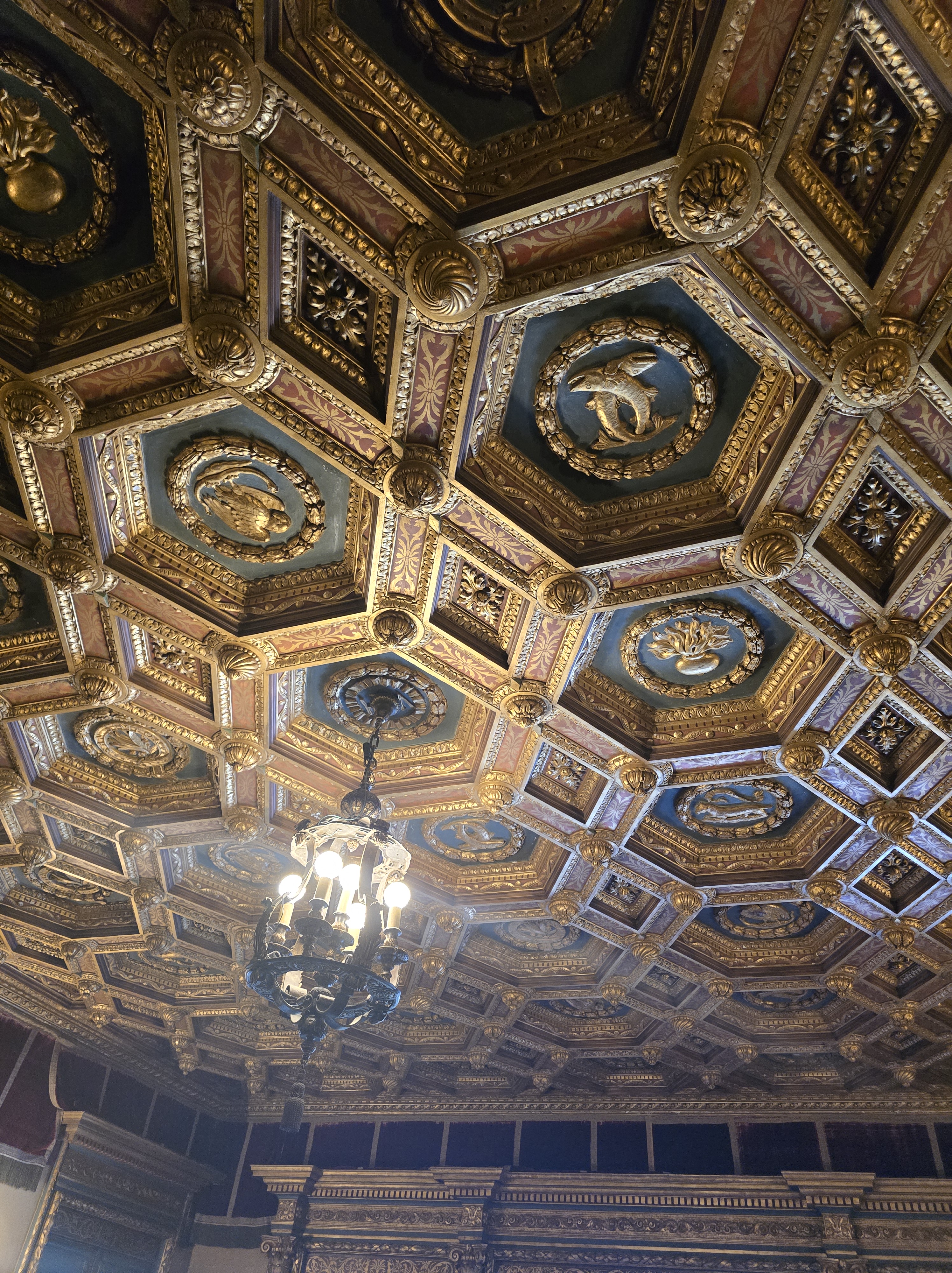
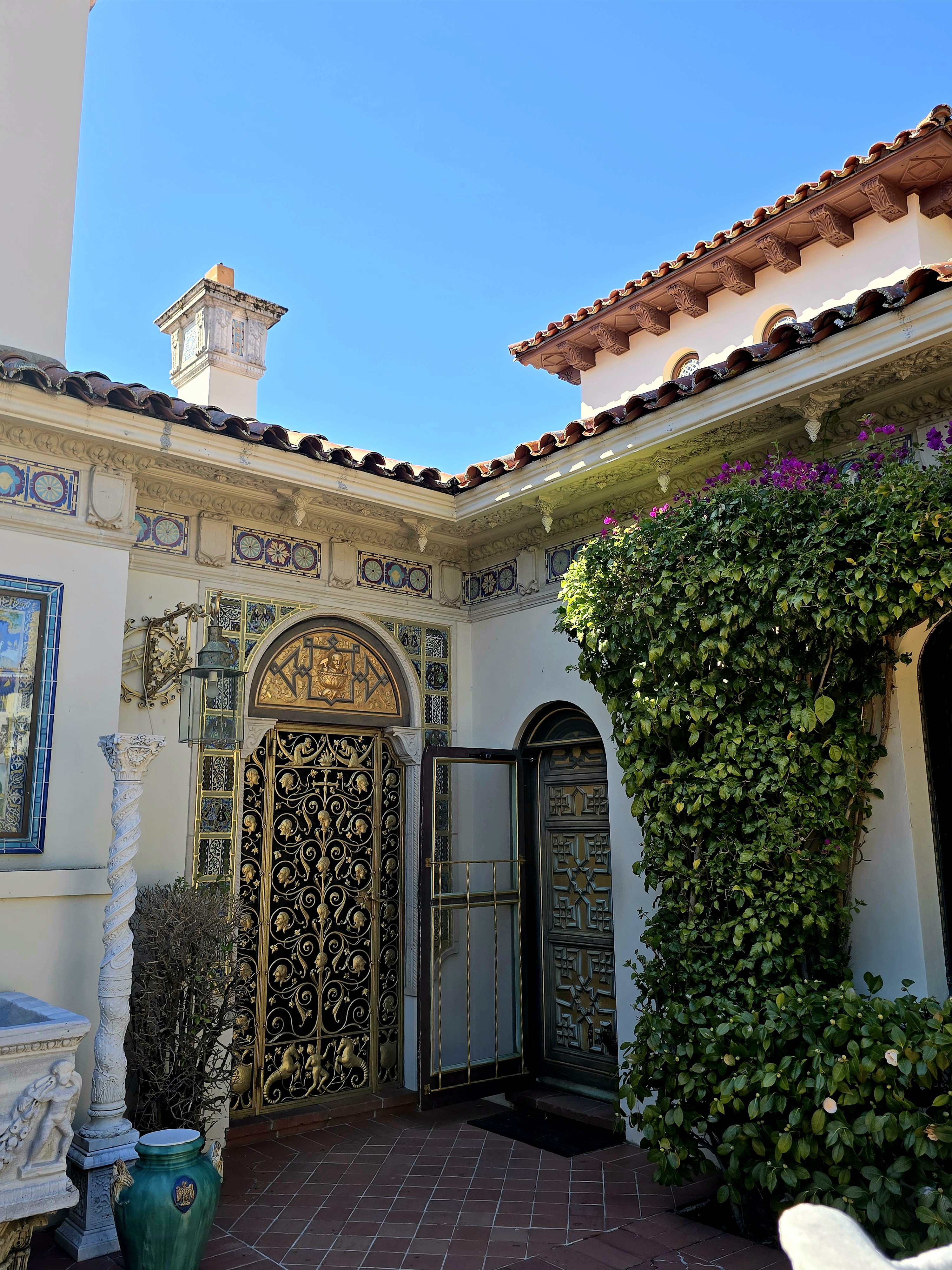
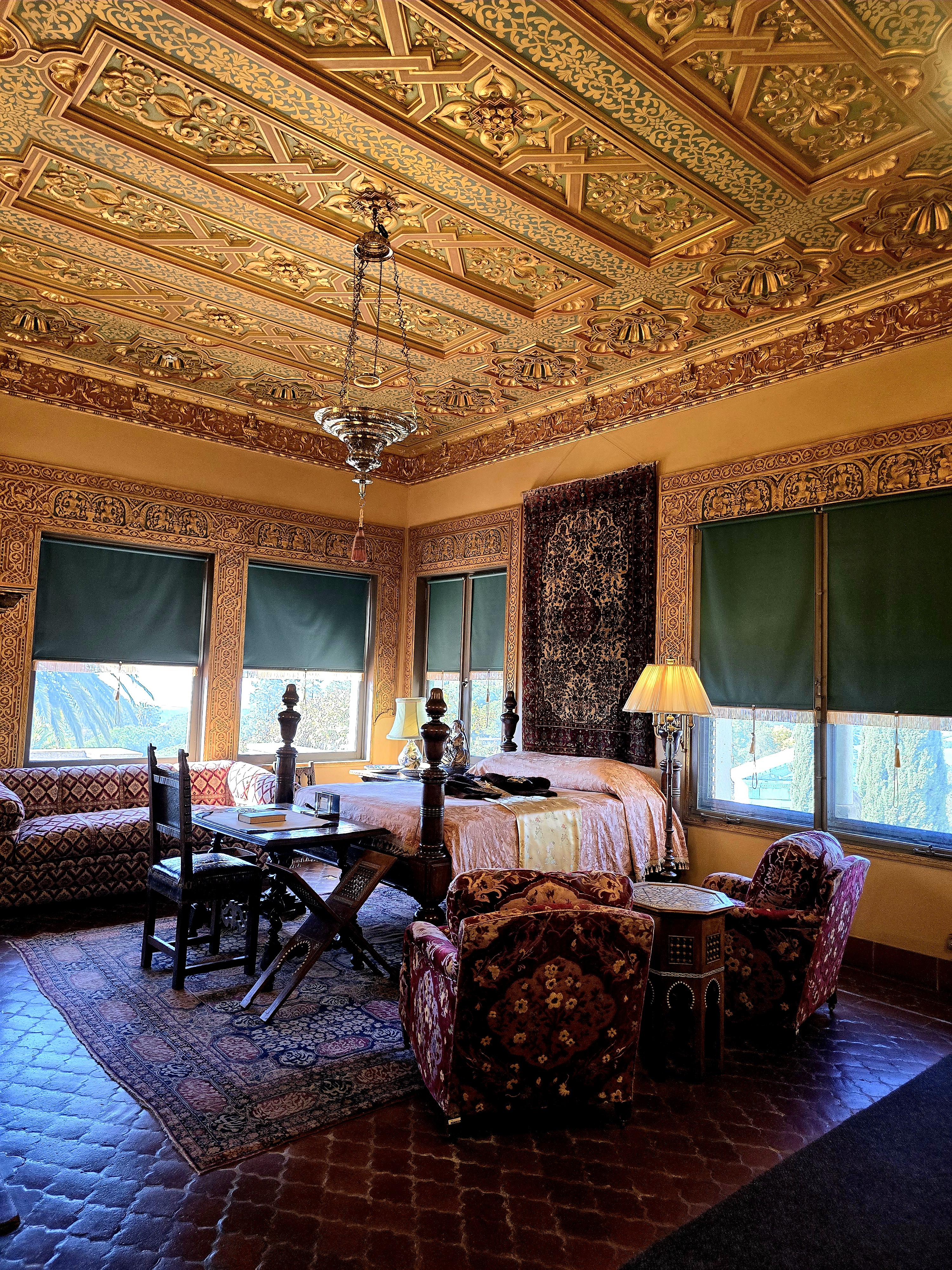
There were three guest cottages: Casa del Mar, Casa del Sol, and Casa del Monte, totaling over 11,000 sq ft. Each cottage includes multiple bedrooms with their own bathrooms and a shared sitting room, but neither cottage includes a kitchen. After Casa Grande was completed, guests were expected to have their meals there. The ceilings were designed by Morgan and created by Morgan’s craftsmen using cast plaster, then covered with 22 karat gold leaf, and feature local touches like eucalyptus leaves and words like “San Simeon”. Each cottage has views of the respective name – the sea, the sun, and the mountains.
Casa del Monte was the first structure on the property, completed in the summer of 1921, and where the Hearsts stayed at first. It is the smallest of the three cottages at 2500 sq ft and includes four bedrooms and four bathrooms. It originally had two large bathrooms, but Mrs. Hearst thought four smaller bathrooms for each bedroom would be more practical. The name “Casa del Monte” comes from the view of the Santa Lucia Mountains seen from the cottage. It is designed in the Spanish Renaissance style, with cherubs scattered throughout. After the Hearsts stopped staying at Casa del Monte, guests included Cary Grant, Luella Parsons who wrote for the Hearst papers, and Winston Churchill.
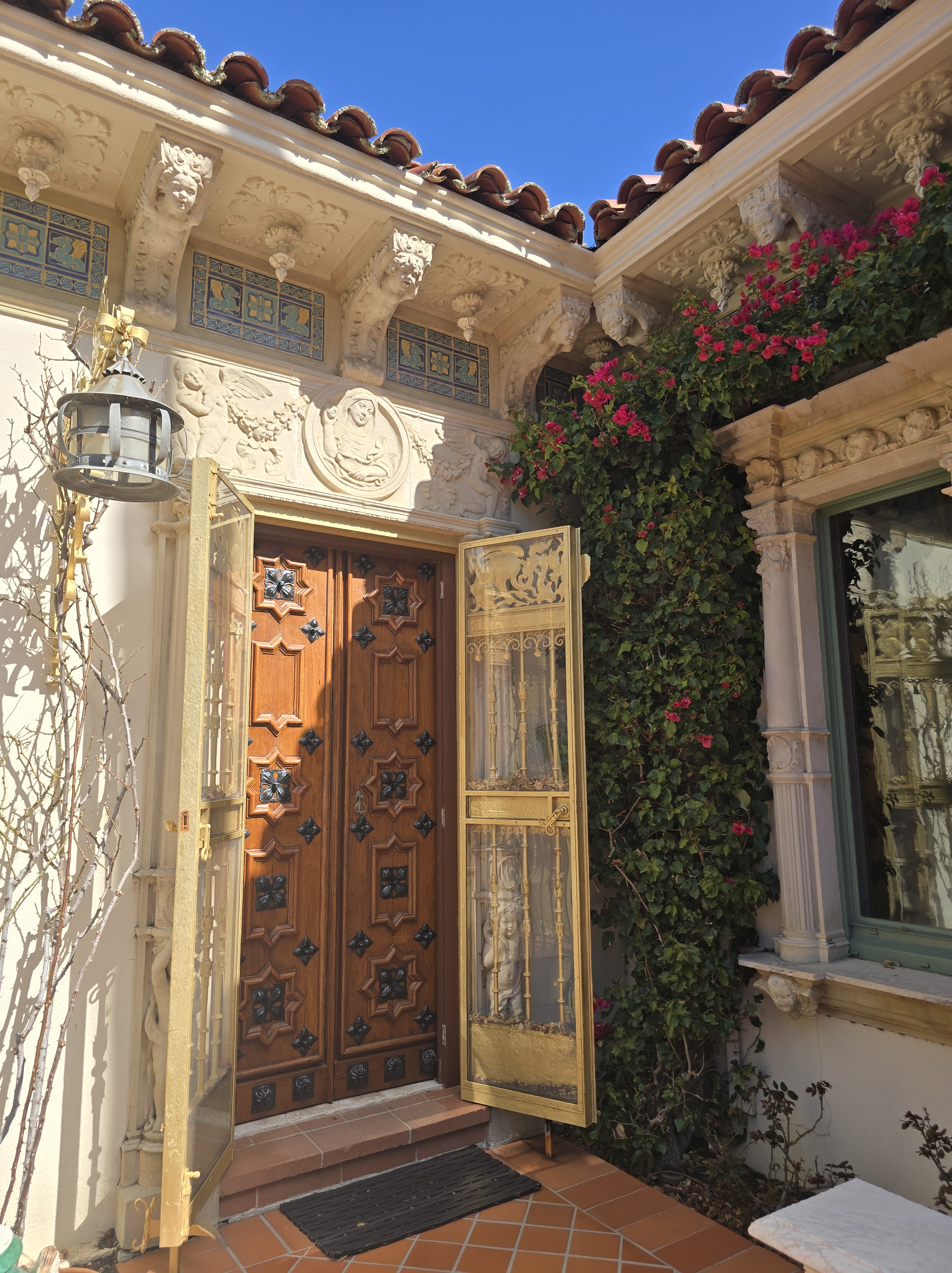
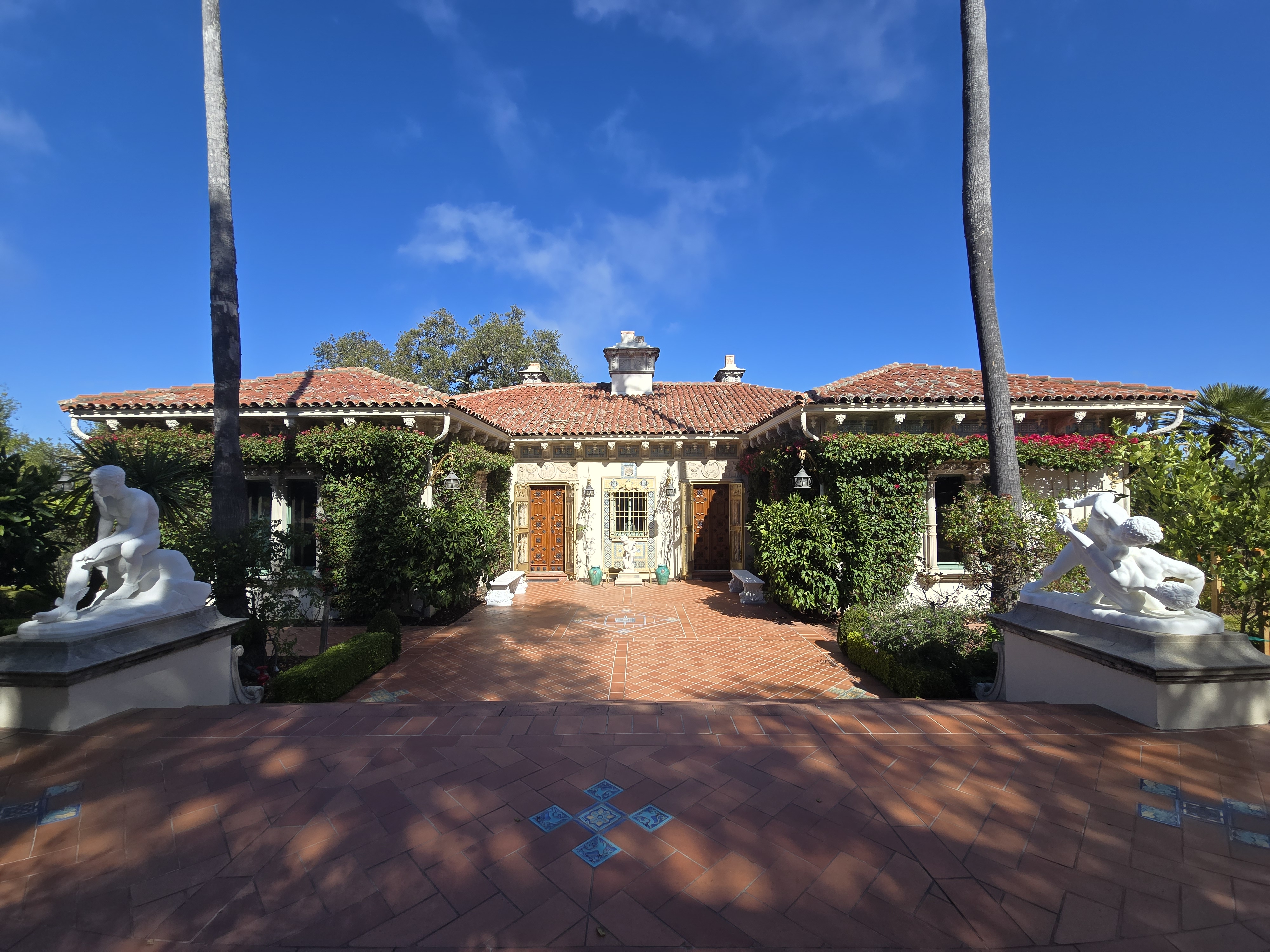
Casa del Mar was built between 1920 to 1923. With over 3600 sq ft and eight bedrooms and bathrooms, Casa del Mar was built for Hearst, his wife and children while Casa Grande was being built. The family lived here from 1923-1927, and Hearst lived here from 1945-1947 once his health didn’t allow him to climb to his third-floor bedroom in Casa Grande.
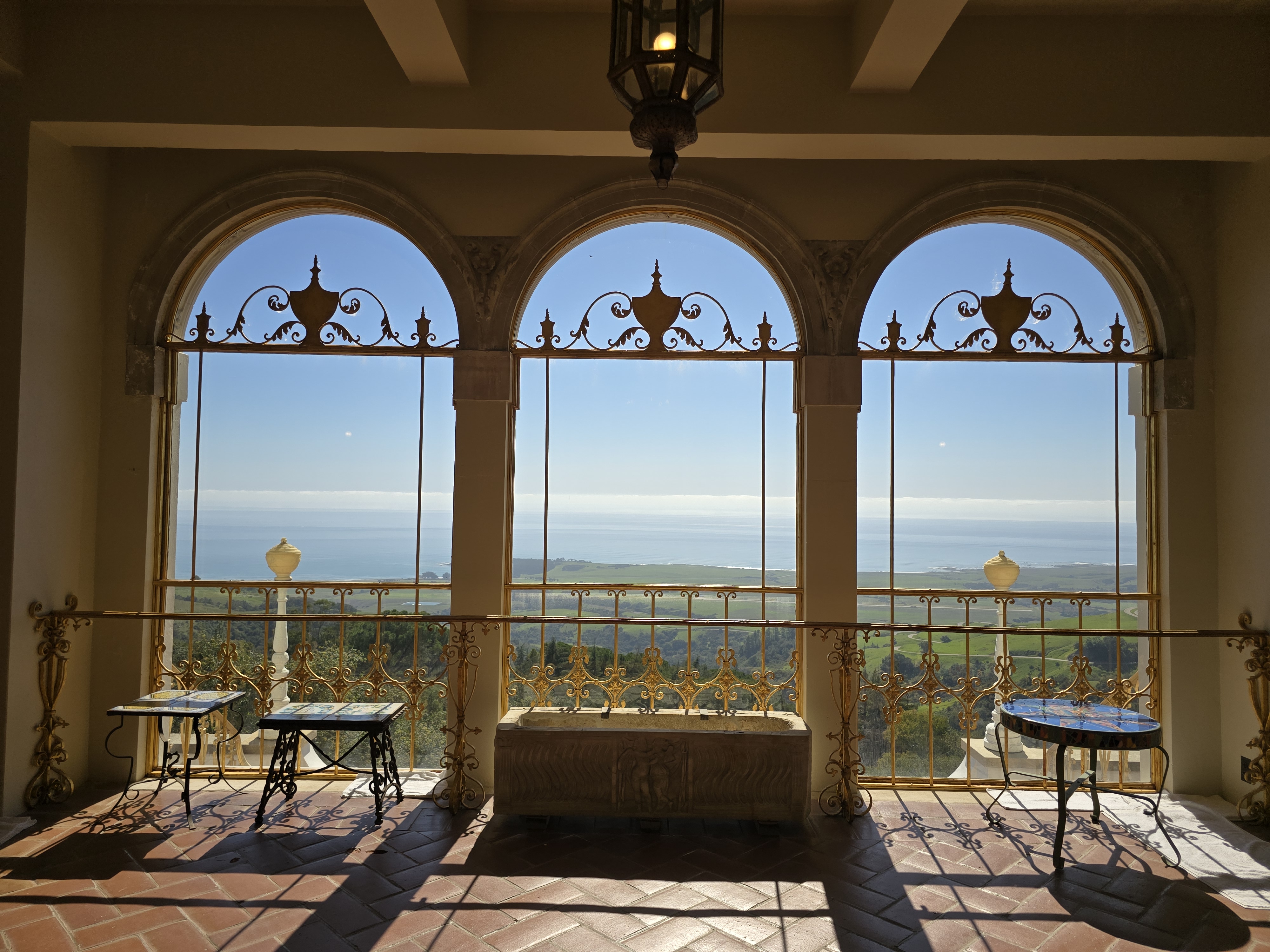
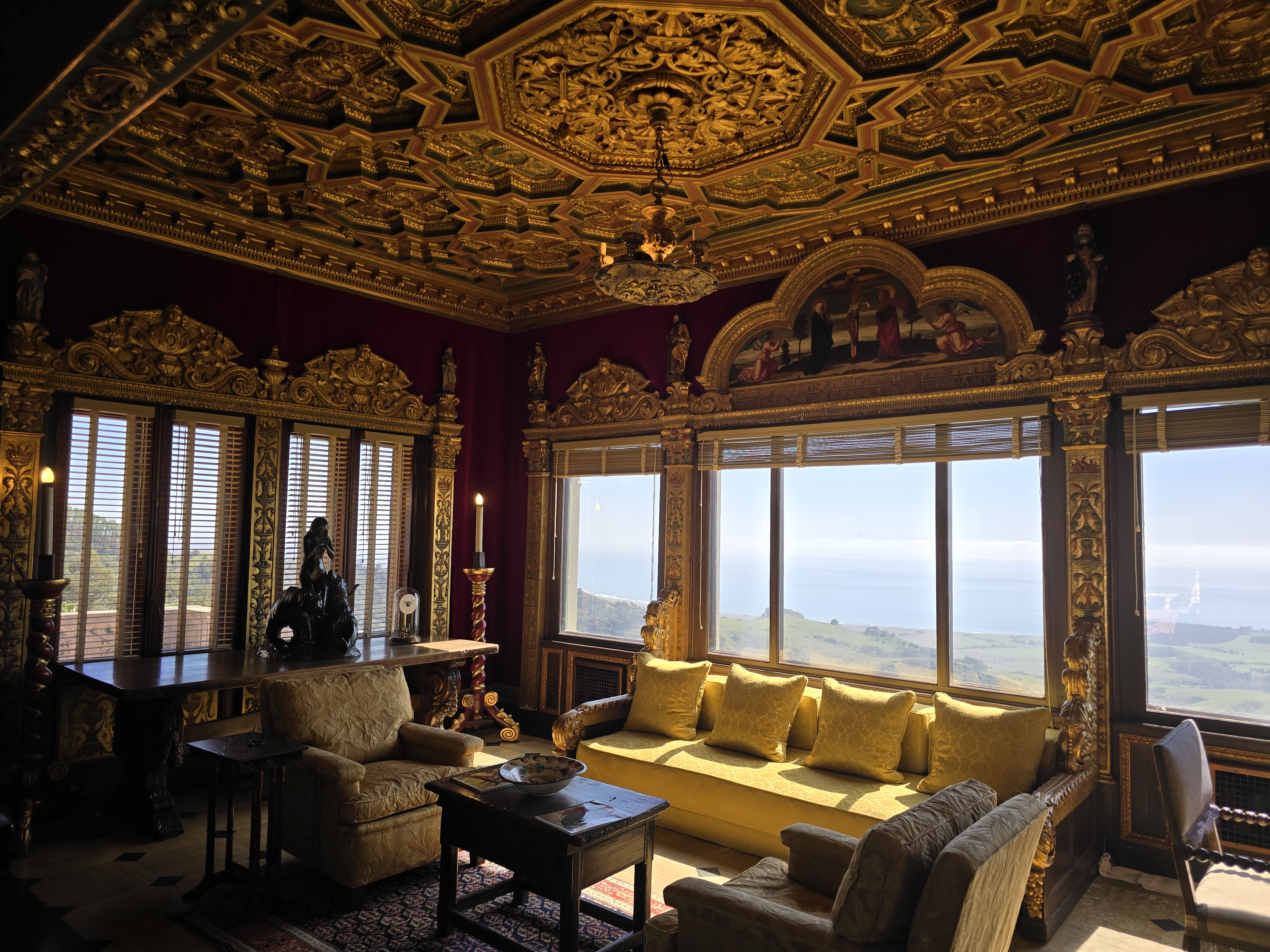
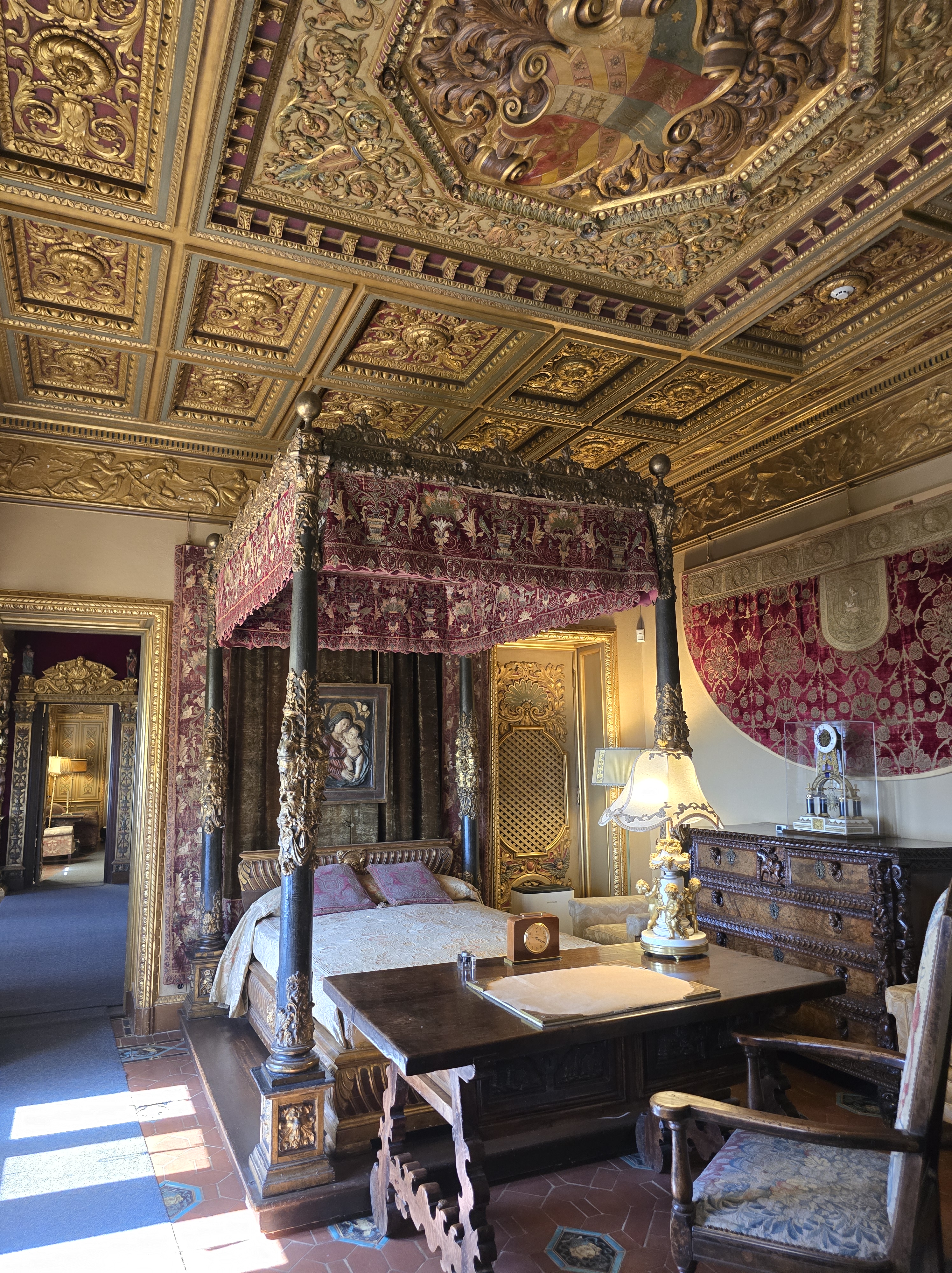
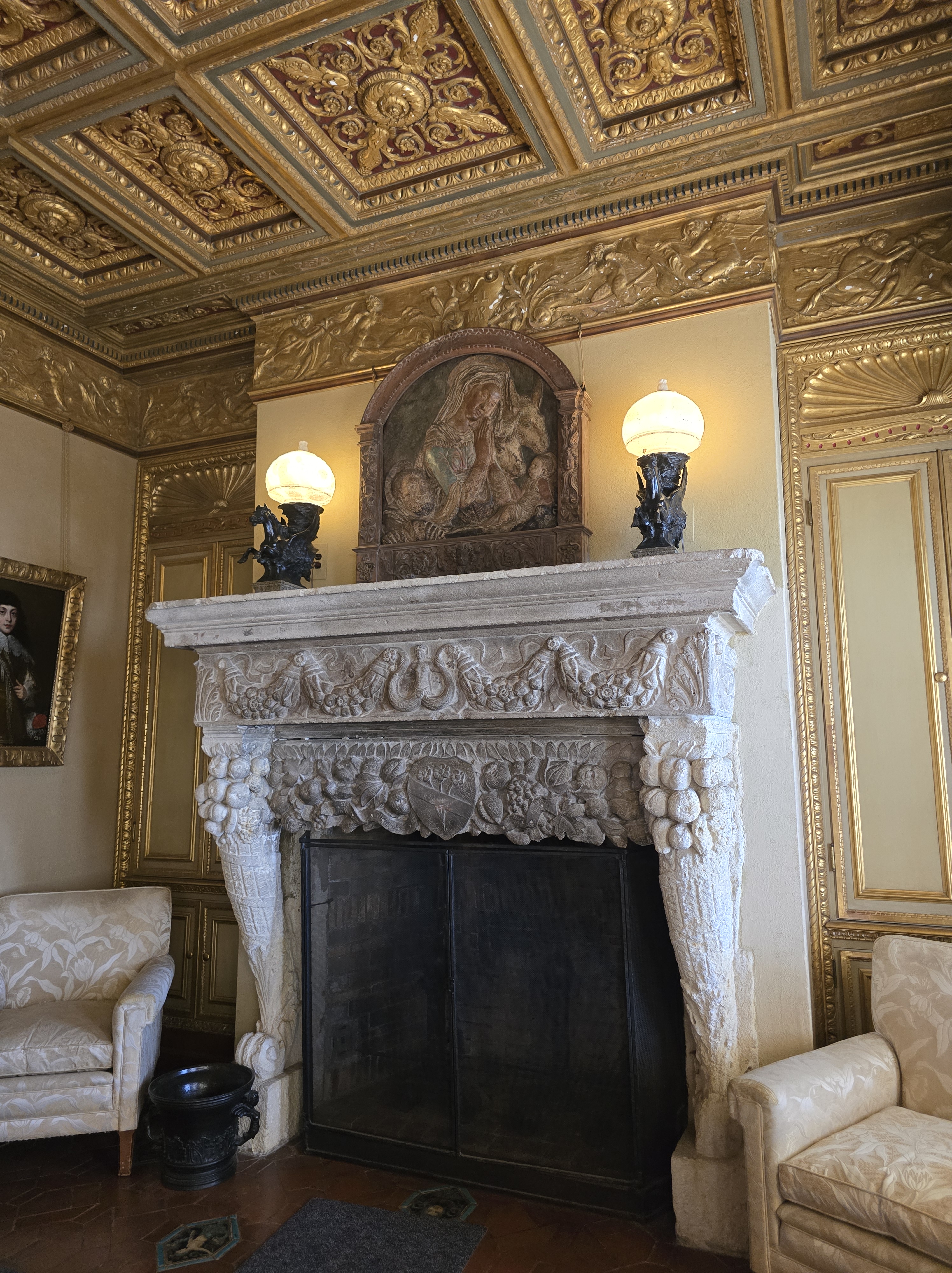
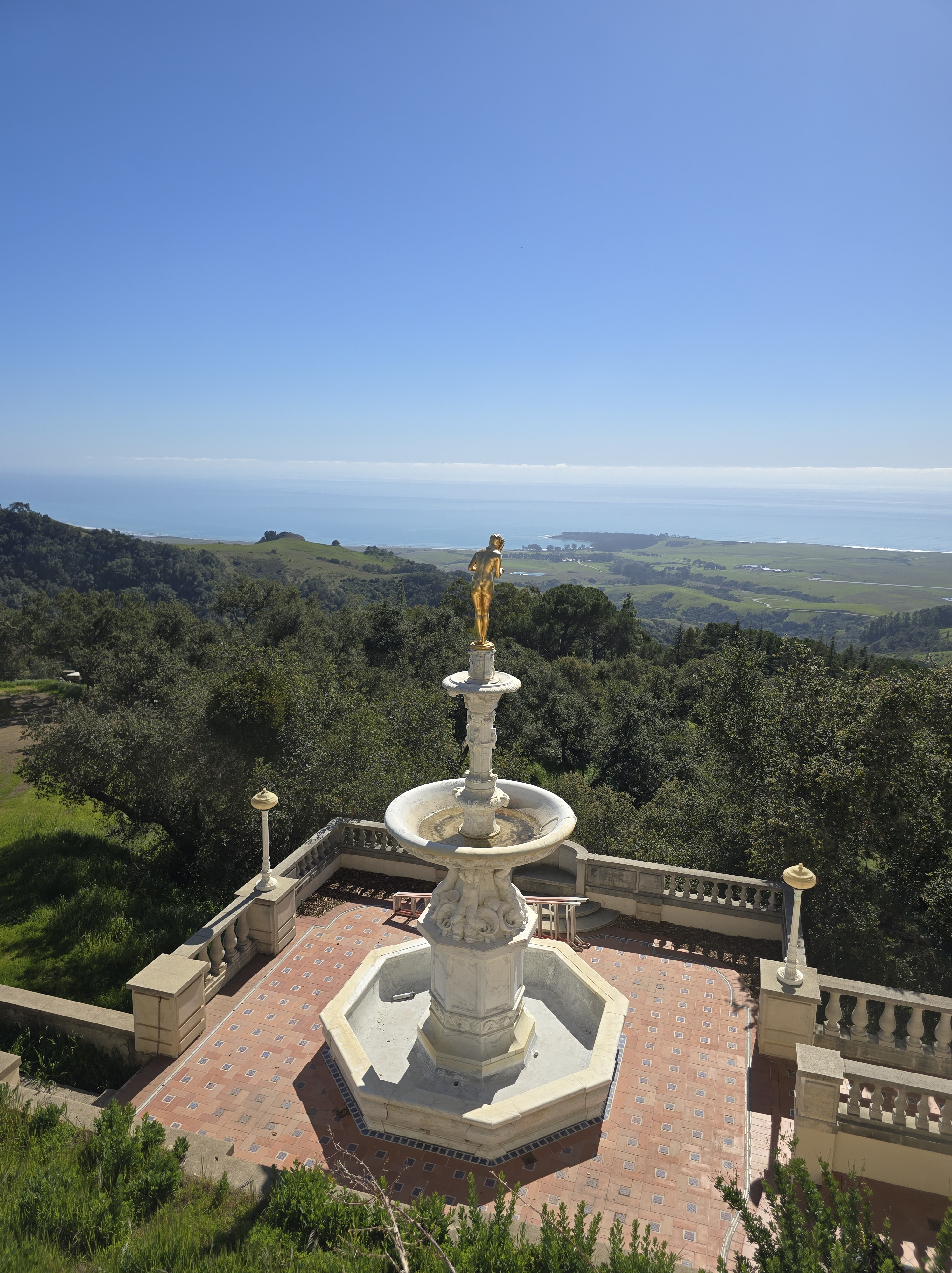
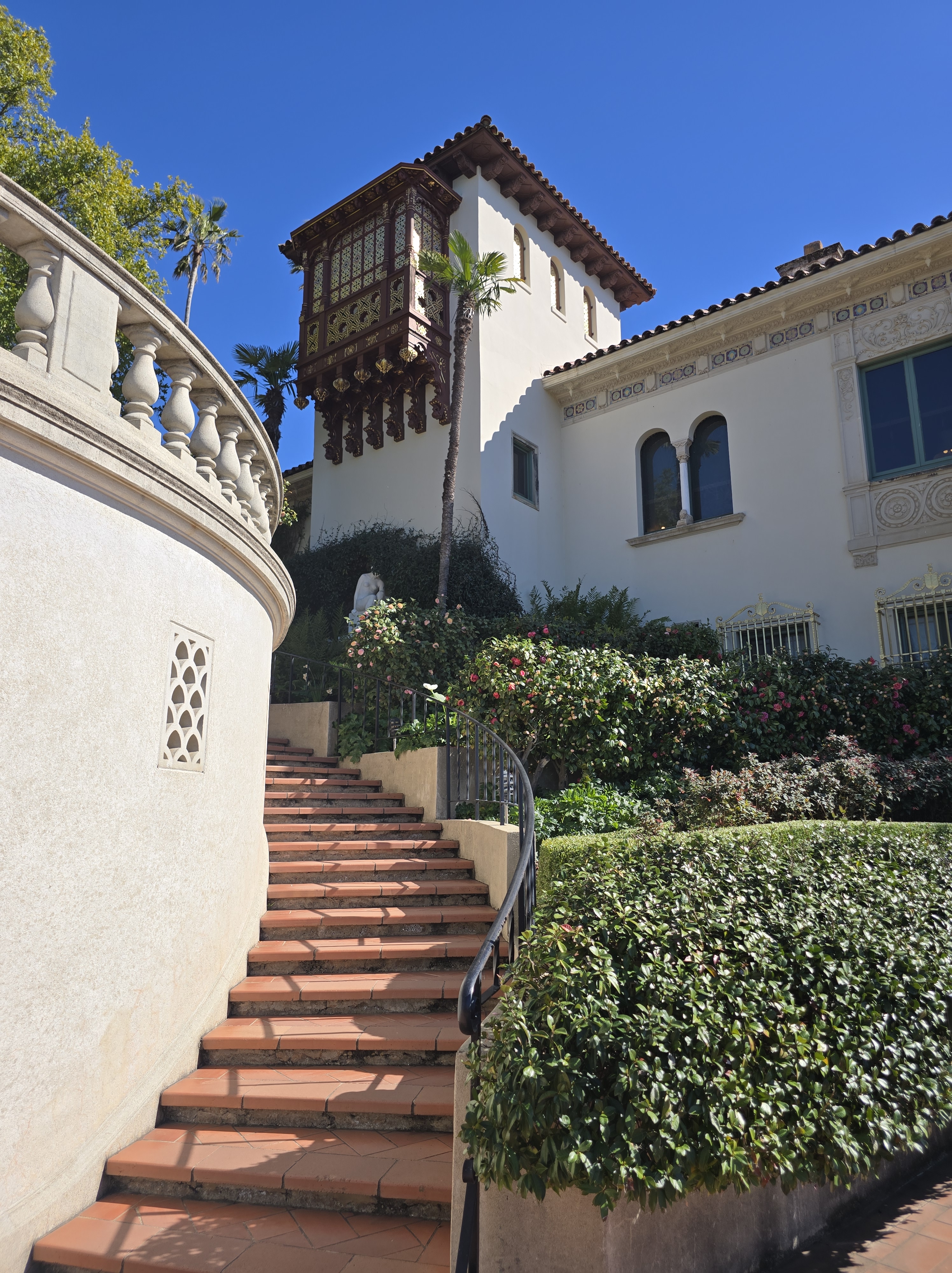
The balcony at Casa del Sol faces west, offering beautiful views of the sunset, so maybe that’s where Hearst got its name from. At 3600 sq ft and three levels, it is the middle-sized guest cottage of the three, and features a deep entrance court, round-arched windows, and two small towers with balconies. The decorative elements in Casa del Sol are inspired by Moors, such as the eight-pointed star, arabesques and geometric interlaced patterns in the ceilings, fireplace mantels and window surrounds. Hearst’s eclecticism shows with the mixture of Italian Renaissance furniture with the Moorish designs.
Construction of Hearst Castle took 28 years, from 1919 to 1947. The lengthy process had several reasons, including labor shortages after World War I and during World War II, Hearst’s financial troubles during the Great Depression, and all of the changes that Hearst would request of Julia Morgan. The unfinished portions of Casa Grande give you an unfiltered look at the construction process, and I believe, make the tours even more impactful.
If you ever find yourself on the central coast of California, be sure to visit Hearst Castle, and take a tour… or five like I did!
 Sravanthi Meka