
As Women’s History Month wraps up, it seemed an appropriate time to think about the trip to Hearst Castle that I took earlier this month and the woman behind the castle: Julia Morgan. Morgan was the first registered female architect in California, and that’s no small feat; Even today, women only make up 27% of licensed architects. Morgan was a visionary, designing buildings that withstood the 1906 San Francisco earthquake, and developing partnerships with wealthy benefactors.
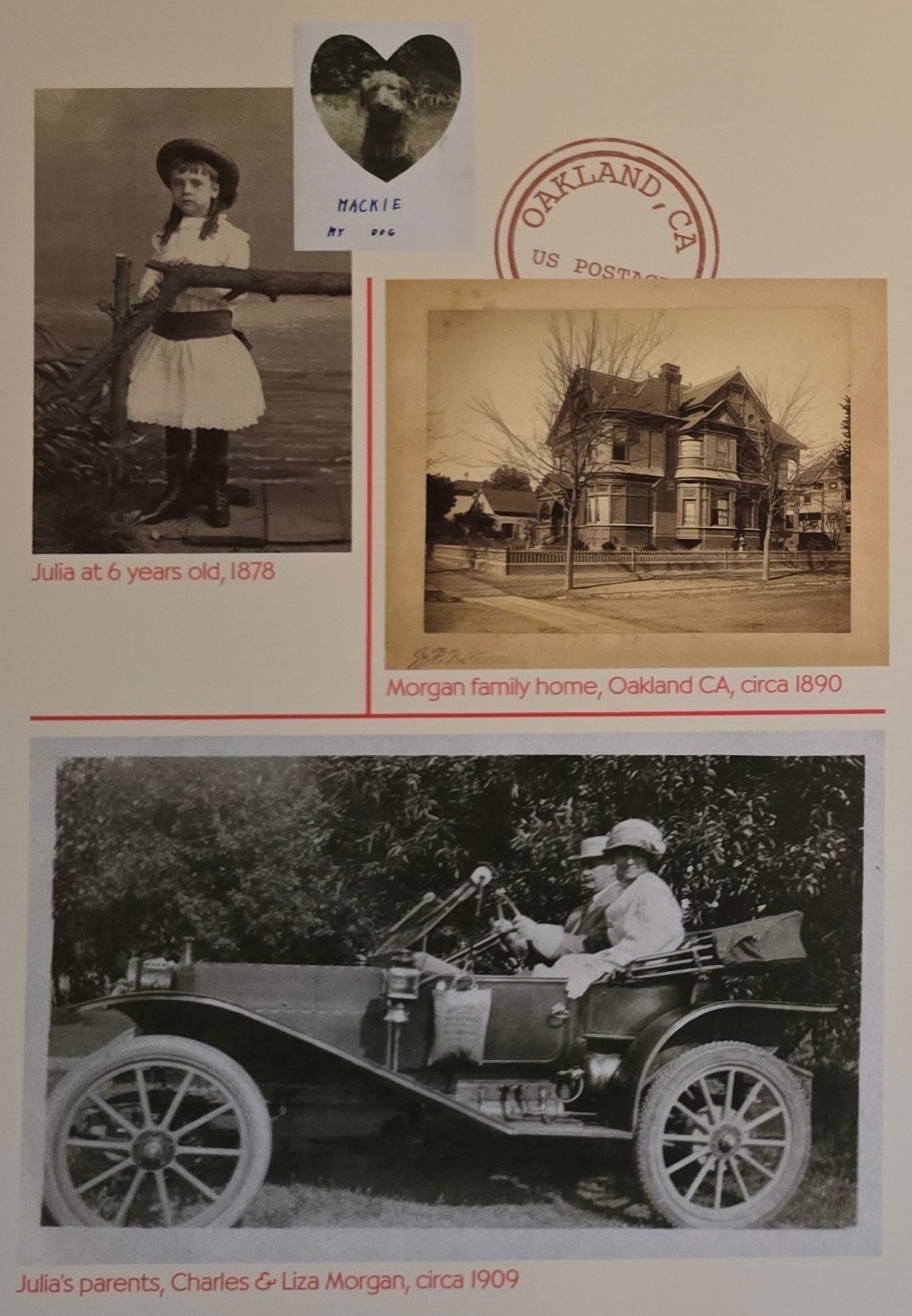
Morgan was born in San Francisco and raised in Oakland. Her interest in architecture was inspired by her mother’s uncle, Pierre Le Brun, who designed the Met Life Tower in New York City (1909), and further encouraged by her mentor Bernard Maybeck, a lecturer at University of California-Berkeley, where in 1894, Morgan earned a degree in civil engineering, as they did not offer a degree in architecture at the time. While at Berkeley, Morgan was a member of the Kappa Alpha Theta sorority, which proved to be quite the referral source, as fellow sisters would later recommend her to design YWCAs in California, Utah, Arizona, and Hawaii, women’s cultural centers and women’s gymnasiums.

After graduating from Berkeley, Morgan attended the acclaimed École des Beaux-Arts in Paris on Maybeck’s recommendation, though it took her several attempts to join the school due to their reluctance to admit women. She was admitted to the Architecture Program on her third try in 1897, ranking number 13 out of the 376 applicants. While in Paris, Morgan was exposed to feminist views, affiliating with other female artists who were influential in women gaining entrance into the École des Beaux-Arts. She was the first woman at École des Beaux-Arts to earn an architecture degree, and completed her studies in three years, whereas most students took five years to get their degrees.
When Morgan returned to California, she worked with John Galen Heard, the architect for the University of California’s master plan. By 1904, she became the first woman to get an architecture license in the state of California. Morgan’s success was driven by designing buildings to be earthquake resistant. The Campanil, a 72-foot tall bell tower at Mills College that she designed survived the 1906 earthquake, and sent many clients her way. She became the unofficial principal architect for Mills College because of this success. The 1906 earthquake proved to be an impetus for her career, as there were many buildings that had to be rebuilt, and she had also gained a reputation as a solid designer and builder.
Along with many private homes in the Piedmont, Claremont and Berkeley neighborhoods, Morgan became known for rebuilding the Fairmont Hotel after the 1906 earthquake. Her style was known for being distinctive to California, as part of the Arts and Crafts style, with the use of exposed support beams, horizontal lines to complement the landscape, the use of shingles, California Redwood and earth tones.
Perhaps Morgan’s most well-known client was publishing magnate William Randolph Hearst. But Morgan worked with another Hearst first, Phoebe Hearst, mother of William Randolph Hearst. Mrs. Hearst commissioned Morgan to redo Hacienda del Pozo de Verona in Pleasanton in 1902, and then asked her to design the Asilomar Conference Center for the YWCA on the Monterey peninsula in 1913. Mrs. Hearst was a patron and benefactor for the University of California, so there are many buildings named on campus after the family, and many designed by Julia Morgan. William Randolph Hearst’s first project with Morgan was the Los Angeles Examiner building in 1914. Morgan ended up designing many more buildings for the Hearst family before she began working on Hearst Castle in 1919.

Not only did she design the buildings themselves, but she also tackled landscape architecture and the interior design of the rooms based on what Hearst had already purchased in many cases. Much of the interiors and even the size of the rooms were determined by the intact ceilings and fireplaces that Hearst bought from French’s auction house. She designed 22 swimming pools throughout her career, including three at Hearst Castle — the indoor Roman Pool, and two versions of the Neptune Pool, which began as a wading pool for his sons.

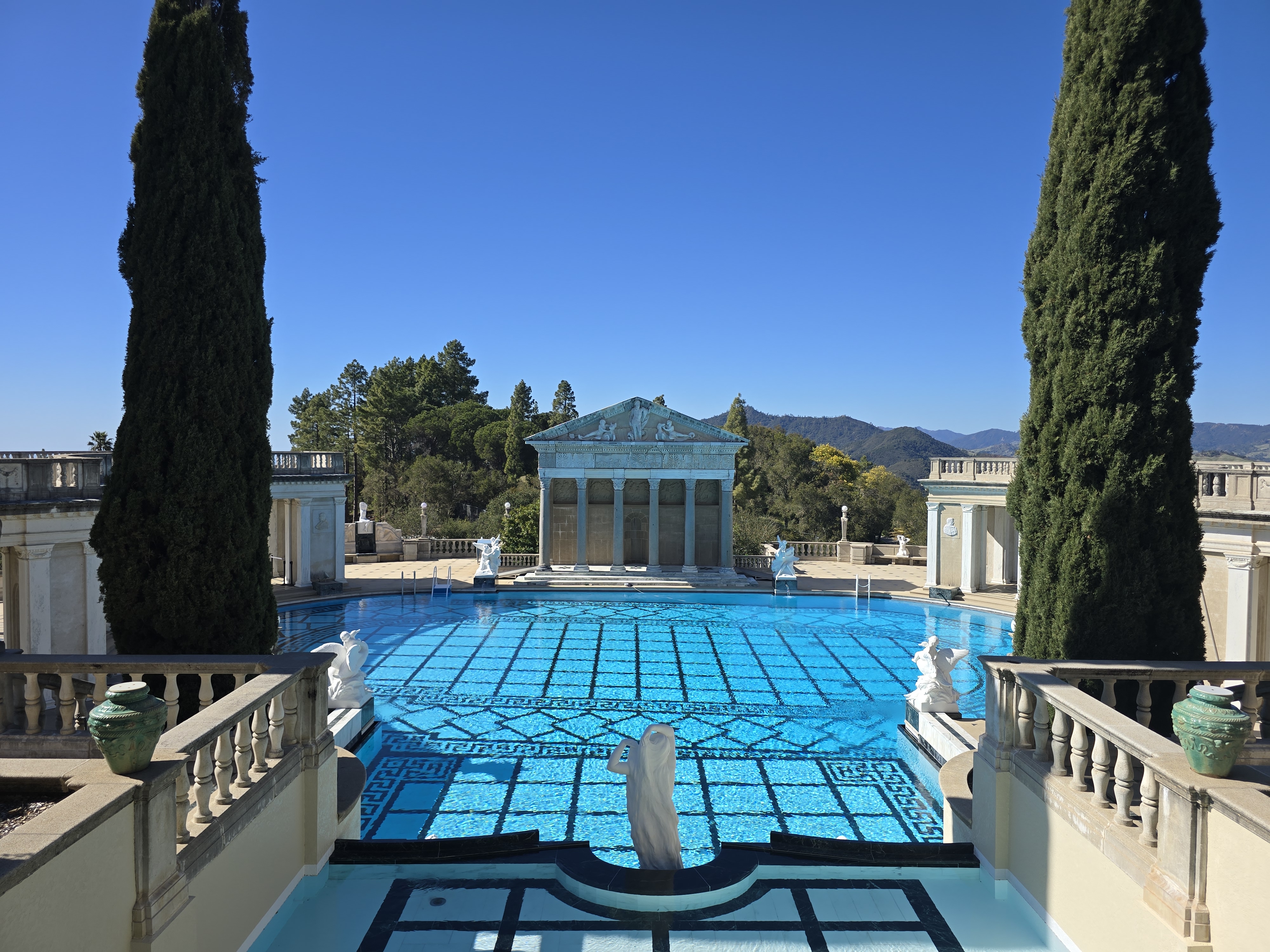
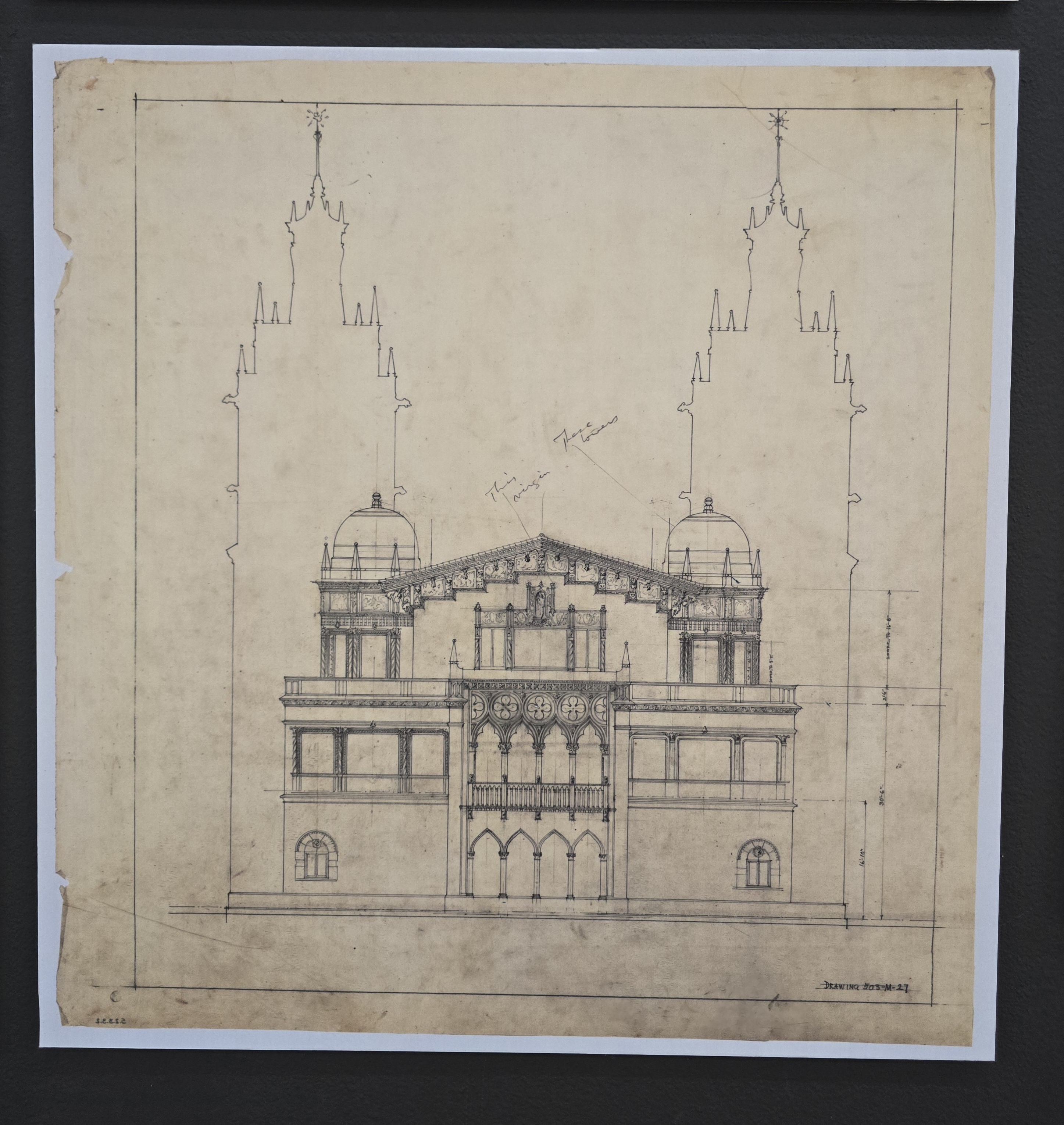
Julia Morgan was the perfect complement to the whimsical, eccentric Hearst, who changed his mind so much that Morgan said he suffered from “changeableness of mind”. They worked together on many redesigns and rebuilds, tearing down or reworking parts that had already been built, including the bell towers in Casa Grande, and the Neptune outdoor pool. Morgan would mail her designs to Hearst, whether he was in California, New York, or visiting one of the other cities where his publishing empire had a newspaper, magazine or radio station. Hearst would mark up the design and send it back to Morgan. And on they went, back and forth.

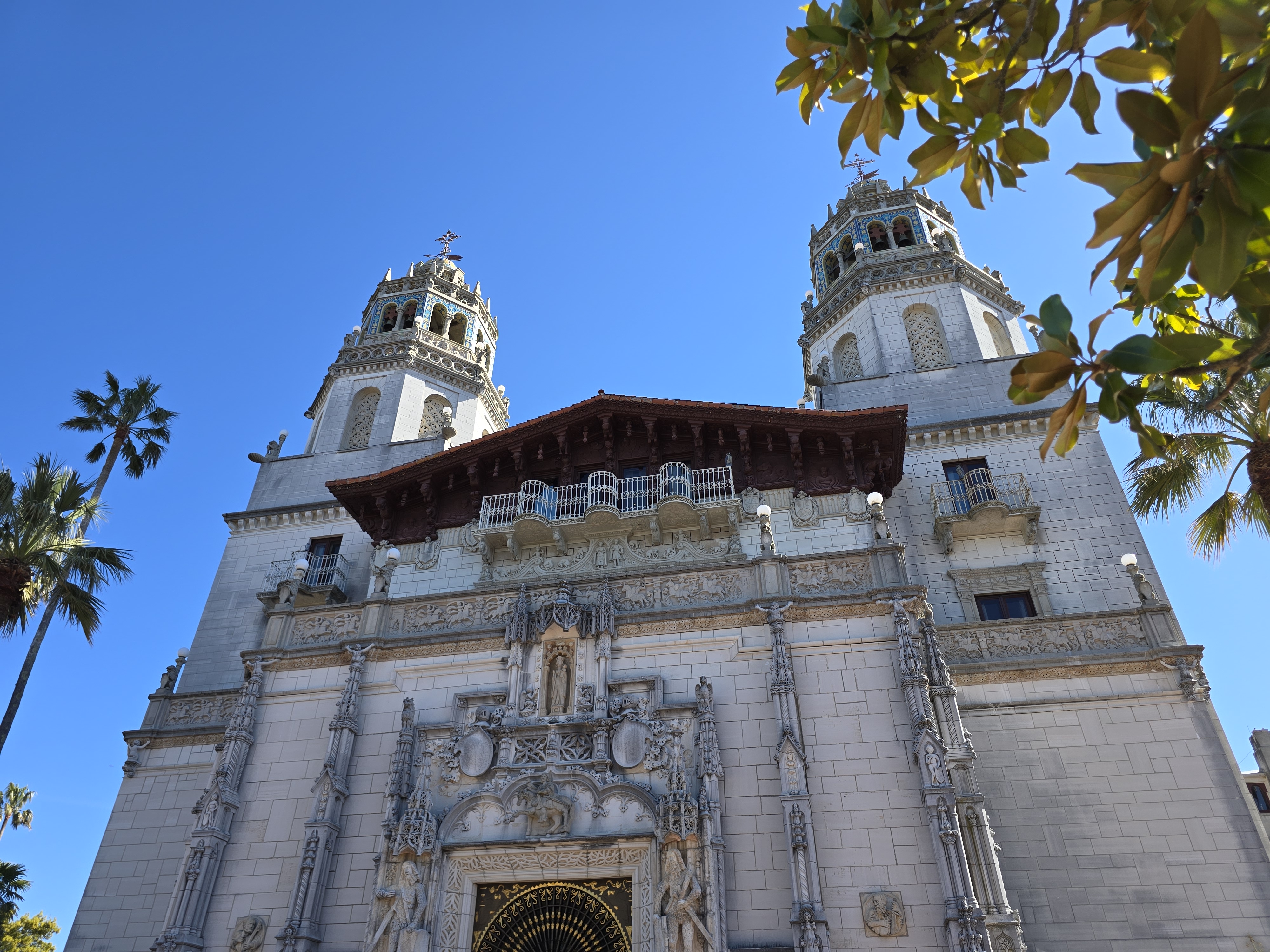
Morgan was intentional in every step of her design, from the drive up the mountain, which provided views of the castle or the ocean, depending on which side of the vehicle you were on. She stayed at the castle as she continued work on the additions and the room that she normally stayed in afforded views of the work site so that she could keep an eye on things.
Morgan and Hearst worked on La Cuesta Encantada for 28 years until 1947, when Hearst’s health began to decline. Work on Hearst Castle decreased significantly when Hearst experienced financial troubles during the Great Depression, but Morgan was able to continue work for other clients during this time, as she had done throughout her career. While the work on the north tower was never completed, the majority of Hearst Castle is still a beauty to behold thanks to Morgan’s intellect and Hearst’s vision. Julia Morgan made a total of 564 trips to San Simeon from her home in Berkeley, all by train.


Morgan passed away in San Francisco in 1957, and is buried in Mountain View Cemetery in Oakland, California. The ballroom at the Merchants Exchange Building in San Francisco, where she had an office from 1907 to 1950, was renamed in Morgan’s honor in 1999. In 2014, Julia Morgan was awarded the AIA Gold Medal, the highest award of the American Institute of Architects, and the first and only woman to achieve the honor. In the end, Julia Morgan designed more than 800 buildings, mostly in California.

 Sravanthi Meka